First Time Facilitator podcast transcript (Episode 31)
This is the transcript of my conversation with Sally Foley-Lewis. Click to listen to my First Time Facilitator conversation with Sally.
This is the transcript of my conversation with Sally Foley-Lewis. Click to listen to my First Time Facilitator conversation with Sally.
Leanne: I'd like to welcome this week's guest who is a dynamic and interactive presenter, MC, and much-sought-after facilitator and executive coach. Her clients rave about her because she leaves the audience equipped to take immediate positive action. Welcome to the First Time Facilitator Podcast, Sally Foley-Lewis. It's great to have you on the show.
Sally: Oh, Leanne. I'm so delighted to spend a little bit of time with you and chatting our favourite topic; facilitation.
Leanne: We could talk, I mean there's so much to talk about in terms of facilitation. But I saw you earlier this year as an emcee at the Institute for Learning Professionals Conference held in Brisbane. So you open up that conference and you really made us all laugh, you look completely natural on stage, you were talking about al l the different types of people that attend conferences which was just yeah I found that really funny. The stage looks like a bit of a happy place for you has it always been that way?
Sally: As a child, if I'm in front of an audience or if an audiences and imprisoned and have just watch me, I'm always happy. That's just something that I have found incredibly easy to do and I know that doesn't come naturally for other people. Trust me, I'm not good at everything but being in front of a crowd is yeah, it is, it's my happy place.
Leanne: Oh, wow. You're very very lucky. How long have you been in this game of running workshops facilitating emceeing?
Sally: Well, don't let my youthful looks deceive you, dear Leanne. Hahaha. Look, at least 20 years. My first job at a university was working as a Recreation Officer in a Psychiatric Hospital in Brisbane and so I was in front of the, my audience back then with patients and so we would do cooking classes or we'd do some training around some skills for cleaning or crafts or anything like that. So my first job at a university, I already had an audience as such. Yeah, so it's over 20 years.
Leanne: Wow. So in terms of what you need back then 20 years ago and the skills that you've honed now, what's really changed? I mean like the audience obviously has changed. You no longer working with patients. What have you done to really hone your craft in terms of your development?
Sally: I am a big believer of lifelong learning. So I have got books, I'm surrounded by books that I read. When courses come up that I think are going to really take my skills to a haul other level then I will jump on them. Advance facilitation programs, professional speaking courses, training courses. Also programs that probably a little bit left of centre but expand my thinking. And in the last sort of 10 to 15 years, I'm even looking at going in, I mean, I've been spending a lot of time going and seeing other speakers speak and other facilitators facilitate secondly for the content but firstly for the process. The reason why I do that is because I want to sit there and watch the audience and what's the facilitator interaction and probably in the last five years, I've been really more attuned to going, “That was great. That was awesome. This is what I've learned.” But also, “This is what I didn't like.” Now, why didn't I like that?, Why did that not resonate with me?” Because there's value in both sides of that coin and I think any opportunity presents a learning opportunity and heightening that level of observation and ability to say and well, stop and say to yourself, “Why didn't I like it?” or “Why did I like it?” is really important.
Leanne: Yeah, it's a really powerful question. Now that I've been in some workshops and I've thought the facilitators been incredible and killed it and I've really resonated the person and then I talked to the person next to me and that didn't hit the mark. It's pretty fascinating why some facilitators stick and why others don't. Why do you think people are more interested in some facilitator styles over others?
Sally: Well, I think it comes down to why have people presented? Why do people shop in the first place? So, who's your audience and what do they want? And also, is the message being delivered in a way that resonates? I think that's where it comes down to you as the facilitator is having multiple formats of your message ready to go so that it can hit everyone in the room in the right way and I also believe that you will have a very clear bell curve of audience. You'll have people who will be, “No, thank you. Never again.” You'll have people in the room who go, “Yep, pretty good.” and don't take that personally, that's actually take it as it is, that's pretty good. And then, there'll be other people in the room that will become your own personal stalkers because they love you so much. So I think, the good facilitators understand that and also the good facilitators know that of the end that didn't like you, there is some value in trying to work out why but don't stay there because that's just soul-destroying.
Leanne: And I think, yeah, you've had 20 years experienced of this and I think that call of “don't taking it personally” is actually really useful for our first-time facilitators who was just starting their journey. How did you develop your resilience? Was it just a case of, “Okay, I'll take the feedback but I'm going to move on and be constructive with it.” or did you have any sort of other kind of coping mechanism to deal with the feedback from the No group in that bell curve?
Sally: There's been multiple little things along the way and that's been willing to listen. Thanks the person for the feedback but then also remember to ask yourself, “Is that true?, “Is this true of that person?” and “Is this true of me and what I need to be doing to get better?” And then also, I know this sounds really bizarre but after I have facilitated or delivered some training whatever. I come home and I have a shower. It’s a little ritual where I wash away the day because if I if I had someone who gave me some feedback that didn't resonate or didn't make sense or they just didn't like me then I washed that away. But also, in the shower it gives me time to actually step back and relax and say, “Okay, what do I need to take out of this?” So that's one thing. The other big lesson for me is that I have got the biggest expectations of myself. I'm self-competitive and what that means is I'm always going to be my worst critic and sometimes I need to calm that little bunny right down and actually noticed that there are 19 very goods and only one good. So which one do you focus on?
Leanne: Oh, yes.
Sally: Yeah and that's something that's really important and you know what? The goods are good. Don't devalue good, it's good and that's a positive word and I think we sometimes and put good into a not good enough category in our own heads when we're doing that mind chatter. Good is good and be okay with that and focus on the 19 very goods that you've got.
Leanne: Yeah. Isn't it funny how we do just go back to that one feedback form and really dwell on it when you've got overwhelming evidence that it actually went really well.
Sally: Exactly.
Leanne: Good tip. I'm the shower thing. Yeah. I love doing that too, actually. I didn't really think of it as a strategy but it's something that I when I reflect on the work that I've done at the end of the day, yeah, there’s nothing better than just having a hot shower, letting it go and then focus and resetting the next day. I think that's great!
Sally: Absolutely.
Leanne: So you spoke about as in terms of your facilitation you've created information you deliver it in multiple formats. So you have that in your back pocket so you can relate these stories or whatever mediums to present. Are there any other sort of other tips or skills that you think facilitators really need?
Sally: Yeah. I think that in the room, what I have seen a lot of is that a facilitators feel the need to be seen as the expert. While they are hired on that premise, I think there's a lot of facilitators who could do was remembering that people in the room have got experiences and they actually combined with your experience, create a really wonderful depth and richness to the room and so instead of just being the talking head in the front of the room, maybe it's a case of asking a question first and saying, “Who's had experience of this?”, “What's your insights around this?”, “What do you hope to get out of this?” and really listen to what's been said because that can then help you determine how deep you go on some things and it also helps you determine whether you need to actually deliver information as knowledge transfer or actually get into an exercise or an activity to truly immerse the group into something. I think that's something that some facilitators get caught up in whether its nerves or an expectation to be seen as something X Y Zed. I'm not sure but that's one of the things I think a lot of facilitators could do to just take that deep breath and ask first.
Leanne: I think there's a real fine line between facilitating and training and I also think for some reason, if you're at the front of the room, you're expected you're the authority figure so you're expected to know it all. I think that's where we cover coming from so I really like the idea of just letting go and using questions more to find out what your audience actually does know and where can you fill that gap.
Sally: Yeah.
Leanne: Now, you mentioned that you read a lot of books but you've also written a few books yourself. Now one of the books is called The Productive Leader and I really wanted to talk about, you talked about productivity and using systems to make work easier and I know as a facilitator especially working for a big company, we've got some content and then were asked to deliver a workshop or something entirely new or we might be asked to change a half-day workshop into a full day or cut it down to an hour. So we're constantly having to go through all the resources we've created and make all these changes and we save them somewhere. Is there a better way of doing that?
Sally: Look, I think there's just one layer and this actually creates work to start with but saves you a lot of time later and that is as you save, where's your cataloguing of your IP. What I think happens is that we create all these programs and all these resources and we've got files everywhere and we've even probably got them cross-reference to. It was somewhere they're sitting in a training folder or a facilitation folder and then somewhere else they're sitting into the actual topic folder and I think what we're not doing is creating a really clear catalogue and I've got a very, look, I'm big for simple. To me, it's very difficult to make things simple but that's where I'm always striving for which means an Excel spreadsheet that has a cross-referencing of the file name and the activity, the resources and also what it will help to, what topic it's supposed to hit on whether it's interpersonal communications, time management, leadership, delegation feedback, whatever it is and it can be more than one. So that way, when I go into the Excel spreadsheet and I do a find, say I've got to do a Lunch and Learn on feedback. If I do find feedback, there I go I've got about six or seven activities: Bang! Pick and choose.
Leanne: Oh, my gosh. That sounds incredible. Yeah, so easy.
Sally: I'm not going to lie to you, the set-up is big. It does take a bit of work to set it up but it is so worth it when you imagine in 12 months’ time you're going and looking for something and all you have to do is do a find search in an Excel spreadsheet. So that's one of the little hacks I think is really valuable and time-saving.
Leanne: Yeah. I mean, I'm even thinking now get so many people at work coming up to me and going, “Oh, do you have a good energizer or something they can get people moving or an activity that's great for engineers, or?” and so if we had just a shared Excel document where all that was. I really like that.
Sally: Yes.
Leanne: You also promised in your book that promised to the reader that you'll help save them two hours every day.
Sally: Yes.
Leanne: It's just using a combination of these type of hacks or what's your philosophy around time and I know you mentioned that it's really about self-management not time management.
Sally: Yeah. It’s tasks and focus-management really. I don't like the phrase time-management but that's what we know it is called as a commercial type of phrase. I do promise two hours a day because when you get into the book, The Productive Leader, there's three big elements to it. There's your personal productivity, your professional productivity, and your people productivity. And if you do one or two things out of each of those three areas, you will find that you'll be crawling, you'll be taking back, creeping back those two hours. It’s nothing you're not going to use them, you will use them but you'll be using them for things that are far more valuating and far more fulfilling for either your personal, your professional life. So it could be setting up an email automation system as one. Tidying up the way you have your meetings is another and that could be your professional productivity and your personal productivity, you could do some batching of tasks or some chunking of some work and then in your people productivity, it could be who can I delegate some work to. So just those couple of things set up over the course of the two-week period or we'll wait a couple of weeks actually brings you over time you'll get back two hours a day.
Leanne: I really need those two hours. Haha. With the people side, do you in terms of delegation, do you outsource any tasks using any virtual assistants. Have you gone down that road?
Sally: I have. I mean, as you know I work for myself and so what I tend to do is outsource project to project. So depending on what it is, is what I'll then outsource. So I'm a big fan of it and I know that it can be quite daunting for some people but when you do it right and I'm actually quite passionate about delegation so that will probably be my next book. That if it's done right and it's clear and your expectations are set in place and you do have milestones and progress checks and things like that until you have that such trust in the relationship that you know you can hand the project over and not worry about it, then it does work well. I do that whether they're virtual or not. I just had a video because I'm speaking in Kuwait and so I have to do some promotional video and so I've sent that off to what it was Upwork or whatever it was Fiverr or whatever I kind of remember what it's called now. A guy came forward and said this is what I do, this is who I am and so I have to do my checks and balances. It's my due diligence here and so anyone who has to delegate, you have responsibility to check that you're picking the right person and so once that was established I asked, “Is this something you can do?” “What's your experience with doing this?” and then, “How long do you think it would take?” and so it was slow to set up but once I once I knew that he was the right guy, I uploaded the videos they were done and they were done perfectly any one revision on one was required for and what I did was I asked for Arabic subtitling onto the videos and within 24 hours done dusted and perfect. So it might have taken me two days to set that up and get that relationship right, get my understanding and my expectations clear but then, bang! Done. Thank you very much.
Leanne: We had so a couple things one I can't wait to read your book on delegation. I'm fascinated by it too more the case of when I look at people, there are certain people or I don't know if it's types and hopefully I'm not labelling but delegation seems it's not about just delegating a task, it's really about a mindset and I know that some people have a fear of letting go or have the confidence that someone can perform a task better than other people. So looking forward to reading that book.
Sally: Oh, yeah.
Leanne: Second thing is, what you're presenting in Kuwait? What's that all about? That’s exciting!
Sally: Thank you. It’s the book The Productive Leader.
Leanne: Yes.
Sally: I've been booked to do a one-day presentation in Kuwait. So it's a long way to go for one day.
Leanne: It is.
Sally: I used to live in the Middle East and we didn't actually get to go to Kuwait while we were there so I'm so excited. I think I'll get about five minutes to see the city. But I'm very very excited about going.
Leanne: Oh, that's so cool. I mean, I read in you bio, you've worked or lived in Germany. So the UAE as you mentioned Asia and even outback Australia. So you're presenting to all different types of people, what do you change anything in the way that you deliver or what is it with the different audiences that you do kind of modify to make sure you hit the mark with your message?
Sally: Well, I think the thing that happens before you even stand in front of the audience is asking a lot of questions and questions like to the client not necessarily the audience. There’s two different things there. To the client, “What do you want your audience to do, to think, to feel, to believe, to act on when I when I walk off the stage? Number one. Number two is who's in the room that I need to be aware of? Are there any particular issues that are going to be in the room that will be not spoken about but completely known to everyone except me? Is there any languaging? That is super important. I don't just mean swearing and potty mouth stuff. I actually mean, “Do you use a certain type of terminology in your particular industry?” And so those sort of questions that take it another step further are really important and I do change it because they're not every audience is the same. I sound less Australian when I'm actually overseas.
Leanne: Really? I got some friends, yeah, when they have a few drinks they’re just their accent changes.
Sally: Yeah, I will admit I come from Queensland so I sound a little rednecky, I’m a Queenslander. But when I'm overseas, I do for some reason I switch into a far more less accented Australian accent if that makes any sense.
Leanne: Yeah, I know what you mean. More kind of British English?
Sally: Yes.
Leanne: Yeah.
Sally: And I also slow it down as well. I speak a lot slower when I'm overseas. But also, I mean that's just voice. But also, I think for the audience when I'm when I'm in the city than I even present differently because there's an expectation perception and while part of me thinks can't they just judge me for me and we can all get on that bandwagon. The reality is you've got to hit a credible no straightaway and so it's dressing the part, speaking the part and then also delivering the part. So when I'm out West, I might wear a pair of jeans and pair of boots and a shirt. Whereas, in the city, I'll be wearing a suit. It just you've got to be thinking about who is and changing things to suit them and as an example is that just recently did some cross-cultural training with a group from the Philippines. So in order to get an exercise done, I had to change some phrasing around so that it would make sense but because English is obviously is not their first language and so I tried different ways to describe a phrase as well as have the person in the group who had English was probably the best out of the whole group and had a chat with him about what the phrase means and have to translate it and so I think for facilitators, it's being okay to play and be flexible and adaptive and keep trying to work things out because your audience wants to get it and that's the thing.
Leanne: Yeah. I think flexibility is key and what most recently last week I was booked into run the strategy session and the agenda just continued to change and I was thinking, “Oh, gosh. I'm not going to have a good night's sleep tonight knowing that it might change again.” But I think that is the nature of the game. That is facilitation. You need to be prepared for anything.
Sally: Oh, yes. I was just going to say. I think that there's a line of being flexible and I'm about to contradict myself and say knowing when to say No and knowing as a facilitator to know when to pull back because let's face it we have a lot of people who want to put in a lot into a day. The more content you shoves in; the more shallow you're going to be and I think that's that bouncing act that makes it very hard for facilitators sometimes.
Leanne: Yeah. It does. Especially if you've got this whole day and they want you to cover all these topics but even just moment you can look at that and just go, “Look, one of those topics alone, it's like it's been a week on it.” I mean, even the doing that delegation, productivity and things like that. So I guess the million-dollar question is a lot of people go to these workshops and they get really inspired but afterwards they don't really implement the changes and I know that at the conference where you emceed what you did was at the beginning of that is you got us to team up with someone as a buddy and we were budding each other, we're going to make each other accountable for learning and embedding all this stuff. As well as setting a time in our diaries and our phones for a week after where we could spend some time to reflect on what we learn about conference. I thought that was such a great tool. What other tips do you have for embedding learning following that workshop?
Sally: I tend to walk out of the programs I deliver with I could guarantee that they've got a coaching session as well and that is to make sure that with between now and a month's time it's usually less than a month but usually within the month I say, “Please call me or book in a session because I want to make sure that over the next month as this feels clunky as you embed new things and I'm there to support you.” and I don't sugar-coat anything. I'm not one of these people who says, “Oh, it's just easy.” No, it's not! You're going through that transition of conscious incompetence and trying to embed something new. You're trying to change something and the latest research says that habits take anywhere from 21 days to 18 months and it depends on the habit and depends on the situation, it depends on you. So you know these things take time and so I often say to people, “Be prepared for it to feel clunky. Please call me.” and then also, “What is it they're going to do? “What's their accountability piece? And I get them to tell me and I will often say depending on the size of the group. “How do you want me to help you stay accountable?” and that's a coaching. It's actually just taken straight out of a coaching context and I will say to every person in the group particularly small groups on a little piece of paper I will say to them, “You need to write down your name, your email, your phone number and how do you want me to help you stay accountable?”
Leanne: Nice. So it could just be like an email or a quick SMS but then they know that someone else is thinking about them and wanting them to succeed. Love it.
Sally: Yeah, definitely. And I say to them, “Just remember scary Sally is coming and get that.” and that’s fun with it and that's the other thing I do say, “What's going to make this fun for you? What’s going to light you up?” and if they say, “Oh, I'm going to do this.” and I said, “Well, no. Say it to me please, you’re excited.”
Leanne: Yes.
Sally: Then don't do it.
Leanne: Yeah.
Sally: Then I say that, I take that pressure off and say, “Don't say that you're going to do something just because you think that's what I want you to hear. I actually want you to tell me what you do want to do it and don't overthink, don't hassle, doesn't have to impress anyone but you.” And when someone, I'm thinking of an example just recently when someone said, “I just want to reread this.” and I said, “Then that's your action and that's okay.” That was the most valuable thing that person could do because at the end of the session they hadn't done their pre-work for the session and at the end of the session I think they felt that they were a little bit behind the group because they didn't do their pre-reading and so they actually said to me and quite quietly so not everyone else heard, “I think I just got to reread this.” and I said, “That is brilliant. Write it down. That's what you're going to do.”
Leanne: Yeah. It doesn't have to be changing the world, right?
Sally: That’s right.
Leanne: But simple steps that at least you get one action done that builds momentum. That’s exciting!
Sally: Absolutely.
Leanne: Just before you mentioned the word fun as well and I think that when I think of you and your brand I think of fun just after what you did at the emcee event plus all the photography and branding that you've got too. I think that's really clever. So all those slides that you had were just photos of you doing different things and with different props. How long did it take you to really create that brand yourself and make it come alive in terms of all the marketing collateral you've got and the training resources?
Sally: Well, I could say 20 years but the real, it's finding the right photographer I think is one person and finding yourself and your branding like, “Who are you?” and I think it's really important to do values exercise for yourself. Now, “What values do you want that light you up, they think to who you are but also resonate as you as a professional and how will then do you want those values to be seen in the market?” and I was called, someone once said to me, “Sally, you're like a lighthouse. You know, you except you're constantly glowing and that means that I feel safe. When I'm with you, you give me safe passage and safe direction and you light the way for me and I love that about you.” and I thought, “Well, that was just fantastic,” So anything to do with light bulbs and lighting the way or a lighthouse was going to be definitely in my branding when that sort of struck a chord with me. The other thing is, you know my undergraduate degree was a Bachelor of Leisure Studies. So if I don't have fun somewhere in what I'm doing and that will be a waste of a degree and I think it's about allowing yourself to shine. I've had probably three or four sets of branding photography done over the years and this latest set I had some very close friends who know me actually say, “Ha! Finally, photos that are so you and that's when you know you're congruent.”
Leanne: Yeah. I was really impressed by them and I think we'll add a link to your website on the show notes so everyone can see what I'm talking about.
Sally: Okay.
Leanne: But just your slides are amazing, very visual and just I think you're right, people just connect with that because it did. I think it represents you even though they don't know you that well from what you were coming across and with those slides it really worked.
Sally: Oh, thank you.
Leanne: So we’re speaking about so many different topics. I'd really kind of surface level. We could speak for ages. We talked about branding, the different types of audience that you've delivered to across the world, cataloguing your resources, productivity, so much more. If people want to get in touch with you and find out or if they want you just to keep them accountable. Where can they find you?
Sally: All the W's. Sally Foley- Lewis; S A LL Y F O L E Y L E W I S. So website and LinkedIn are probably my two go-to spots but if you google my name then there's only one of me. Thank goodness many people say.
Leanne: Awesome and all the best in Kuwait as well. We can't wait to hear about it. I'm sure you'll post some updates on your LinkedIn about that experience. That's fantastic.
Sally: Oh yeah. Thanks, Leanne. Awesome.
Leanne: Awesome
Sally: And thanks for having me. It's been great chatting.
Leanne: Absolute pleasure. Thank You, Sally.
Sally: Thank you.
[END OF AUDIO] 28:54
Episode 30: A hostage, a hard-worker and a holiday maker walk into a workshop… with Murray Guest
Murray Guest is a coach, consultant, facilitator and speaker based out of Newcastle, Australia. His consultancy is called ‘Inspire my business’ which is apt, because as you will be able to tell from the conversation, he’s an inspirational bloke.
Murray Guest is a coach, consultant, facilitator and speaker based out of Newcastle, Australia. His consultancy is called ‘Inspire my business’ which is apt, because as you will be able to tell from the conversation, he’s an inspirational bloke.
After over 20 years in corporate roles which included roles as a QA Manager, L&D Manager, BD Manager and Facilitator, Murray followed his heart and started his own business as a business coach, facilitator and consultant.
We cover a range of topics in this conversation, ranging from the importance of professionalism as a facilitator; to the questions he uses to get people to start talking to each other at the beginning of a workshop; through to behaviour management.
Listen in when we also talk about teams in organisations and reasons why they may not be performing as effectively as they could/should.
In this episode you’ll learn:
How Murray got his break into the world of facilitation
His philosophy around TGIF
The importance of professionalism and what that means for facilitators
What you can do when you have participants who demonstrate resistance in your workshops
The three types of audience members in your workshop
How he uses the Gallup Strengths Finder tool everyday; in both his personal and professional life
Why it’s important to create foundations in a workshop (and how long Murray spends doing this)
How to survive (and keep your energy and sanity) during consecutive days of facilitation and
Ideas on when you should start reflecting on a workshop you’ve just run (hint: Don’t reflect immediately!)
His advice for First Time Facilitators
About our guest
Murray Guest is one of Australia’s leading Strengths coaches, helping over 1,000 people unlock and apply their strengths to achieve their professional and personal goals. As a Gallup certified Strengths coach he partners with organisations to build strengths-based cultures and realise the benefits a strengths-based approach brings.
The founding director of Inspire My Business, he combines his diverse experience in HR, QA and Business Development to inspire leaders and their teams along the pathway of change and continuous improvement.
His recognition includes one of only two coaches to speak at all three of the Gallup Strengths Summits in Omaha and receiving the HMA Excellence in Training Award for leading significant improvements as the Learning and Development Manager of Tomago Aluminum.
Resources mentioned in this episode:
Like this show?
Like this show? Please leave me a review here — even one sentence helps! Consider including your Twitter handle so I can thank you personally!
Click here to let Leanne know about your number one takeaway from this episode!
Episode transcript
View the First Time Facilitator episode transcript with Murray Guest.
Episode 29: Adventurous agendas and other tools you can use in your next meeting
Ever had to facilitate a strategic or planning session, or important meeting, and wanted some fresh ideas on how to do it, and how to make that agenda come to life?I recently had a fantastic opportunity to facilitate a three day annual planning meeting.
Ever had to facilitate a strategic or planning session, or important meeting, and wanted some fresh ideas on how to do it, and how to make that agenda come to life?I recently had a fantastic opportunity to facilitate a three day annual planning meeting. As part of my preparation, I discovered some interesting tools (and received some really useful advice), that I think listeners of the First Time Facilitator podcast could really benefit hearing about.On that note, I was thinking of creating some kind of peer-support group for First Time Facilitators, maybe a closed Facebook group, where we can start sharing these tools & getting support from each other. If that’s something you’d be interested in, let me know - you can email me - hello@firsttimefacilitator.com, or add me on LinkedIn. I think it would be really great to start leveraging the activities we’re doing around the world, and supporting each other.
In this episode you'll learn:
An interesting, adventurous way to present an agenda and set expectations
A tool you can use if the right level of detail isn't being addressed in a meeting
Some general facilitation advice I received from two experts
Resources mentioned in this episode:
About your host
Leanne Hughes is the host of the First Time Facilitator podcast and is based in Brisbane, Australia. She works in the field of Organisational Development. She loves to shake up expectations and create unpredictable experiences and brings over 12 years’ of experience across a variety of industries including mining, tourism, and vocational education and training and believes anyone can develop the skills to deliver engaging group workshops.
Like this show?
Please leave me a review here — even one sentence helps! Consider including your Twitter handle so I can thank you personally!Let Leanne know about your number one takeaway from this episode! (or, leave a comment below)
Episode transcript
View the First Time Facilitator podcast transcript of Episode 29.

First Time Facilitator podcast transcript (Episode 29)
This is a transcript of the First Time Facilitator episode 29: Adventurous agendas and other tools you can use in your next meetingHey everyone, thanks for tuning into Episode 29. Welcome to another solo episode. I’ve had some hectic weeks, which have been full of facilitation and face to face delivery, so I thought I’d share a recent experience with you all, while it was fresh in my mind.If you prefer the interview format of the show, don’t worry - as I have loads of exciting guests queued up for future episodes. I’m simply mixing up the format, as we know all good facilitators should!Last week, I was invited to Sydney for a few days to facilitate an annual planning session. This is a little different ot the work I’ve been exposed to before, in that it was facilitation in it’s truest sense. It wasn’t about teaching a new skill, or delivering a team activity. I was there, as a facilitator to ensure the conversation was on track (and that discussions weren’t going around in circles), the group were sticking to the task, and we kept to time.It was for my day job - and if you’re new to the show, I work for a global mining services provider. The details of the agenda are all commercial in confidence, so I can’t go into detail on that side of things. But what I can share with you all, are some of the fantastic tools I discovered while planning for this, as well as some advice I received from others, that I think you, as listeners of this podcast could really benefit from. On that note, I was thinking of creating some kind of peer-support group for First Time Facilitators, maybe a closed Facebook group, where we can start sharing these tools & getting support from each other. If that’s something you’d be interested in, let me know - you can email me - hello@firsttimefacilitator.com; shoot me a tweet @leannehughes, or add me on LinkedIn. I think it would be really great to start leveraging the activities we’re doing around the world, and supporting each other. At this stage, I don’t know really know if there is a need for it, so like I said, if you’re interested, reach out and we’ll go from there.On this episode, I’ll be talking about some tools which are quite visual. You can find a link to all of these on the Adventurous agendas and other tools you can use in your next meeting (Episode 29) show notes page. So let’s jump in. Part of your role as a facilitator at the beginning of these types of sessions is to to go through the agenda and set expectations. This was a three day planning meeting. Each person attending, already had been briefed on the agenda prior and had access to it. Therefore, I didn’t want to get up the front and tell them what we are doing that day and at what time because:
They already had access to that information and
That’s pretty standard and boring.
I found a cool way of presenting the agenda through a website called Gamestorming. It’s called the ‘Hero’s Journey’ agenda. The ‘Hero’s Journey’ was a concept created by a guy called Joseph Campbell in a book called ‘The Hero of a Thousand Faces’. In that book, he maps out and explains that every great adventure, or hero’s journey’ journey goes through a sequence of steps. On the Gamestorming site, Dave Grey, shares how he’s also mapped that hero journey to a normal meeting agenda. You can relate this to Luke Skywalker in Star Ward, Bilbo Baggins in the Hobbit, Dorothy in the Wizard of Oz. I’ll give a quick run down of that but also share the video explanation in the show notes. The hero’s journey starts in ordinary life, and that’s where we are at the moment. There are two sections to this, the known world (top half of the circle) which is life as we know it, our regular working day, and the unknown world (which is the bottom half), which for us is 2019 and beyond. We start at the top of the circle in ordinary life and we’re going to take a heroes journey. It starts off with that call to adventure. For Harry Potter, the call comes from Hagrid, and that’s where you start finding meaning on why you’re there. In the case of a meeting, this is a good time to explore the purpose, objectives and outcomes for the meeting, the why. Or, if your first presenter is going to do that, you can mention that here. You’ve had the call to adventure.As you work around the circle, you draw and mention those things on the heroes journey and relate them back to that meeting.For example, a hero always has the assistance of helpers and mentors that assist on the journey, you can link to these external people that are coming in to share their information or advice.When you cross the threshold to the unknown world - that’s probably a good time to have a coffeeTrials and tribulations, problems and pitfalls - in the adventure novels, this is the time when you climb the mountain, or fight the trolls, you can relate this back to brainstorming, About the six o’clock mark of the circle is what you call the pit.. The belly of the whale, where you’ve opened up all of these problems, and think to yourself, ‘Are we ever going to get home?’. This is a moment of great pain..but also great reflection and opportunity. It’s where Bilbo Baggins finds the ring. At that point in the meeting, let’s call it out and reflect on how we feel and how we can make progress.After the pit, you start developing new powers, new ways of doing things. You learn how to use the force. This is where you start creating solutions and actions on how to tackle the unknown. However, the Hero’s Journey doesn’t end there. You still have to cross the threshold back into the known world. These new gifts that you have, you need to figure out how to share those ideas with your teams back home. In the meeting agenda, this is where you start talking about how to communicate the actions from the meeting and the next steps.It’s really cool. Now I only saw this Hero’s Journey agenda a few days before flying down to Sydney but I thought ‘jackpot’ and decided I just had to use it! So I downloaded the explanation video from the Gamestorming site, onto my iPhone, and every opportunity I had, I popped i those headphones and listened to David’s explanation. My next step was to write out the explanation in my own words, linking it back to the upcoming agenda. I then recorded myself explaining it, and then started listening to that over and over again. My final step was to explain the concept to my husband and a couple of friend’s..and once I could do that, I knew I was ready to use it for the main event. You may be thinking this is a cheesy concept, and maybe it is for the audience you may be pitching it. Always consider your audience and their needs before selecting an appropriate analogy or tool. My audience were a team of Executives that are super busy in-demand people, who were brought up on Star Wars… so an opportunity to talk to them like and relate what they were about to embark on as being heroic, well it worked for them. And I could tell, as they continued to refer back to that heroes journey, using phrases like ‘the pit’ in conversation, to keep track of where they felt they were along the journey, how they were feeling, and how they were going to bring it home.Have you ever been in a meeting where you’re talking about a three year plan, but the conversation keeps getting brought back to detail and the problems of today? Or, the conversation is too abstract when operational detail is exactly what’s needed. I think we’ve all been there, right?When this happens, you can use this next tool, Altitude ( which, I again discovered from the Gamestorming site), to agree on expectations and keep people focused at the right level to serve the goals of the meeting.For prep work, draw up a flipchart divided into three horizontal sections. Again, I’ll link to this tool in the Show Notes. On the flipchart you have the title ‘Satellite’ written up the top, ‘Airplane’ in the middle, and ‘Ground’ on the bottom rung of the third section. When you’re ready to explain the concept, give everyone a sheet of paper and ask them to make a paper airplane. If you have enough time, you can give them the chance to test how well they fly.Then, reveal your Altitude flipchart and and ask the group to define what they mean by the satellite level, or the airplane level, and the ground level in the context of their meeting. For example, if they say that the satellite level is too high but the ground level is too detailed, ask them for examples of the kinds of things they would consider at the right altitude. Then ask them for examples of things that would be too low or too high.When you have reached some consensus on the right altitude level, put a mark on the page to represent the “right” altitude.Now tell them that whenever they notice the conversation going too high (abstract, vague, strategic) or too low (down in the weeds, tactical, operational) they can float their airplane and that will be a signal to the group.I think this tool is fantastic for a few reasons. It stops you, as a facilitator, to be like that teacher coming in to remind people that they’re rushing to detail too quickly. The accountability is on the people in the room to self-moderate - they have agreed on the right level of discussion up front, and they each have their plane to float when they realise the conversation is steered at the wrong altitude.So far, I’ve covered a neat way to talk through your agenda using the Heroes Journey agenda, and set expectations on the level of detail in the meeting using the Altitude flipchart. For the remainder of this episode, I’d like to share the useful advice that I received from three people that helped me hone in and focus on what was important as part of preparing for this workshop. I’m sure all of us receive useful advice from time to time, what’s special about having a podcast is that I can share and scale the advice relevant to you by reading it - and hope it helps positively shape your experience in facilitation, too. I emailed an old boss, Julie Kean. And to be frank, Julie is probably one of the best leaders I’ve ever worked under. She’s currently working in Timor as a Skills Development and Employment Specialist, and has held Executive and Director roles in Education across the pacific region.I haven’t included all the advice she wrote, but here’s a snapshot: My main advice to you is to trust your intuition. You are not there to be centre of attention. You are there to allow others to put together their collective intelligences. As in the old aphorism - you need to be the guide on the side, not the sage on the stage. So the best facilitators don't seem to be facilitating, but provide the space for others to produce the outcomes. Depending on the group, this can be tricky but you should expect an executive group to put in big time. Which brings me to the question - are they doing any prep? One thing you can do as the facilitator is to put some questions to them in advance with an expectation that they will bring answers with them to the sessions. The more confronting the questions the better - even if you don't get to address them during the planned sessions. You can also think about questions that you can send them home with at the end of each day. Make sure they are hard questions - make them work for their money, so to speak. I'm sure you know the concept of wicked problems - throw a few at them during the day and let them develop solutions. Scenario planning is another strategy that can work well with the right group. You can develop a range of scenarios in advance and have them work through and document solutions. This can provide the basis for risk management planning, but can also develop some blue sky thinking. If you planning on parking ideas, make sure you come back to these and really play them up. Sometimes the parking lot can provide the best thinking and the best outcomes. If you park a lot of ideas over three days you can go through a selection process with the group to identify those that merit further thinking and those than can be discarded. And finally, remember that the process of planning is often more important than the outputs. This may be a one-off opportunity for every voice to be heard, and that should be valued in its own right - irrespective of any collective outputs from the group. I liked the guide on the side analogy. It relates to refereeing a game of sport.. With a referee, you know you’ve done an amazing job if at the end of the game, no one is talking about you. I think the same thing applies to this type of facilitation. The other section that really stood out for me was to not focus on the outcomes too much, and let them focus on the process of planning. I also connected with Sue Johnstone, you may have heard her in Episode 7 of the podcast. She gave me some of her ideas if you find that teams go in details and around in circles. She said to call it by saying ‘It seems like you’re getting into some detail that may not be necessary right now’ and ask them to park the issues. Following this, introduce a third party perspective into the room; one that is asking for a result and requires them to take action, for example, ‘What are our customers expecting to see?” Or “Imagine the board chairperson has asked you to provide a broad brush of the options at the end of the day. What would you say?” This is really useful as getting that third party perspective helps them to figure out the impact they’re having. Michael Port also talks about not using absolute words when public speaking, I think it also applies in facilitation. Start looking at ways you can incorporate phrases like ‘It seems like…’ or, ‘What I’m hearing is… is that correct?’. So, those are few tools and tips I discovered last week that may be useful for you, if you’re being asked to facilitate and chair some big meetings.
Let me know your thoughts - leave your comment below!
Episode 28: Facilitation is all about the tempo with Joshua John
In today’s episode, you’re going to hear from a good mate of mine, Joshua John. Josh has been living in the Kimberley region of Western Australia and has been working as a Language, Literacy and Numeracy trainer at North Regional TAFE. It’s a pretty challenging gig for trainers in the region. It’s normal for trainer to drive hundreds, if not thousands of kilometres in a week to deliver training to students at remote communities.
In today’s episode, you’re going to hear from a good mate of mine, Joshua John. Josh has been living in the Kimberley region of Western Australia and has been working as a Language, Literacy and Numeracy trainer at North Regional TAFE. It’s a pretty challenging gig for trainers in the region. It’s normal for trainer to drive hundreds, if not thousands of kilometres in a week to deliver training to students at remote communities.
The reason I asked him on the show, was to talk about these challenges, even down to the detail of what he packs on the road… but also talk about his side hustle in the world of MC’ing too.
In this episode you’ll learn:
How to keep participants moving in a workshop (literally!)
How he responded when his mind went blank at the national stand-up comedy festival
How he prepares for his MC work
His take on using humour in your presentations
Josh's packing list when he trains people remotely
About our guest
Joshua John is an Access (Literacy, Language and Numeracy) lecturer based in Broome, Western Australia.
Resources mentioned in this episode:
Like this show?
Please leave me a review here — even one sentence helps! Consider including your Twitter handle so I can thank you personally!
Click here to let Leanne know about your number one takeaway from this episode! (or, leave a comment below)
Quotes of the show:
People try to stick in so much content and it's too much. It's like a tsunami of information. It overwhelms people.
One of the most important things across every industry is that ability to communicate.
What that individual will see is, every other person in the class has spoken and no one has laughed. When it gets to their turn, they're able to say something - and it's more part of that desire to be part of the group. No individual is going to go against that and not speak. They're engaged, and then from there, the classroom environment is working well.
Episode transcript
View the First Time Facilitator podcast transcript with Joshua John.

First Time Facilitator podcast transcript with Joshua John (Episode 28)
This is a transcript of Episode 28 of the First Time Facilitator podcast, with Joshua John.
Leanne: I'd like to welcome to the First Time Facilitator podcast, my former colleague and good mate, Joshua John.
Joshua: Good morning, Leanne.
Leanne: Welcome to the show. Thanks for your time. It's great being in beautiful Broome.
Joshua: I'm glad to have you back for a short holiday back in Broome.
Leanne: Now, Josh, I'd like to start off with you sharing with the audience what you currently do and what you did in your past which enabled you to be in the role that you're in today.
Joshua: At the moment, I'm working at North Regional TAFE. I'm a literacy and numeracy lecturer. I work across a range of industries. That's my daytime job. I've just recently, this year, started an events business called Rise Entertainment and that's mainly around event managing, emceeing, and DJing. In 2007, I was holidaying across in Broome, as a lot of the stories always are, and I was out on a remote community and met with their school principal. I heard there was a job going, working in the school as a tutor and I put my hand up and he gave me a call back. That was my entry into the Kimberley.
From there, that was back in 2007, I've worked communities, in the towns, and all over the shop.
Leanne: That first foray into tutoring, prior to that, what role were you doing? Did you have the education backing to become a tutor or you just knew a lot about the industry, what was going on, a bit about literacy and numeracy at the time that enabled you to make that transition?
Joshua: I was doing some volunteer tutoring in Brisbane just after uni, just to get my experience up once I finished my arts degree. Surprise, surprise there, the offers weren't coming in thick and fast for a Bachelor of Arts in Brisbane with possibly not the best results. I was just volunteering, doing some tutoring for high school students. Then I moved to Darwin where I was just temping. Temping in different offices doing office work. I just found that there were just-- A lot more doors were opening, being in a more regional area, moving from Brisbane to Darwin.
Then I knew that a possible move was also going to happen, moving from Darwin to a more regional center. Like I said, that did happen but by chance, being on holiday in Broome and that's how I fell into education. I then started my grad dip in education to become a qualified teacher as I was working in the school. That's how I got, formally, into education. Then after that, I have moved into the TAFE system, into more training.
Leanne: The interesting thing about this show is it's called First Time Facilitator and facilitation is really about getting the experience in the room, getting people to share that knowledge and training a unique skill set because you're actually there to pass on information. It appears to be more structured, but I know that in the Kimberley and especially working in communities, things don't always go to plan. I'd love you to tell us any stories or some challenges or opportunities you've had while working remotely. What you've had to do a bit differently and the cohort that you're training.
Joshua: It's the more remote you get, the-- You have a lot more freedom to do what you want to do because people aren't watching over your shoulder, so you have a lot more freedom to get into what the clients demand or what works well for the client, rather than going out there and running off-the-shelf product. You can go into a community or with a different group and, working overtime, work out what their needs are and really adapt and modify a program that suits them.
Probably the best example of this was, I was working at a local cattle station, doing some literacy and numeracy work, and then that evolved from essentially the literacy and numeracy tuition into leadership skills and management skills. The station themselves really keen to get the station workers skilled up and exposed to some of these ideas that you might get if you walk into a business course or a management course. I was bringing those out to this remote station and delivering it to these station guys. It was-- Like I said, I had a few years to develop a program which looks completely different at the end from at the start.
It was interesting, they'd come in the morning. First class was at six o'clock in the morning, that'd be the first group. The second group would come in from doing the station work, they'd come in covered in dust and blood and all this stuff and we'd get stuck into it. They were quite keen because obviously, they got to sit in an air-conditioned room for a bit rather than fighting cattle. We went on with a lot of different concepts which wasn't my mandate going in, but that's what I'd work with the group. These station managers were keen to see, saw the progress, their staff enjoyed it, and they just kept on evolving from there,, and a lot of freedom and opportunities to do that.
Leanne: Fantastic. With these guys on the cattle station, guys and girls, I should say, what's interesting sometimes when I have workshops with people that are used to being out on the floor or being active during the day, they actually struggle when they're sitting in a classroom. They're not used to the lack of movement. What kind of activities or-- How did you actually-- You talk about tailoring your content to suit this type of audience, did you play any games? What kind of things did you do with these students to keep them engaged and motivated?
Joshua: That's right. Absolutely, lack of movement's an issue. We have it here with a lot of trades guys. They come into the classroom and then-- It's difficult. What happens is, the facilitator or the lecturer is on their feet. They're walking from the computer to the whiteboard, they're walking around the room and it's all the students, essentially, who are sitting in their seat. As that facilitator, you don't actually realize that you're moving around, so your energy levels are staying up, the blood is flowing in your body. For the people sitting down, that's right, their energy levels are going to go down, so I ensure that I place simple things just to get them to move.
One of the simple ones I do a bit is, rather than handing out maybe the worksheet or something like that and walk around to them, I'll leave them at the front say, "Okay, when you're ready, go up and get that worksheet." It's not because I'm lazy, it's more just to get them walking and moving, and they don't really realize that. You have to keep on doing it otherwise, that's right, people start to nod off, regardless. Everyone knows if you sit down through a three-hour lecture, it's really hard to keep it going, so you have to incorporate movement.
Absolutely, playing team building activities where people are on their feet and working things out together, that's definitely where I-- This type of training programs I like to design because if you're training someone who's in a certain vocation-- If you're training someone whose job is not to sit down and essentially do office work, if you're training someone who's on their feet, then it's good to train them doing those type of tasks. I've designed a few activities where people are on their feet working in a team environment and, essentially, team-based problem solving and really getting into communication.
One of the most important things across every industry is that ability to communicate. Where my training ended up really revolving around was communication and teamwork. Now, with the skills, we're able to run these activities in the classroom. I designed them to be hard and people would fail, then we'd reflect on it, discuss what went wrong and then we'd run it through again and saying, "These are the skills we need to develop." Have a bit of a laugh along the way in a space where people aren't being judged and they're not being stressed out about stuffing something up or obviously getting injured on the job.
Having that classroom is that place where no negative talking and if someone can't do something, that's okay. We're all working together and we're all, obviously, always learning and trying to get better.
Leanne: Fantastic. Did you find that you have to do a bit of rebranding of the classroom? Some people associate a classroom with school. The way schooling's taught, it's very structured and there's right and wrong answers and you must follow this script. When you go in there and you're being flexible, you're getting people up and moving, is that something that you do to move away from the connotation of, this isn't school, this is an adult learning environment?
Joshua: Absolutely. If you walk into a classroom, or a setting, and you hand out, essentially, assessments or workbooks and it's all very literally black and white on the page, people, they get taken back to possibly negative times when they were at school. They would switch off so you've really going to shake that up at the start. The first activities, I ensure you're not asking them to write anything down, you're asking them to engage in the classroom. The first thing I'll always try and do is get everyone to speak, which I know it sounds a bit daunting for some people training, saying, "Oh, it's really difficult to get my students to speak."
It's difficult because they're used to not speaking so they're not going to start halfway through the week or something like that. You need to break that straightaway. The method to do that is, allow them to speak about something that they're not having to rely on their knowledge about the subject and being found out that they're not an expert. I have activities based around like, "Let's have a look at the difference between these two pitches. Circle the difference," and then we'll go around, "Okay, everyone has to say one thing which is different." Everyone can point and say, "Oh, look. This object is in this first picture but it's not in the second."
Just by something as simple as that, the individual has engaged, they've broken that-- No one's laughed at them, they haven't got it wrong. From that, that's the tempo of the class and everyone's keen to go along like that. In saying that, you've got to be careful to ensure that the first person you ask to speak is that individual who's showing a bit more confidence. You're not going to show that-- The kid at the back of the room who's trying to shy away, they'll be last.
What that individual will see is, every other person in the class has spoken, no one's laughed. It gets to their turn, they're able to say something and it's more part of that desire to be part of the group, that no individual is then going to go against it and not speak, that they're like, "Okay, everyone's doing it. I'm going to be part of the group. There's no repercussions." They're engaged, and then from there, the classroom environment is working well.
Leanne: Wow. I really liked you talking about creating a safe environment where everyone feels like it's okay to speak up. I like that you mentioned tempo as well. It's the first time someone on this podcast has mentioned tempo. A lot of facilitation and training is really about, how do you mix that up? At the beginning, you're setting a nice, safe tempo, but there'll be times where you're putting people and challenging people, increasing that rhythm then bringing it back when you reflect, so I like that you brought that into it.
I also want to touch on your time, I think it was in Darwin or was it in Brisbane, when you were doing stand-up comedy. Can you please tell us a bit about that experience? Why did you start doing that and what did you learn from it?
Joshua: It's a very short-lived career of stand-up, but I do enjoy-- I grew up performing on stage. I grew up playing musical instruments, my mother's a musician. From a very early age, I was just on stage tapping a drum or something behind a group of people which you just get so used to it being on stage.
Leanne: Josh loves the microphone.
Joshua: Yes, I don't shy away from it. It's something that's just always been there. Then in school, my eldest brother, when I was in year 8, he was in year 12, he actually wrote the school musical. I just always found myself performing on stage to some extent. I entered a comedy competition, RAW Comedy, in Darwin. Then I was the finalist there, so I traveled to the Melbourne comedy show and performed there. That was probably the biggest performance I've done inside of an audience.
One of the interesting takeaways from that was, right before I went on stage, as I was sitting, essentially, behind the curtain as they're introducing me, I just remember thinking of-- completely forgotten my first line. My mind went blank, and I was like-- In those situations, it's just good to stay calm because that's how the body works. I knew I delivered these lines before, I was well prepared, but it was a massive audience, there was camera crews, et cetera. Mind went blank.
The takeaway there is, that's how the mind works before you do something new, before you get on stage. Even for myself who’s someone who's been on stage a lot, I still get nervous. Particularly when it's something I'm doing for the first time, I still get those nerves and jitters. Maybe the difference is I, not embrace them, but I put up with them and know that's part of the gig and you go through with it.
That would be my advice to people who are presenting for the first time. If you're feeling nervous, well, everyone feels nervous. It's only when you're doing the same gig or the same facilitation to the same clientèle group after about three times, you'll realize, "Oh," then the body just starts to relax and you don't get that heightened state of awareness before, you don't get that adrenalin shot before. Like I said, if I do a different type of gig, then yes, I'll be nervous before I go on stage. It's something I think is always going to happen to individuals. Don't let that be a barrier for you to think you're not cut out for being a facilitator. I'd be surprised if there was an individual who didn't feel like that. It's the case for most people.
Leanne: Yes, I agree. It is the case. I thought it would be easy as well and that every time, I still get nervous. I have have spoken to facilitators and trainers on this podcast that have been doing it for 20 to 30 years and the second that you change up the content, it always comes back. Then what drives you to appear on stages or appear in front of workshop rooms and teach people?
Joshua: It's one of those things most related to my emcee work. Some people say, "You’re emceeing, you like to be on stage, you like to have that microphone." The real skill of a good facilitator or an emcee is someone who can get the event rolling and functioning well. Often that means doing less on the mic and not being up there to listen to your own voice, it's about being effective in your timing and what you're saying, and the tempo of the night. While it's counterintuitive, while I don’t mind being on stage, that's not the draw. The draw for me is the excitement in facilitating, is getting the event rolling well.
Nothing is more annoying or frustrating as seeing a facilitator or an emcee who's up there, who likes the sound of their own voice and they're showboating around. That turns everyone off instinctively. The skill of a real facilitator or an emcee is to be able to make it seem natural for the audience and make the whole event fluid. A lot of the time that's not spending time on the mic but actually getting other people up there and kicking things along, keeping that pace going.
Leanne: Fantastic. Let's talk about emceeing an event. What kind of prep work do you do prior to that night, that big day?
Joshua: The number one thing you can't go without is having a list of the names and checking you can pronounce them correctly. As I said before, often you can go up and then everything just disappears out of your mind. That's just the nerves kicking in and that's when you'll forget the individual's name or their position. I always have a list of the key people and in a really simple running list. From there, it's just a bit of adlibbing, but essentially, you're able to refer what's coming up next and what needs to be said at that point in time.
Just having those. Obviously, you can't stand up and read a list of notes, so your notes are very simple, and you're able to get those key points across. Then the rest is just adlibbing on the night.
Leanne: You've got an uncanny talent. You're very lucky that you can actually I have never [unintelligible 00:17:55] around you, but you can bring in these jokes just in the right moment, at the right time. Where does that come from? Is that just something that Josh has in his personality or did you have these jokes in the back your mind before you got on stage? Where does it come from?
Joshua: Humor is an interesting one. Like I said before, it's good to be prepared, possibly with a few jokes, but nothing would be set in stone where it's like, "Oh, at this point, I'm going to say this gag." A lot of the time I'll skip over them. You need some content, it's not all just ad-libbed, you need some content there but it's all about reading the room. Humor sometimes, like I said, it can seem very lame if an individual's up there and and they're telling a joke that they think is funny. If the room's not ready for that or it's not the right point, you need to restrict the humor.
In other times, that's right. You can just feel the audience. It's just building and everyone's listening to every word you say, so then it's a lot easier to drop a little word in there or a look or a glance which is funny, but that's only because at that stage, at that point of the night, that works. You need to be-- Like I said, I've definitely skipped over jokes or things I've written out just because it just wasn't the right time. It's about reading the room and just doing what's right at the right time.
Leanne: Excellent. Let's skip and go back to the remote training environment. I'd love to hear what you pack, what you find is essential when you're training people in a remote area. What do you put in your car?
Joshua: Some of the most important things I take out, it would be a-- You've obviously got to think about how many people you're training, but usually with me, it's around the 10 mark so it's not a massive audience. Obviously, if it was bigger, I’d have to take more activities. In saying that, I'd take a projector if I had more clients, but if it's smaller groups, I'll just have a laptop there. Definitely like a portable whiteboard, quality speakers. In most of my facilitation, I'll always have short clips of videos that I can put up there because you need to break up who’s speaking and the content, rather than me driving all these information and content.
It's great to go, "Here's a little two-minute clip of an individual," maybe introducing a topic for the first time or just an interesting little activity, because like I said before, it's easy then for the individuals and for everyone in the room, if we watch a-- For example, you could put on a short clip of people arguing in a customer service environment. Then it's very easy to go, "Hey. What went wrong here?" It's quite easy and people feel confident saying, "Hey. That person was rude to that person," or "This person did that," et cetera." It's very easy for everyone. It's not confronting, because you're talking about people on the computer, you're talking about people who aren't there.
It's easy to identify that behavior, and then from that we can say, "Okay. Take those points out," rather than me standing in front of a room for a number of hour saying, "Don't be rude to customers. It's bad and they'll have an argument." Always taking visual short videos, like I said, quality speakers to get all around the room. It's something that the person sitting at the back of the room needs to be able to hear or they'll completely switch off.
It's always good, no matter where you're delivering, is to get a sense of the room that you're going to be delivering in. Reorganize that room, so it's efficient. You might be pushing all the tables to the side, having a big open space, put all the desks in circles, et cetera, et cetera. It's important to just be well prepared.
Leanne: Fantastic. That's great. You had some advice for first time facilitators and that was about keeping calm and just making sure that your preparation enables you to deliver when it's the big moment. Do you have any other advice for those starting out their facilitation journey?
Joshua: Advise for first time facilitators. It's all preparation. Give yourself enough time to get your presentation ready. Run that past someone who can give you that feedback, and then it'd probably be, don't try and squeeze too much information into any presentation. Sometimes I chair a meeting here and we have multiple presenters all the time. People have a 3-minute slot and they'll have 15 points that they're trying to make to tell people.
What you need to think about is, "Where is my presentation? Where is that in the sequence of events for that day?" Because if it's all morning and there is 10-minute slots and you're one of those 10-minute slots but there's 5 before you and 5 after, no one has the capacity to remember the 15 points you want them to remember. Write your presentation first, but then go back and clearly be able to define, "What are your key takeaways?" You need to be able to explain those things very simply, and they need to be very obvious from people going away.
Like I said, after, if you are doing a professional development week or professional development day, at the end of the day, how many things can you remember from that day? If you can be really clear and succinct and explain your concepts well and easily, people will remember that, "I can remember, yes. That guy was talking about behavior management," or whatever it was. It's good to really break it down, and don't try and add more information in to make it appear that you're right for the job.
People try to stick in so much content and it's too much. It's like a tsunami of information. It just overwhelms people and it's hard. The brain kind of turns off. It's like "Well, there's too much information here, I can't handle all this. Even if I'm writing down a few notes, it's too much. It's coming too quick." Less is more. Break it down, introduce the key concepts very simply. Then like I said, show a short little video of that concept, maybe in action. Break that video down and talk about it in a more complex way, but then also bring it back into a more simplistic way that, like I said, everyone can understand.
That's the way to get your point across, and then people will walk out of your session going, "That made sense." [laughs]
Leanne: That's really interesting, talking about the order of proceedings and where you're in, say, over day and if you've given a short period of time. What it's really about there is being memorable, is what you said, but also think about what everyone else is doing. They'll be doing what you think you should be doing, which is cramming information down. To be remembered, what you have to do is something that's a bit different. It could be just telling a story for three minutes, bringing in that video, something that no one else has done. Immediately, if your key takeaways are obvious, people will remember. That's just the key for everyone is, when you're in a day and you're one part of that, try and forecast ahead and go, "All right. Well, this is the agenda. This person will be talking about ABC. Where can I come in? What can I do to bring it to life so that my three minutes, everyone remembers that at the end of the day?" That's critical.
Joshua: Absolutely. That's right.
Leanne: Josh, where can people find you if they want to talk to you and find out more?
Joshua: I'm on the world wide web.
[laughter]
Joshua: I'm on Facebook, Broome MC & Wedding DJ. That's my events business. It's called Rise Entertainment, but that's the search you put in. I'm up here in Broome delivering training to North West Australia. That's probably the main contact.
Leanne: You can find the links to Josh's website and his LinkedIn profile and other details on the show notes for this episode. Josh, thank you so much for your time. It's great to reconnect. I love that you have this side hustle of emceeing because you've always asked us to do it within the workplace, so it's great that you're doing it for the public as well.
Joshua: Absolutely. Leanne, thinking back on knowing I'll come in today and talk about some of my things I have been doing with emceeing and event management. A lot of those things that I've actually got into is because of yourself. We've work together. You were the creative driving force in a lot of those activities. You got me a lot of those gigs, you put my name forward, so I'd like to thank you for-- It was your creativity a lot of the time which opened some of those doors to going, "Hey, geez, these things needs to happen. Someone needs to do it. Well, I'll do it." You created the opportunities, so on behalf of myself and everyone in Broome, I've just got you a little token of appreciation.
Leanne: That's lovely.
Joshua: Got you a little Broome Cycles hat, the local cycling shop. It just says "Broome" on it, with a nice sunset. You can take that back to Brisbane and all your travels overseas and just show people beautiful little Broome.
Leanne: I will. We'll have to get a selfie after we've recorded this and pop it on the show notes. You can see the hat there and a photo of Josh and I on the show notes. Thanks for that lovely compliment, and I'm proud to be part of your career development. Let's check in in a couple of years and see where we've both gone.
Joshua: Looking forward to it.
Leanne: Cool. Thanks, Josh.
Joshua: See you, mate.
Episode 27: Being comfortable (with feeling uncomfortable) with Leanne Hughes
Usually on the show I interview amazing facilitators, speakers and leaders but I’m going solo for today’s episode. This is the third solo episode I’ve recorded and these ones are usually spurred on by questions I receive from listeners. The question this week was from a colleague and it was this, “Leanne, how did you get the confidence to speak in front of large groups?”There's a bit to unpack in that question. Its different for everyone. Interestingly, this question is about confidence; not about developing the skill.
Usually on the show I interview amazing facilitators, speakers and leaders but I’m going solo for today’s episode. This is the third solo episode I’ve recorded and these ones are usually spurred on by questions I receive from listeners. The question this week was from a colleague and it was this, “Leanne, how did you get the confidence to speak in front of large groups?”There's a bit to unpack in that question. Its different for everyone. Interestingly, this question is about confidence; not about developing the skill.
In this episode you’ll learn:
The real opportunities I had that lead me to feel more confident speaking in front of large groups.
How I compare training for a marathon with becoming a better public speaker
How I found opportunities within roles I held to practise speaking in public more often
Why time on your feet matters (and how you find those opportunities)
My driver for doing things differently in front of an audience
The joys of being a wedding MC
About our guest
Leanne Hughes is the host of the First Time Facilitator podcast and is based in Brisbane, Australia. She works in the field of Organisational Development. She loves to shake up expectations and create unpredictable experiences and brings over 12 years’ of experience across a variety of industries including mining, tourism, and vocational education and training and believes anyone can develop the skills to deliver engaging group workshops.
Resources mentioned in this episode:
Like this show?
Please leave me a review here — even one sentence helps! Consider including your Twitter handle so I can thank you personally!Let Leanne know about your number one takeaway from this episode! (or, leave a comment below)
Episode transcript
View the First Time Facilitator podcast transcript of Episode 27.

Being comfortable (with feeling uncomfortable): My public speaking journey

This is a transcript of Episode 27 of the First Time Facilitator podcast.Usually on the show I interview amazing facilitators, speakers and leaders but I’m going solo for today’s episode. This is the third solo episode I’ve recorded and these ones are usually spurred on by questions I receive from listenersSo the question this week was from a colleague and it was this:
“Leanne, how did you get the confidence to speak in front of large groups?”
There's a bit to unpack in that question. Its different for everyone. Interestingly, this question is about confidence; not about developing the skill.I'm going to share the real opportunity I had that lead me to feel more confident and now accept opportunities where I do speak in public. In saying that, I’m still human and continue to question my ability before accepting these opportunities. However, after talking to fellow facilitators and speakers on the podcast, that appears to be a fairly normal response. I guess the good thing about type of response, is that it keeps you on your toes and not operating in autopilot.The definition of large group is also different from everyone. I think anything above 30 is pretty large. From my experience, anything above 30 or 40 requires a microphone, probably a stage and some bright lights. I can give you a short and long answer for this but I took this question as a really good opportunity to reflect on the things that I actually did to position myself to accept large group speaking opportunities, with perceived confidence.
It was October 2014
I was living in a small, coastal regional town in Western Australia called Broome. I talk about Broome in a lot of episodes as I have find memories there. Imagine a place where in winter, you can swim at the beach, in summer it’s too hot to do anything. The population is very small, about 15,000 people. The closest town is a 2 hour drive away, the nearest capital city is Jakarta, Indonesia. You don’t really do things there. Your weekend plans are dictated by the tide times, everyone drives a 4wd and you spend most of your time in air conditioning, down the beach camping and fishing, with a cold beer in hand. It was wonderful! However living there for 3.5 years you can become pretty complacent, and outside of work, I wasn’t really achieving a lot. I wanted to create some more discipline for myself.I thought I would set myself a ridiculous goal, something that would get me out of bed nice and early… literally... and that was to run a marathon. It was a big goal because growing up, I hated running. I loved playing netball, but I loathed the fitness element - I associated running with everything negative in life. However, living in this coastal town, there were no hills, no traffic, and because nothing really happened in town, I had time up my sleeve. This gave me the ultimate entry point to start. So I signed up for the GC Marathon.Not having a clue on how to do this, I enlisted a coach Pat Carroll. He’d won a few Gold Coast marathons. My goal was to simply finish under 5 hours.On a side note, this is a speech I did at Pecha Kucha, Broome about the whole marathon training experience.I’m sharing this story as there were a couple of words of phrases he said, that I think can generally be applied to this question about gaining confidence in speaking in front of large groups.I'm going to drop one of those phrases now and then again later on, in the episode. Pat said that a lot of people approach runs and start cross-training, ie. Do weights, swim or cycle. But HE SAID - and gosh, it sounds so simple - and you’re probably going to think I’m crazy to highlight this as some kind of watershed moment - but it was for me...
He said, "The best way to train for a marathon is, to simply, run".
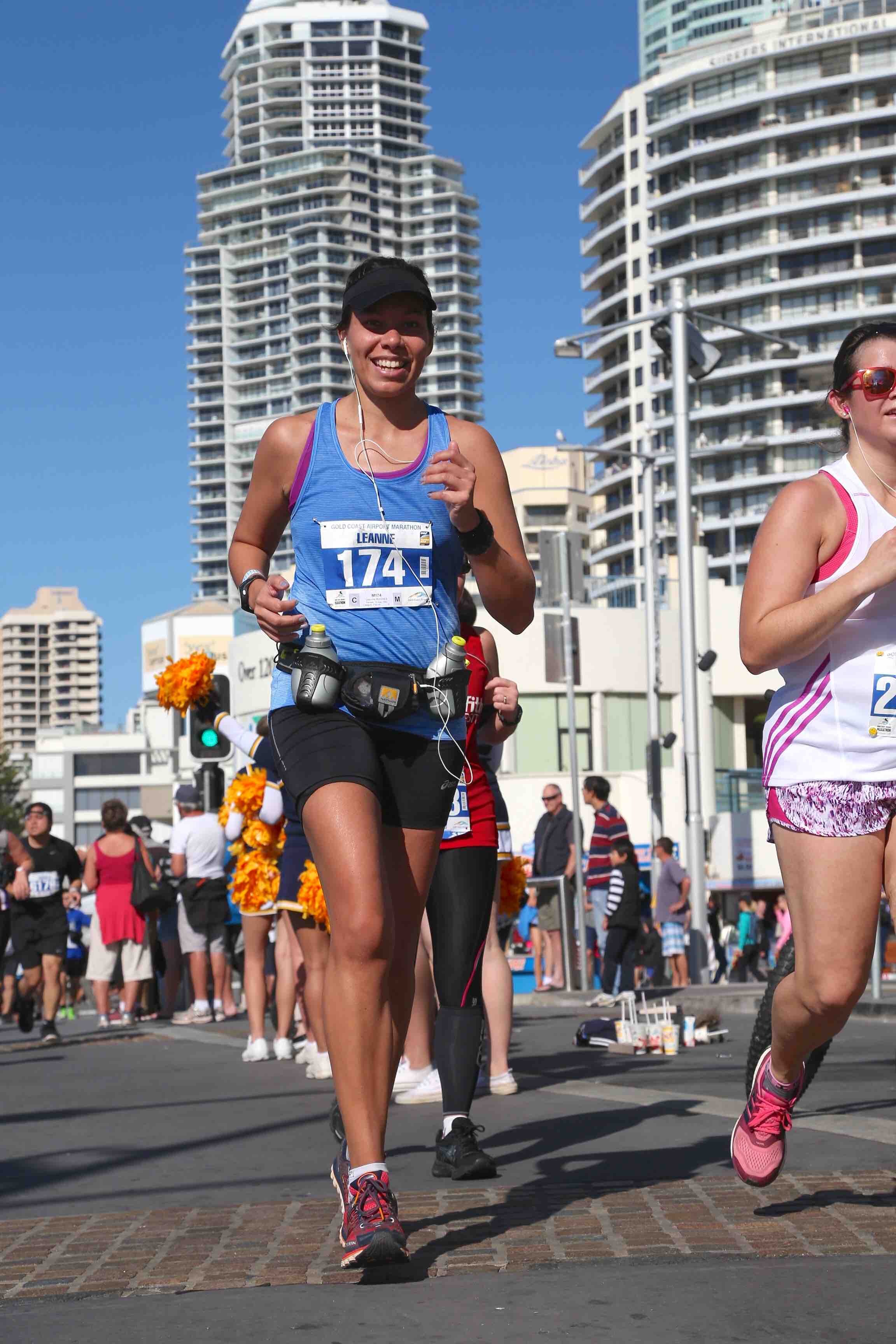 You need to start banking those kilometres on your legs. You don’t need to do pilates, swim, hike, or play touch footy. Just run. Bank those kilometres on your legs. I loved that concept of banking kilometres. And I banked thousands of kilometre on my legs in those nine months.My most recent podcast guest, Neen James agrees with this. If you listened to my conversation with Neen in Episode 26, you would have heard her mention the phrase ‘Time on your feet.’So my short answer to that question, ‘How did I get the confidence to speak in public?’, well it was really about banking that time on my feet as a speaker.That leads onto the next question:
How do I find time in my feet, so when a marathon-like speaking opportunity comes along, I’m prepared?
If you go through school and Uni, that’s a good start and there are opportunities there, like high school English class presentations or the dreaded group assignment preso at University.I’ve also always loved seeing others kill it on stage. I have always been fascinated by the power of strong delivery, and what brilliant presentation looks like. I guess the difference I brought, was to continually to ask myself, "What can I do that is different? Who is in the audience, what do they want, what is the hook?”When I really think about why I care so much about making sure my message hits… it probably comes back to my philosophy about how life is too short.In Episode 16, I spoke with Adam Mustoe about the Gallup Strengths Finder 2 and my second highest strength theme is Maximiser. The Maximiser theme is really around ‘Do you want fries with that?’ and taking advantage of opportunities…you get caught out sometimes, particularly when travelling as you want to cram and juggle everything into a day. How this theme plays out also is that if I’m given the opportunity to present in front of other people, I want to maximise that moment. I believe you are in a position of great opportunity the second you have more than two people in the room. Life is too short to have your time wasted by boring, irrelevant and un-memorable presentations. When you’re the one in front of that room, don’t waste everyone else's time.And that’s my real driver for doing things differently.
Sport played a role.
I was lucky getting into netball from the age of 10. Through the game, I’ve been given opportunities to speak in front of others at occasions from speaking in team huddles during quarter breaks, to club presentation nights and dinners.In University, I started coaching more junior teams and I believe being a coach had a significant impact on my ability to deliver a message succinctly and projecting my voice - particularly when you have quarter and half time breaks to do that and your audience are 13 to 15 year olds.My first official MC gig was as on-court announcer for the Queensland State League netball finals back in 2003. I called the teams on the court, thanked sponsors, talked through key highlights of the match. Through this, I learned about the importance of time-keeping, how to speak clearly into a microphone, and the realisation that the role of MC is so much more than just the delivery. There is a lot of background work involved in who you need to liaise with, what your backup plans are, etc. Now when you start doing this sort of stuff, the people around you hear about it, and that opened doors as an MC’ing at friend’s weddings.
If you’re ever asked to MC a wedding, please say yes.
For two reasons in particular:
- It keeps you off the booze for a few hours so that you can avoid a painful hangover!
- The skill to being a wedding MC is about really making it a personal experience. So this experience forces you to tailor your message -for the couple, family and friends. Having that first wedding MC gig again opened up more invites to MC other events.
Can you see from this trail how it all works?
If we’re relate speaking back to running, I believe those school, netball and uni presentations were 5km runs. MC’ing a wedding is a half marathon.And unfortunately, similarly to running, you can’t go cold turkey for 6 months and then expect to run at the same pace you did while training.
So how can you continue to get that speaking experience?
I know a lot of the listeners are split, probably about 50% working in a full-time job and 50% freelance. For those working, there are so many opportunities to put your hand up and deliver presentations from where you stand.While I was working in Marketing for a company called Wicked Campers, we were sponsors of the annual Backpacker travel expo in Melbourne. As part of the sponsorship package, the company was offered an opportunity to run some sessions on travelling around Australia.I put my hand up.In my role working in Government in regional Western Australia, we had a fortnightly Friday morning video hook-up with the other campuses in the region called Communication Corridor. 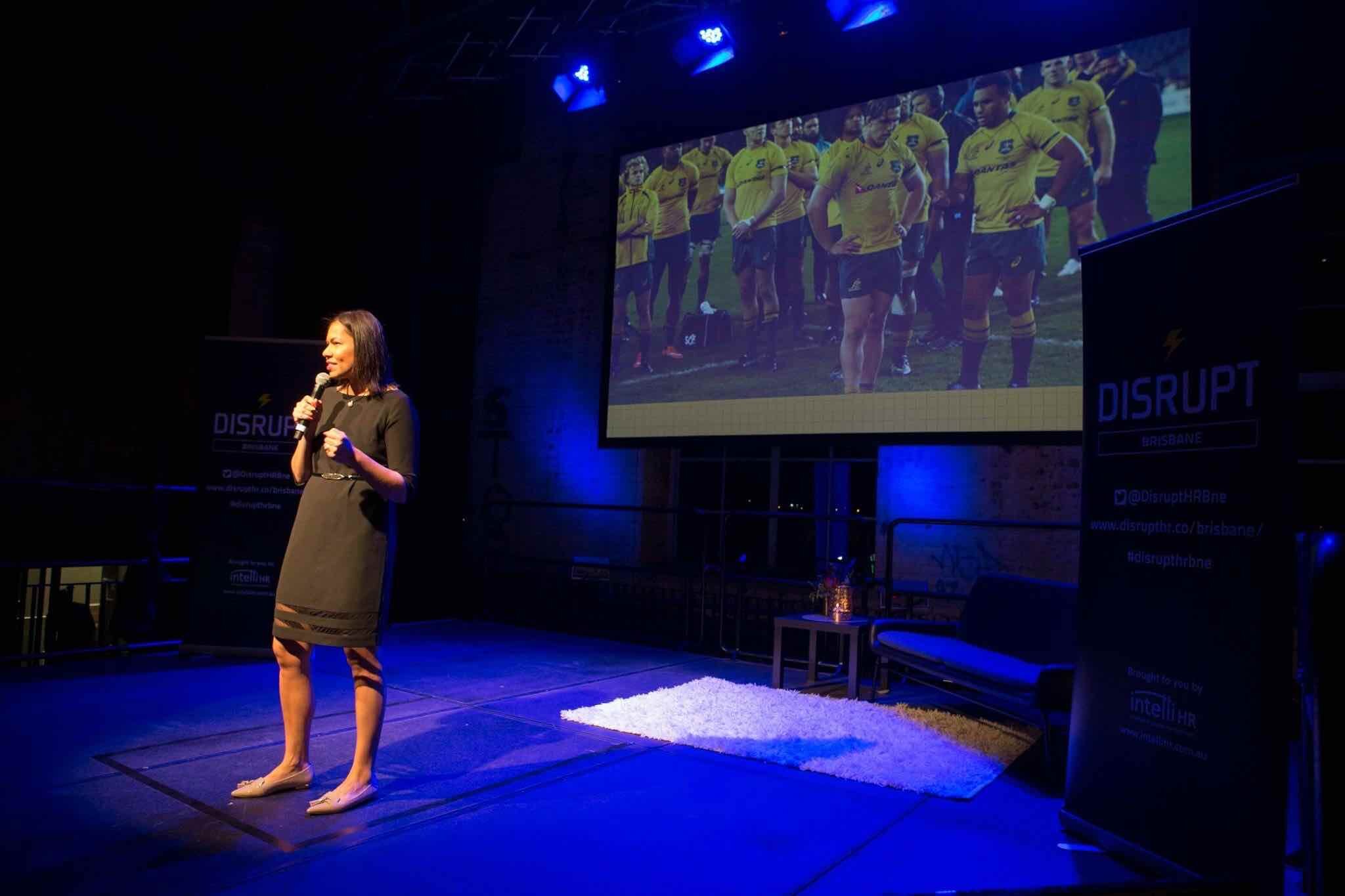 As I needed to share internal messages, I put my hand up and asked to be in the agenda, pretty frequently. I challenged myself to out-do my previous presentations over and over again.When it came to Friday morning, I also felt like whacking myself on the head and questioning myself on volunteering for these sessions and putting myself under undue pressure. It would have been much easier not volunteering and sitting in the crowd every fortnight, But, when we held a Professional Development week for all 200 staff in the region, guess who was asked to MC the event?In late 2016, I was asked to co-facilitate some leadership training in Brisbane. A few months later and I was onboard a flight to Canada to run the same workshop over there.
Time on your feet matters.
Not only does it give you more time to practice your presentation skills and experiment with content, but more importantly, you also get used to that feeling of uncomfortable-ness. You get comfortable with being uncomfortable. It also leads you to good things and great opportunities that you would never have realised. Every time you step up, it’s an opportunity for you to market yourself and build your personal brand. You get luckier. I think the best analogy that sums this up is the one I heard on Episode #49 of the Jordan Harbinger show. In this episode, Jordan chats to Alex Banayan about mentoring. In fact, its so good, I am going to share it for you below:There's no denying that luck plays a role in anyone's success.But it was in conversation with then-Microsoft executive Qi Lu that gave Alex a real understanding of lucks role in success.Qi Lu had grown up in a village outside of Shanghai, China that was so poor to the extent that there was only one teacher per 300 children and people developed deformities from malnutrition. Being very smart and working very hard, Qi was making seven dollars a month by the time he was 27. Like so many other intelligent, hard workers in China, he dreamed of a better life in America — so, he needed an advantage over the competition.As luck would have it, Qi had the opportunity to speak to a Carnegie Mellon professor lecturing at his local university. The professor had been so impressed by the questions he was asking and the papers he had written about the professor's area of expertise that Qi was offered a full scholarship to Carnegie Mellon.How did luck play into it? Under normal circumstances, Qi would have ridden his bicycle to visit his parents on that particular night of the week — but it was raining, so he stayed on campus, attended the lecture, and happened to be the most well-informed scholar in the room on the topic at hand. Thanks to his extra months of productivity, he was prepared when opportunity knocked.To Alex, Qi imparted this nugget of wisdom: Luck is like a bus. If you miss one, there will always be the next one. But if you are not prepared, you won't be able to get on.This encouraged Alex to do a little more digging into the science of luck, and from the research, it seems one thing is clear: luck is a mindset, not a phenomenon.
When I again reflect on that question, how did you get the confidence to speak in front of large groups?
As you can see, it’s an evolution piece underpinned by three things:
- Bank that time on your feet.
- Put your hand up and find the opportunities.
- Every time you have an opportunity to present, challenge yourself to stretch and outperform your previous presentation.
The second piece of advice from my running coach, Pat Carroll was not to be concerned by the fact that your longest training run does not take you near 42.2km. Save yourself for the marathon. Prepare consistently, stay injury free, and your solid preparation combined with race day atmosphere will allow you to go all the way.Nothing will prepare you for that marathon moment in front of hundreds of people with the spotlight on you, but you’ll get pretty close by banking the thousands of kilometres prior, and you can be confident to accept the opportunity, given the success you’ve had in the past.
I'd love to hear how you got your speaking experience.
How will you find that time on your feet? Where are you banking your speaking kilometres? Comment below!

First Time Facilitator podcast transcript with Neen James (Episode 26)
Here's the episode transcript with Neen James. Alternatively, you can listen to my First Time Facilitator conversation with Neen.
Leanne: Okay, I'd like to welcome to the First Time Facilitator Podcast on the line in Pennsylvania, Neen James.
Neen: G'day! What a treat to be able to serve your listeners today, Leanne.
Leanne: Oh, that's a lovely attitude to have Neen. Thank you so much for your time. As I mentioned you're on the line in Pennsylvania however, you're from Sydney I believe.
Neen: True story. So I live halfway between Philadelphia and New York City on the East Coast and so I didn't even know where Pennsylvania was to be honest with you. But if you look at a map of the U.S., it's the squarest State on kind of the right-hand side of the map. If you're trying to look for where I am, so imagine moving from Sydney City so we lived on the water, we had a beautiful apartment look at the Sydney Opera House and the bridge and then I moved to Doylestown, Pennsylvania.
Now let me just give your listeners a bit of a picture of what that is. That is like perfect Suburbia. I'm talking 2.4 children, a truck a minivan and people even mow their lawn with stripes in it. I mean I moved out to Suburbia and yet I loved it. It's such a different way of life but I absolutely love it.
Leanne: I can see already how impactful you are as a speaker. I love it you launched and tell a story and we're very descriptive about the differences between those two locations and I don't know if I could give up the view of the Opera House to be honest but I'm so glad it did great transition for you.
Neen: Yes, exactly. I fix that by coming back to Australia because I still call Australia home obviously. I fix that by coming back at least once or twice a year. I was recently back there, my baby sister moved to Sydney with her two little ones so I have the privilege of just being able to hang out in all my local spots. To me, there is nothing more amazing than being able to run across the Harbour Bridge and then grab breakfast at my favourite little place and I'm sure people listening when you think about whether it's your original hometown or things you love about your hometown.
Now, there's so many ways you can engage people by using things like story and sharing personal observations or letting your audience know just a little bit about you that peek behind the curtain that every audience remember once and it's just another engagement strategy as a facilitator.
Leanne: That's brilliant. Thank you so much. Wow, we would try in there. I think that's a really great advice for our audience. I'd like to ask you, I've seen on Instagram your hashtag which is #happylittleozzy. How did you how did you end up coming from Sydney and absolutely just killing it on stages in the US which I hear is a very sort of competitive market when it comes to corporate speaking and training.
Neen: I followed the love of my life. So I have been married just we recently celebrated 29 years married. Now, I know that your listeners I sound like I'm five. But I promise I have been married pretty much my entire life and I followed my darling here and we created a life here about 14 years ago now. And what was interesting was in Australia I had a corporate career so I worked in retail, banking, telecommunications, and the oil industry and as you probably know Leanne, not a lot chicks in oil in ours and then I set up my own company just before I left to move to the US.
So I guess I'd been sort of playing with being an entrepreneur and I set up a training company when I left corporate and so I did that for maybe two years. So I didn't really have a very established successful business but I was doing okay and then I moved to the US. Now, what's interesting about Australia versus US in the corporate speaking market is the Australian market is so small, so you've got to be really good because it being that there is only so many events that are occurring and every meeting planner talks to each other, that's the beauty of the Australian market, right? So you've got to be good.
What was fascinating to me is when I moved to the US is that the market was so big, so how on earth do you stand out in an environment where there are literally hundreds of choices. I mean there's literally hundreds of conferences in Vegas alone on a weekly basis and so what I realized was that this whole idea of being Australian was actually a novelty.
Now, as an Australian that was really challenging for me to actually promote that I was Australian and I'm sure Australians listening to this will understand it but for your US listeners Leanne they might think I'm a little crazy. But I always get called like something that people remember, my audiences remember and so I had a very dear speaker friend his name is Scott McKain. Someone I look up to, definitely one of my dear friends and speaker role models and Scott McKain was one of the people who said to me, “You have to play up the Australianness of you.” and I was like, “Like tell people how to seek a day?” and he was like, “Exactly.”
So it's really funny that sometimes these things as facilitators or speakers they’re so a part of your core being that you don't actually realize how much your audience loves them and so whether you're in the mining industry, whether you're in HR, whether you are in a corporate, whether you're in non-profit, all the different facilitators that listen to your podcast. It doesn't matter what industry you're in. People want to know who you are and when they have the privilege of being in your training room, you want to create an environment where they get to have a little conversation with you. So I followed my honey and I'm so glad I did because we have the time of our life here and working in the U.S. is amazing but I also make sure that I keep my Australianness in my work as well.
Leanne: Yes. I think it's really true what you say about I guess because we're on our own head so it's really hard for us to see what is unique and different about us all the time and sometimes does take a conversation with someone else to say, “Do you really think that this is what sets me apart?” Just a sort of reflect on that and clarify what makes you unique. Really great point about that.
Neen: Yes.
Leanne: Yes. So what are the differences between because of your Australianness in the U.S. you mentioned that I guess in the States that's not really a problem with kind of finding or talking about what sets you apart. What about the audiences over there, is there a bit of a difference between the audiences in the US and the Australian market?
Neen: I think there definitely is. If you think about Australians and the way that we have a very, I think our core belief is very different to America and let me explain what I mean by that. As an American, and I became an American citizen as well so we have dual citizenship. It was very important to me that I honour both countries that I loved. But in America our core value is freedom and by that I mean, freedom of speech, freedom to bear arms and even if someone says something stupid beside you they have freedom of speech and so you need to be able to listen to that and so the core value in America is my belief is freedom. The core value in Australia, I believe is equality and that is that we want everyone to be treated equally. We have public health, we have public education, and we love the Aussie battler who pulls themselves up by the bootstraps and then make something of themselves.
In the U.S. they are very confident in the way that they promote themselves, their activities, where they live, the car they drive, they even have stickers on their cars of where they send their kids to school. I mean there is such a wonderful pride that they have. In America, if you do a great job you'll get a standing ovation and that's a fairly as a keynote speaker, that's a common and delightful wonderful thing that audiences do here.
In Australia, I don't see that as much and so I often mourn U.S. because we're going to Australia. Hey, don't be surprised if you don't get a standing ovation from Australians. They think you did your job and you did it well but they're not going to necessarily show you that in the same way because we value equality in Australia versus freedom. Does that make sense, Leanne?
Leanne: Yes.
Neen: So I think knowing that the core values are different, it means that you approach audiences differently. So for example, here in the US I might really emphasize how when they in my case my body of work is all about attention. So how do they grab people's attention, how do they keep attention, how do they pay attention and so I would be talking about, how that's going to make them better at their work, in their home, in their community. That same message would resonate in Australia of course but the stories I would use for the engagement would be different. The audience interaction I would use would be different. The exercises I would use would be different. Australian audiences and US audiences have different core values and belief systems. They both want to make an impact on the world, they both want to be great at their work but the way you might deliver to those audiences is different.
Leanne: Yes. I really like talking about this sort of cultural mix as well. Recently, I was in Indonesia and I was sort of watching a workshop pilot over there for the company I work for. At the beginning of the workshop it is like 8 o'clock in the morning, we've got these people in high-vis mining gear doing a bit of a war-cry in Indonesia and I just thought there is no way that anyone and Aussie bloke in Australia would be doing a war-cry about the company 8 o'clock in the morning which I thought. So yes, it's fascinating and some of the activity that didn't think would work over there worked because of the audience in their beliefs. So I think it's a really great point that you bring out.
I love to find out, this is a question that you've just inspired me to ask. How did you feel when you had that first standing ovation in the States was it a bit surprising for you and overwhelming then and also bloody amazing?
Neen: Yes. I think that it's so amazing to me that people share their recognition in different ways and so I'm always honoured when I receive a standing ovation but I also think that people express how they appreciate you differently, right? So some people might complete those smiley sheets in the evaluation, right? and they might give you a 5 out of 5 and that's their way of experiencing that they think you did a great job. I have other audiences where they will line up for literally hours to talk to me and have me sign their books and that to me is like truly one of the coolest, most amazing experiences ever. The people are literally willing to stand in line and wait to have a fantastic conversation with you and take a photo with you and that to me, I don't find it as much overwhelming as I find it totally fills my heart. Like I'm just I am absolutely astounded that people would do that but I also believe that my approach to those situations is my only job Leanne is to stand in service of that room of people, of that line of people, of the person I'm standing and talking to.
So because attention is so important to me, I want to make sure that every person that I have the privilege to serve is feels like they're the most important person to me in that moment whether it's the audience or the individual or the client or the sound engineer that's putting on my microphone. I want to make sure that every interaction they have they feel like they are getting the attention that they want and need and deserve. So I think it's an amazing opportunity when you get a standing ovation it literally does blow your mind and that's incredible but it's never expected. I've never ever expected that and I think for me, what's more impressive is when someone tells me what they're going to do as a result of my keynote.
When someone says, “When you said this, when you told this story, when you challenged us in this way, it made me do this, it made me think this, I want to do that.” and that's the kind of impact you can have as a facilitator of a conversation when people are making behavioural shifts that's far more important to me than a standing ovation.
Leanne: I agree. I think that's the most rewarding part of what I do as well is definitely getting that feedback months later saying, “Hey, I remember this point that you said and as a result this has happened to me.” and you think, “Wow, what a position we're in that we can do that.” and hopefully we're using it to drive positive change. Now, you talk about attention, I'd like to talk about your book Attention Pays and in this, you mentioned that there are three types of attention- personal, professional and global. I was wondering if you could explain to our audience what those three types are and how they can help us or just knowing that can help us when we're building up our facilitation work.
Neen: Absolutely. So the idea of Attention Pays is that when you pay attention it's going to drive profitability, productivity and accountability and when you think about us facilitators people who are doing training sessions and consulting in the world. One of the things that I want you to write down is that these three ways you pay attention, there's something important questions around them. When you think about personal attention that's about who deserves your attention and for many of the people listening to this that's the people in the room that you're training and facilitating, it might be the people you share your life with. If you want to accelerate your personal attention, you've got to understand who deserves your attention and that's about being thoughtful, we're going to come back to that one.
Professional is about what deserves your attention, what are the activities, the events, the projects, the key performance indicators, what deserves your attention, that's about being productive. And the third way we pay attention is global attention and global is about how you pay attention in the world and that's about being responsible and being a contributor. So it's personal about who deserves your attention and being thoughtful. Professional about what deserves your attention and being productive and global about how you pay attention in the world and being responsible.
And when you think about this in the context of someone who is working in consulting or facilitation, what you want to consider is that personal attention is often those one-on-one conversations, it's their conversations in the break. It’s you making sure that you are treating every person who's in the room as your most important event, your most important speech. I remember when I first started in the U.S., I drove for like six hours to a job, it was a three-day job, I had two people in the training room, there was a whole comedy of errors that occurred with this client and for three days I work with two people.
Leanne: Oh, my gosh.
Neen: But I had a curriculum that I had agreed to deliver, I wanted to stand in service of those people. We had an amazing time, it was really hard work but I turned it into more of a coaching-consulting conversation.
Now, I understand if we thought that they were actually going to be 52 people in the room and there are only two people in the room, imagine the adjustments we had to make. But what I've always believed to be true is whoever is in the room, is meant to be in the room. So when you think about personal attention it extends into your personal life as well so who in your personal life does deserve your attention. One of the challenges of choosing a career like consulting facilitation or training or in my case keynote speaking, you are traveling the world literally which means you have a lot of days away from home from people that you care about. So when you are home, are you giving those people that you care about your attention? Are you making sure they know they're a priority?
When it comes to professional attention as a consultant, as a facilitator, you want to think about what's going to really help you move your business forward, move your skills forward, move the day forward because one of the things I realized, Leanne, is you can't manage time. Time is going to happen whether you like it or not but you can manage your attention. So understanding where you're putting your attention and how it's going to move your audience's objectives forward, how it's going to move the business forward, they're the things you want to focus on.
And then global because I'm Australian, I obviously had to have that in there because it may not everyone is environmentally aware, not everyone is caring so much about what's happening in the world. But many people care about what happens in their community, in their local community, in their church, their temple, wherever it is. So global attention is about how you're really showing up in the world, how you're paying attention in the world and making sure you're being responsible and contributing to your community or to the greater planet.
Leanne: Great. So with these three types of attention is there kind of like a ratio of how we should spend our time? What do you find that say when you're starting out in your facilitation or a speaking journey that you focus a lot more time first on your personal attention and then look at deep down the track then start building at more professional skills or do you need to have a balance of all three at all times?
Neen: I don't think you can prescribe anything for anyone because I think the people that are listening to a podcast have such diverse experiences and backgrounds, right? I was so fortunate that in Australia I was privileged to have been on my feet and delivered training and spoken at best practice conferences and spoken at the leadership retreats and updated the board. So I had time on my feet not as much as I needed to be a professional speaker but I had an experience in that regard.
But I was also so fortunate that I work for companies who are willing to invest in me and send me to training programs and allow me to do my MBA and so it's a really hard question to ask as far as how you're going to split it. What I do believe though is you can be a phenomenal facilitator, you can be a fantastic trainer but if you choose to go out on your own and deliver it and have a business of your own doesn't matter how good you are on your feet, doesn't matter how engaged your audience is, if you don't know how to run a business then you don't have a business.
So I learned as a professional speaker, it didn't matter how great I was on stage even though I get fantastic opportunities where people audience members would walk up and say, “Hey, can you come and speak it out of them?” I still have to sell a speech, right? My product is a speech and the people listening your product is maybe the training program if you're out on your own. Now, if you work with a corporation that's a little bit different in that someone is paying your salary on a regular basis and so you're very fortunate to have that opportunity but for people who are listening who might be going out on their own, who might be running their own business or in practice then you have to also be good at focusing your attention on building the business and building your skill set.
Every year I invest heavily in my own development, I'm part of the National Speakers Association, I serve on several boards, I attend programs, I work with a performance coach for two days every single month on my speeches, I have a business coach who helps me with the actual running of my business. So I'm very specific in my own development because if we're going to ask others to invest in themselves, I believe we need to role model that too.
Leanne: Oh, my gosh. I want to give you a virtual high five. That's a 100% agree. I love that you're not resting on your laurels because you've really made it to an exceptional stage over there and to hear that you're still investing all this time on a monthly basis to improve your skill. I think that's very inspiring. So thanks for sharing that.
Neen: Oh, my gosh. I’m in working progress like everyone who’s listening to this episode. So let's just say there are no laurels for this little Ozzy, okay? I think what happens is we often watch other people, we see their lifestyle, we see what they've accomplished and we think, “Oh man, how am I going to do that, I'll never be able to do that.” and by the way, I have people in my life that I look up to in that same way.
But what I've realized is that it's those daily decisions that you make that affect your week, which impact your month, which then add up to your quarter, which then add up to your twelve months. I mean, I think it's those daily decisions we make, I don't feel like I will ever make it here, I don't know what that means. Do you know what I mean? I think that's a crazy thought because there's always the next opportunity, the next level performance, the next skill to develop, the next way to challenge an audience and what's fascinating that everyone listening to this is every audience is so different.
So it doesn't matter how good you are, you can have an audience that blows you away and there fun and they're amazing and engaged and then you can have an audience the next day and nobody wants to talk, nobody wants to play, no one wants to respond to your games, no one wants to do Q&A. I mean, everyone listening to this call and I believe me, I've had them those audiences can be so diverse. I don't know if I can ever make it in this business but I can really try to get better every day.
Leanne: Yes. I think that's what makes it such a really great industry to be in and it was that variety because when I started this podcast I thought I was unusual and that every time that I was running a workshop, even though it might have been the fourth or fifth time and I was confidently content. The second that the audience changed, I just got extremely nervous again and thought I really need to start reinventing this and focusing on who this audience is and is that normal and I found out through the conversation with really experienced people along with what you've just said that is normal. So we just have to keep using our craft and keep reinventing ourselves and I was hoping for that sort of magic potion but doesn't seem to be the case.
Neen: Yes. Oh, my God. It’s so true. Oh, honey when you find it please tell me about that. But I remember there is a phenomenal speaker, one of the top 25 speakers in the world, his name is Matt Church and he's based in Australia out of Sydney and Matt Church gave me advice very early in my speaking career and he said, “The reason that we get nervous is the centre of our thought is wrong.” Meaning what we're focused on, right? And he said, “Often people get nervous because they're thinking about themselves.” right? We think about, “Oh, my God. Are they going to like me? Have I done enough preparation? What if they ask me a question I can't answer? right? So we get nervous because the centre of our thought processes ourselves. Sometimes we get nervous and we move on a little bit and we think, “Oh, my gosh. These people are so qualified like 600 PhD people. What am I going to be able to teach them?” right? And so we get intimidated by the audience or maybe we get nervous because our boss is in the room or people with super big fancy titles are in the room and that's still wrong because the centre of our focus is wrong and if it's not about you and it's not about them.
What Matt explained to me was, it's really about us, it's really about creating a conversation not doing a presentation and when I learned that amazing ninja trick, it totally changed my nervous energy, right? So if you think about it as a facilitator, it's not about you and it's not about them, it's simply about a conversation you're going to create in the room and that's very liberating and I've relied on that many times when I get into my head and I think, “Oh, my gosh. I'm nervous.” and then I think, “Huh, I'm only nervous because I'm worried about myself and I'm not standing in service of this room.” And so it's my belief that when you stand in service, you can't be nervous and that is something that I've had to remind myself of so many times Leanne.
Leanne: I think I'm going to have something like that printed on a poster and pop it up. I think they'll be useful for everyone “When you stand in service, you won't be nervous.” I love that. Thanks for sharing that quote from Matt. Are there any other sort of who are your other speaker role models, you spoke about Scott and Matt. Anyone else that you can share with that our audience might get some inspiration from?
Neen: You know what's interesting to me is my role models at a very big variety of people and some are known in the US and some are known in Australia and Matt Church would be my number one. I had the privilege of learning from him earlier in my career until to this day, he still remains one of my favourite people to sit in the audience and watch not just because he the way he thinks and his brilliance. The way that he is so strategic and very clever in audience interaction and keynote speaking but because he's such a great human and adores his children and loves his wife and runs a successful practice. I feel like he's the whole package and so for me my role models for a variety of reasons.
I love people like Mark Sanborn, who was a brilliant leadership speaker because he's so eloquent on stage. He’s brilliant at what he does, he has longevity in the business. He’s built a very successful speaking practice and he has quality books that he publishes. So he's someone else that I really admire.
Jay Baer is a marketing speaker that I would encourage people to investigate. Jay has a wonderful energy about him, a high energy, he has great sound bites, he has fantastic social media presence and his quality of product is fantastic too.
So when I think about some of these people that I love, Tami Evans is a fantastic, hilarious speaker in the US. She is loved by audiences, she's always getting standing ovations and she's one of the funniest humans I know and Tami Evans is brilliant at audience engagement.
Judson Laipply is also one of my most favourite role models and Judson people may want to, they want to Google, Evolution of Dance. He was the very first YouTube viral video when YouTube was just starting and I think he remained the highest viewed video until that Gangnam Style video came out or something like that but Judson, I am constantly asking his advice on more audience engagement techniques, more interaction. He's a brilliant at that and so I have so many different role models for so many different reasons.
Connie Podesta is a phenomenal speaker in the US who speaks in front of thousands of people, no slides, just her in her microphone and she is hysterical, she's brilliant at bringing in people up on stage and having fun with them all at once. So for so many reasons I have so many different role models, Leanne and I think often what I'm looking for is “What do they do that is different? What is their mad genius? What is their one thing that they're doing phenomenally well?
I have a dear friend, Tamsen Webster and she has a product called the Red Thread Process and watching her break down someone's ideas so eloquently and presenting it back to them in a way that the world will understand it is phenomenal and she was the executive producer of one of the most successful TEDx franchises here in the U.S.
So all these people that I'm listening, I encourage your listeners to go and check them out and what you'll find is they're all brilliant at their area of expertise and that's how I look for role models. Are they good humans? Are they great on stage? Are they the kind of people who walk their talk who are the same on stage as off stage? That's my kind of role model.
Leanne: Wow. Thank you so much for all those names and we'll definitely link to all of them in the show notes as well. When you're watching someone that's just killing it and doing something a bit different on stage and you think, “Oh, I like what they're doing. I wonder if that will work for me.” What's your process then, do you try it yourself launch it in a workshop is as a, you just practice it out or how do you incorporate some of what they're doing into your work?
Neen: My first step is always to ask them what they were thinking when they did it. So I would say to someone like to Jay, “When you did this particular thing, tell me about that.” I would say to Tami, “When you set up that joke and then did the call-back, explain to me that process.” So I'm always looking at it from a process point of view. I will never attempt to replicate anything that my friends do on stage because it is their crazy genius, it's their brand, and it’s what they're known for. But what I'm really keen to understand is why do they do it and what process do they follow to achieve it.
And for someone like Tami Evans who was a professional actress so her training is in acting and she understands the power of that and she knows in prove and she has that ability on her fate to be so wishy. I’m not funny but I have the benefit of being an Australian so I am self-deprecating humour until the cows come and so that's my only form of humour. Does that make sense to you, Leanne? And whereas she can actually tell the jokes, she can tell a funny story, she can tell a story the exact same way with the rhythm and the beats and the laugh lines because she can remember lines because she was an actress. I can't remember things to that point, that's not something that I'm gifted with and so what I'm always looking at is not what I can do that they do but why do they do it and what's the process that sits behind it. Because then what I can do is go, “Okay, my version of that might be this.”
Now, the other thing that I would say to people who are listening from a facilitator point of view is there's so many great facilitators out in the world. Sometimes there are things you can replicate. Judson Laipply that I mentioned earlier, he has this really fun icebreaker and I was never a big fan of icebreakers, I'll be honest with you and I used to cringe a little bit every time someone would say, “Oh, we're doing an icebreaker.” But I saw just this one thing and I was like, “That is so freaking brilliant.” and he said “Use it, just use it, just make it yours.” and he said it wasn't his original material we couldn't find the source of it but it was so fun and the first time I did it was felt clunky like I was like, “Well, this Judson did it so much better than me.” But he'd been doing it probably 20, 30 times before I ever saw it. Does that make sense to you, Leanne?
So I think sometimes there are some exercises out in the world that others do better than you might but sometimes it's just giving it a try and doing it in a safe environment where people feel like you've created an environment that they can trust you and that it is safe to try things. Because my role as a keynote speaker is I am paid by the client to deliver a key message, that's not my training ground, that's not my opportunity to try new things. I'm going to try new material when I'm not speaking for a fee, when I'm speaking for free or when I'm with some friends. I'm going to test a story out as opposed to testing it on a main stage where I'm being paid to deliver.
Leanne: Yes. Absolutely. Totally get that. I've got to ask you, can you share what Judson's icebreaker was, I'm sure our listeners I'm hanging out for it.
Neen: So you know a term a scary story, right? So when people tell a scary story, Judson asks people to share a scarry story. Tell us about the scar that you have and if it didn’t reply to the removal of course, show us your scar and tell us about it and I have watched hundreds of people I mean very intelligent people just crack up telling their stories and so I loved it so it's called a scarry story instead of a scary story.
Leanne: I love that too, gosh! I'd be scared to share mine if it goes back to university days but---
Neen: But isn’t it funny that maybe at least you could think of something. Isn’t that amazing to you?
Leanne: Oh, yes. I had that, the second---
Neen: Everyone has a story like that.
Leanne: Oh, it's brilliant. That's great. Neen, I just want to go back to the attention and the professional attention because I went onto your website and I opened your speaker kit and I just love the colour, I love the words, I love the testimonials, everything about it was fantastic. How long did it take you to get to that stage? I mean how many versions are we talking here? It's just a beautifully put together kit that I think would be a great template for people to sort of use as a base but how did you sort of craft this and what version is this?
Neen: Oh, gosh. I want to say it’s like version 50,000. I think what happens is, one of the challenges with having the career that I have is that I speak about attention. Now what you are probably sitting there thinking, “Well, why is it a big deal?” Well, because people pay attention to the way I do things and so in my world I need to make sure I'm always doing things a little differently or the best version I can humanly afford and so I have a designer that I pay a bazillion dollars to and I say, “Here's my vision for this. I need it to be different to anything that is out there. I need to make sure it is better than anything I've ever seen before and I need to make sure that it quickly grabs the attention of my meeting planner or my bureau partner who is considering hiring a keynote speaker. It also has to represent my fee level.” I'm at a certain fee level in my career now where I can't just have a one-page word document with a logo on it because if they're going to pay a premium, they also want to make sure there's a consistency in all of my collaterals and so I've always invested very heavily in the marketing side of my business because my fears reflect that.
So one of the things people need to consider is not that they would copy that but they would look to say, “What's my best version of that? What's something that I can do that is really great?” Some people that have phenomenal speaker kits, Matt Church is one of them, Mark Sanborn is another one, Sally Hogshead is another one, where they had created something very different but unique to them and so when you're creating your own facilitator kit whatever it looks like. You want to think about what is the best representation of you.
Now, my brand colours were always pink and purple and the purple was very much to offset the pink and it was a hot pink and I stayed very true to that colour palette for many years and when I published my book folding time. I went with a red and grey colour scheme and started to move out of the pink and purple colour palette but what I've done with attention is really driven home the red colour palette. So my website has that throughout the red and the grey a very consistent colours and so what I wanted my speaker kit to do was combine the pink and purple of the past with the grey and red of the future that's what you have that you've seen.
Leanne: Got it. Yes, it look very impressive and interesting you hear that you still invest all those dollars to I guess now that you talk about the level that you're at as a speaker. You have to build everything else up around it as well. Particularly like you said as you are in that field of attention and branding and being out there so that's important.
Neen: And I was just talking to my designer today and I said, “Look, I need an industry-specific version of this particular one sheet for this person.” and because I work in media I do a lot of work with the large some of the movie studios and the television side of the business here in the US and so when you think about the business they're in, they are in the business of attention and so I needed something very quick but there was very elegant that would grab their attention and so I have a different version of media kit for the actual media that I work with. I also have a media kit for my book because I do obviously some TV and radio work and things like when I do a podcast I can just send my media kit to someone which says, “Here's some questions we could talk about, here's some things about the book.” So this level of collaterals all needs to be very consistent and so what I do is I then customize it for industry.
I work with credit unions they have a different budget than my pharmaceutical clients which have a very different budget to my media clients, which have a different budget to my hospital clients and because the industries are so different they're looking for different variations of my messaging. They have different challenges whether they have members or patients or clients or customers, they call them all very different things and so my one page is that I sent them the speaker kit conversions I have for them have their language in it not my language and so that's another thing you can consider if you want to customize is having templates that are customizable based on the type of industry that you serve.
Leanne: Yes and I think that a lot of our facilitators we do that when it comes to the training content. We can make sure that we contextualize the images and everything that we're using but I don't really think anyone's thought about contextualizing the collateral that we present, so thanks for sharing that. Now, with the range of clients that you work with, you must have presented at some pretty amazing locations around the world. What's the best conference venue that you've presented in personally?
Neen: Oh, my gosh. You know it's so hard to compare, right? And I'll tell you why I like different kinds of stages. In Vegas you know the stages are beautiful, they're often full production events where you have an amazing crew and the staging is beautiful, right? So those are those great times where you hope you have a videographer who's capturing like how kind of impressive it all looks, right? And then I have these clients who have boardrooms on like the 50th floor of a sky rise in a magnificent city like New York or Philadelphia and that's a very different kind of location for me and yet one that I love.
One of my very senior leadership teams for a media company that I work with. They took their team on a retreat, I was this speaker and invited me to stay with them. It was literally in the woods, it was one of the most exquisite Spas I've ever been in my entire life. That was my venue so it's really hard for me to say like what my favourite kind of location is. Sometimes I'll be like speaking in a beautiful boardroom in Seattle and looking out over the skyline in the water and then other times I might be in a tiny little room of the FBI where someone's following me to the bathroom where I'm not allowed to be on my own. Do you know what I'm saying? Like so it's really hard for me to choose a location.
You know I once spoke on a navy shipyard where they built submarines and so I had a handler that basically went absolutely everywhere with me and I got to speak to everyone from the person who runs the entire shipyard and their leadership team all the way through to people that were building the submarines that were welding the submarines. I mean it was such a privilege to be there and do that. So no day is the same, no conference location is the same, sometimes the hotels all start to look like. I don't have a particular favourite but what I do love is that every audience is so different, every venue is so different, and every sound crew that I get to work with is very different. That's to your point that you made earlier today Leanne, that's the beauty of this profession.
Leanne: It is. I would love to hear that FBI story sometime but will leave that for another day. Just incredible and I think you do place some of these images or locations that you're at on your Instagram account too. So encourage listeners to follow you there, it's always exciting to see what you're up to and what time zone you're in every day of the week. Now, we've spoken a lot about tools and tricks for first-time facilitators and how they can gain attention, some speakers to watch out for, even some great icebreakers and really it's all about being of service to your audience and to build a great conversation on the day. Do you have any other tips for our first-time facilitator audience that you'd be happy to share?
Neen: Yes. I mean I love to facilitate a conversation, doesn't matter if there's 10 or 5,000 people in a room. I will always default to the role of facilitator because it's what I know it's in my DNA and it’s how I love to have a conversation. So some of my favourite techniques are things like doing hot seats bringing people out and I've done this in front of a thousand people. You choose someone out of the audience, you put them on a chair and you play with a flipchart, you ask them some questions and present them back as brilliant. I love doing town hall type events where I would interview a leader from the company and as a result I would get the audience to also share particular questions, things that are on their mind but I'm controlling it as the facilitator. I love doing Q&A in a very different way, instead of going around the table or around the room. I like to make sure that there's some alternative ways to do that. I love getting people to help me co-create the agenda. So the beginning of sessions, I love to ask them what they want to achieve today and create an agenda in front of them.
Now, 9 times out of 10, Leanne I have the same agenda items they do but when you can talk in their language and they're requesting the things that are most important to them by co-creating an agenda, it's a really powerful way to make sure that you customized that particular training. I love setting up accountability partners in the room so that people have to declare what they're going to do as a result of the training. I ask people to share with their accountability partner something they can't stop doing, something they can start doing and then I encourage them to check in with their accountability partner in 30 days. There's so many different ways I love to engage audiences. I get them to take photos and share them with each other. I get them to do all kinds of things where they feel safe that they're sharing with someone else so sharing with a room or sharing with a group of people but they feel like they can apply everything as soon as they leave. One of the best engagement techniques is to keep it really practical so as soon as they leave your workshop, they can share with someone else what they learned and they can implement it in their everyday life.
Leanne: Oh, wow! Just tons of useful information there so thank you for that. I agree with the accountability partners, big time! I think we all need one of those in our lives, if not a few to cover all the different aspects of what we do. But personally, I just love your passion for this field and everything that you've shared with our audience today. We could have spoken for hours, I think there's so much to cover. I want to know what systems do you use and how you make all this happen and how you actually do all this every day, it's incredible. But time is life sink. So I’d like to ask and where can people find you, Neen?
Neen: I believe the easiest thing is if you just search me on social media. I'm so fortunate there is only one Neen James and so one of the things that you'll find is Twitter is where I have a lot of conversations with my clients and my audiences. Instagram is the peek behind the curtain of my life. Neenjames.com you will find hundreds of articles you can download for free and some of the resources that you have mentioned to your listeners today and you'll also see that if you go to my blog, you'll find there's a lot of articles written there for people who want to be professional speakers and so whether you choose that career or not you might do a search for that and you'll find some of these amazing people that I've talked to you about and you'll see resources there that I believe in as well. So hopefully that's just some places you can start. You may also want to see get your hands on a copy of Attention Pays and see if you enjoy it as well.
Leanne: Absolutely. We'll pop a link to your book and all those resources in the show notes but I also want to share with the audience. So I heard about name through Michael Ports Steal the Show Podcast and you've been on and introduced with him.
Neen: Oh. I love him.
Leanne: Yes. I can tell you guys love each other. The conversation, like I'm cracking up in the car listening to you brave talk. I've got a lot of value, a lot of value out of it. There's one episode in particular where you talk about conceptual models and you guys do a deep dive on that and I'd love to share that with our audience I think that's really useful too. Didn't have time to talk about it on our show but that's fine because there's so many other resources that our listeners can access and Neen I'm just so grateful for your time and your energy and all the information you've provided today and just through your book and your blog and all your conversations. It's just wonderful to see an Australian doing so well over there and thank you so much for your time.
Neen: It's my privilege and the great thing is Americans love an accent. So if you come over and do any work in Australia you have a huge advantage. Leanne, thank you for what you're doing in the world and being able to serve those first-time facilitators and whether the people are starting out in their career or they've been doing this a long time. It feels like you have so many great resources that can help everyone no matter what stage in their career they’re in. Thank you for what you do.
Leanne: Oh, thanks again Neen, love your work.
[END OF AUDIO] 43:23

First Time Facilitator podcast transcript with Mark McKeon (Episode 25)
Here’s the episode transcript for Episode 25 with Mark McKeon. Alternatively you can listen to my conversation with Mark.
Leanne: Welcome to the First Time Facilitator Podcast, Mark McKeon.
Mark McKeon: Hello Leanne
Leanne: Hi Mark, thanks so much for your time. Mark to start, I'd really love you to share with our listeners your career journey, it's a bit different from any other facilitator that we've had on the show. You started out playing in a high performing footy team and then transitioned to a high performing coach, and now you work with businesses as well. You've pivoted your skills through sport and business, can you share with our listeners a little bit about your career journey and how you wound up in the world of speaking and facilitating?
Mark: It's certainly not a stayed journey, it was really serendipity 101 because, as you mentioned I was involved with footy as a player, and then as a high performance coach my original training was in biomechanics and human movement. While I was doing the high performance coaching, because in those days it wasn't a full time role, I also set up corporate gyms for clients, and one of the clients actually asked me to do a talk to the staff to try to get more people to join the camp.
I did that and I had a call couple of days later from an agent, a speakers bureau rep asking me to- when I was doing another talk I had let him know because he wanted to come and watch. I said, "Well, I'm not doing anymore, that was the only one. That was a one off." He actually then organized a job, a freebie came along, I guess he liked what we saw and asked if I'd want him to represent me.
It was purely by accident and then slowly over the next five years that took over from my corporate work and then another 10 years later from my coaching work, and for the last, I guess 20 years, it's been an absolute full time role.
Leanne: Congratulations. That first stage, can you remember that was over say 20 years ago, what kind of preparation had you had before that, had you had any kind of media training through your footy career or was this just something that you learnt on your own?
Mark: Look, no, to be honest, I think it's maybe just a skill that I've managed to have, and it was obviously very raw at the time and I've hopefully improved it since then, but I just try to do it in as honest and as natural way as I could. I still try to do that now maybe I think it's like 1,400 presentations later I still try to bring that same honesty to my presentations when I can.
Leanne: Wow. Let's talk about those parallels between I guess high performance. Also, I used to play netball, not at the level that you did, but at a pretty high level. I've often said in the Podcast the way that I prepare for a big workshop or a speech is the same way that I prepare for a netball game in terms of my morning routine, the music I listen to when I'm on the drive in. Do you find that there are some parallels between playing in a high performing game like a footy final as opposed to presenting in front of thousands of people?
Mark: Yes, definitely. It's one of the things that really drew me towards it because after I played for a little while, but then coached for a lot longer, you do everything you can and you do your role to your highest level but come game day, the players would run out, not watch from the sidelines and whether that's a ego thing or a desire to have the most influence you can, really restores the fact that if you are on stage, if you are facilitating it, it was you, it was your performance, it was your ability to affect the outcome, so I think that's a really strong parallel from a broader point of view of the AFL environment and a corporate environment.
I think it's also amazing how much impact leaders have, coaches or business leaders have in getting that discretionary effort, in getting that high level of performance out of their teams is amazingly close parallels there.
Leanne: Let's talk about that discretionary effort, what does that look like for you in terms of your preparation for a big- say for a big workshop? Say you got a new client, they want something, let's talk about you guys are in training a bit later, but you are approached and you haven't worked in an industry before, what kind of effort do you put in to making that a really great experience for the people that show up?
Mark: That's where the rubber hits the road. That's just one thing you can't [unintelligible 00:04:30] regardless of whether you have been traveling or you have been busy with other roles, you have to do that, you have to do that research. I always would want to have that absolutely done at least the day before the event, if not well before that. Certainly, that starts with your web search, you're checking their website and getting a close understanding of what the industry does, what their product or service is, if you haven't had previous experience with that company or with that industry.
Then most importantly, when you're getting a brief from the clients, often the clients don't really know what it is they want or you might be working with a committee and there are [chuckles] differing views on what should and what shouldn't happen. One of the great dangers especially in a facilitation role is it becomes vague and you don't have clear idea of what you are trying to achieve.
When I do that brief I'm always starting with the end in mind and I often ask the people if you had a magic wand in this day or this say could go as well as they possibly could, what would be the three outcomes? For them that can be a really challenging question that they need to go away and think about and discuss. Once you know as a facilitator what those three outcomes are, then you can work back and do your preparation about your discussion groups or what content you might provide yourself and you can structure your day.
I'm quite a casual person but that's one thing that I'm not casual about, I can be quite painful about that and the only other thing is room set up. I'm very pedantic about room set up to make sure that you've got the best opportunity for people to be involved.
Leanne: Great, so in terms of room set up, what does that look like for you?
Mark: Every room is different, but I would certainly, and it depends on the size of the group and so on. The worst rooms are long, skinny rooms like corridor type rooms where you are at one end and there can be a long distance between you and the last person. That makes it much harder. A room that was like that, I would try to have that configured, so that I was in the side in the middle so people are only half as far away from you as they would be to have it the other way.
If it's more of a presentation thing and it is a large audience, you have to have a stage. Often, organizers won't provide a stage, but you have to have a stage. I'm about 183 centimeters, I'm reasonably tall, but if people are sitting down and they might be 10,15 meters away from you, it's very hard for them to see you. I also would never have a lectern because a lectern is a barrier between you and the audience and you need to be open and in control, so I'd absolutely get rid of that.
In terms of seating with a small group where it may be a facilitation where there's 30 or 40 people, I think round tables open at the front, so people aren't sitting with their back to you, are much more preferable rather than a U-shaped- most are U-shaped depending on the number of people in the room can work, but it tends to be very formal and very back to school because people are sitting next to each other almost like they are back in school.
If it's a large audience but in a bigger auditorium that might hold a few hundred or even more people to block off the back and have the people more towards the front, so they are closer to you.
Leanne: Yes, you always find a nice big sort of room set up. When you invite people to come in, they always linger towards the back and it's a bit of effort to rally them up the front. That's really good practical advice.
Mark: Pleasure. Just in regard to that too for people who haven't facilitated so many times before, if you are ever in doubt as to whether you should or shouldn't use a microphone, always, in my opinion, use it because you might have a strong voice, but you could be speaking all day and the extra amplification that you get through a mic makes your voice much deeper, much more resonant and it just really adds to quality.
Sometimes people say, "Why did you use a mic? There wasn't that many people there." It actually, it's one of those subtle thing that helps. My preference is for a lapel mic because it means both hands are free. When you have a hand held mic unless you have it in the right spot as it very easy to get that popping peep all the time. If it's a directional mic one other thing that sometimes people may not be aware of, if you hold the mic a hand held mic vertically just in front of your chin, you don't get nearly as good a sound as if you hold it at an angle so the top of the microphone is directly in front of your mouth, but of course, when you do that you are actually partially hiding your face. [chuckles]
Whichever way you go with a hand held mic you lose a little bit, so my preference is the lapel mic. Of course, I wouldn't use a lectern mic because to use the lectern mic you need to stand behind the lectern, and as I mentioned that could be a block between you and the audience, but just to add to that all these things or opinions and people have their own preference.
Leanne: That's true, but I agree with you on all of those, especially the having a lectern up there. I think there's nothing worse, it creates a block. I guess people use it because it's a bit of a safety net for them, because they can have their notes there and everything else. I do challenge all of our listeners too, if given the option go the lapel, it's definitely more free. Just remember to have it switched off when you're offstage. [chuckles]
Mark: Yes. Also, I'm sorry to interrupt there Leanne, also, be pedantic about the battery. If there's an AV take there, they'll often say, "Just had a new battery yesterday", but I would actually respectfully ask for a new battery before your session because I've been on stage in front of quite a few 100 people when the battery's gone, just fails and you're mute. It's embarrassing for someone have to run up on stage and fiddle around with the battery pack while you're trying to do your presentation.
Leanne: Is that one of the worst things that happened to you onstage or have you had any other experiences that you can share?
Mark: Look, things are going to happen, that certainly happened a couple of times. There's been malfunctions in the warning system, you'll get alarms as if there's been a fire and so on. Once at a presentation at the MCG they were testing a siren, so they rang the siren every 15 seconds for about 10 minutes. There's been malfunctions of equipment where stages have collapsed, not in a dangerous way where anyone's got hurt or anything like that, but things are going to happen and that's when it does the audience will take the lead from you.
If you show that it's not really worrying you or you're pretending that's it's not really worrying you, they'll come along for the ride. Expect the unexpected.
Leanne: That's really good advice, to expect the unexpected, I think it's key for all facilitators to be extremely flexible, which is difficult if you want to control where it's going and those outcomes that you spoke about, your top three and waving that magic wand, I think that's a really great question. What other in terms of your delivery style, what do you think that you bring to a show or to an event. What does Mark bring?
Mark: Well, hopefully some knowledge and some expertise and some enthusiasm. When I was thinking about the chat we were going to have, and this is my number one tip if you like, it's something that even quite a few people in the industry with a lot of experience, to be honest I think don't do. It's what I call being audience centric. What I mean by that is, if you're at the front whether it's a keynote presentation or a facilitation, you've been given the privilege because either you know something that the audience don't know or you're trying to get the audience to do something that they may not be doing.
You're in a really important center of influence there. A lot of people when they're in that situation, they're thinking of themselves, "What will I say? How will I go? I hope I don't run out of time, I hope they can see my slides, I hope I get an eight out of 10." They're thinking about themselves. Even to the point where sometimes when I actually help teach presentation skills, when people are putting a practice, I'll put a plant in the audience who will actually get out their phone and pretend to send a text message or even lift up a newspaper, full tabloid newspaper and hide their head behind the newspaper in the front row.
After the person has done this practice presentation you'll say of them, "Who do you think wasn't quite engaged?" Very often they won't know.
Leanne: Wow. Okay. Because I weren't paying attention, I was more absorbed in-[crosstalk]
Mark: Exactly. By audience centric, what I mean by that is you're a servant for the audience. The more you think about the audience, how can I help the audience in your preparation phase, and then in the actual presentation or facilitation phase, it makes you look at the audience, it makes you aware if a particular person maybe isn't quite engaged or if you've really hit a note that you need to keep going on, whether it's time to pause and ask questions.
The cues are always there from the audience and I think it's the most important thing. In addition to that, audiences love it, they love it, they can sense it, they can smell it when you've got their best interests at heart. I think it enriches the experience for everyone. If as a presenter you get a bit nervous or unsure, it tends to take away all that anxiety because your focus is away from yourself and towards the audience.
I often say to people, some people present with a easier solution, "Now, what we should problem again, mentality." As a facilitator you need to have the opposite, you need to dig and find and listen and watch. I think that's the magic, I really do think that's the magic.
Leanne: That is the magic. I love audience-centric approach. What you were explaining in terms of your presentation skills training, I think that everyone's worst fears is they're out there talking and someone will pull out to find that it's very real. I think instead of seeing it as something to be fearful about, it's really a sign to you to say, instead of continuing what you're doing, why don't you break it up? Why don't you ask your question and use this as a cue to make the workshop a better impact?
I think that's a really great practical tool for all of our learners. Don't take it as a personal hit to what you're doing, take it as a sign to switch things around.
Mark: What happens from that and if you using a slide deck and where that session has gone means that the next couple of slides are no longer valid or not at that time. Then I don't think there's anything wrong with acknowledging that because of the way the session's gone. Going to slide mode, fast forwarding through to where you want to go and just bring up the next slide.
You don't have to be a prisoner to the structure that you've set. A lot of people are worried about running out of content, they'll prepare four hours worth for an hour presentation.
I find it's always different, if certainly in a facilitation, a keynote it's a little bit different but a facilitation is always different and on forever swapping slides around and stopping and accelerating and changing the times and the breaks and so on, all really hopefully, to the benefit of the audience rather than my own comfort level.
Leanne: Wow. Yes, very challenging, great information there. You talked about people do have this fear of running out of content before the times allocated is over. What do you do in that situation if you have run out of time or do you throughout the day recognize, "We've gone quickly here, we have more time for a discussion here." Do you pace it a bit more or do you wait until the end and go, "Well, here are some other things I've thought about, let's do this now." How did you approach it?
Mark: It's a good question. To be honest, I've been doing this a long time now, I have a lot of blocks of different information and I think maybe one of the indicators that you maybe have reached a certain level of competence or beyond is that you've always got more than you have time for. That's one thing so I guess you'd say fundamentally. The second thing is I will always have more ready in the preparation phase than I think I'm going to need.
Sometimes those later ones that I wasn't going to get to because of the way the session goes, maybe will come forward and something else we wont to get to. I'm always going back to that thinking with the end in mind, "What's going to be the best thing to actually get to those outcomes we want?" That's the other, maybe a really important thing that's a little bit different to sport, to be honest.
When you were playing netball or if any of your listeners are playing sport, I found I would always perform better when I was just in a moment, I wasn't really thinking about it too much. I wasn't conscious of how many kicks I'd had, I was just doing it. As a facilitator you almost need another part of your brain because while you might even be speaking, listening and be part of discussion, part of your brain has got to be thinking, 'Where do I go next? What does that person mean? What's the context, how do I move towards that outcome?"
You almost need to split your brain to the one that's actively there, to the one that's thinking about where do I go next. That's something that probably does come from experience. When people come to me and say they want to be a facilitator, I actually [inaudible 00:19:02] focus on that audience centricity I spoke. I mentioned about the split brain and then I'll tell them, "Go away and do it a 100 times and come back", because that's what it takes I think. That's a [unintelligible 00:19:14] -
Leanne: It is. It's really, really difficult to stay in the moment and stay completely present, which as we know is really important. Then also I think, "where is this moving to? What do I need to do next?" You don't need to split your brain, but I've never heard of it being compartmentalized that. I think by doing this Podcast as well, when I first started I think this is episode 25.
When I first started I was keeping to script a lot, but I think through the journey I'm listening to what you're saying, but I'm thinking where is this conversation leading to, and directing it that way. I think live questions and interviewing is very similar to the whole and split brain in terms of facilitation too.
Mark: I agree, absolutely agree. There's a lot of synergy there and sometimes when you're being interviewed from someone and the discussion is headed in a certain direction, [chuckles] it can tell you that they're just asking you the next question that's on their run so just not no longer [unintelligible 00:20:06] relevant or is congruent. A good thing for facilitators to do is to listen to skilled interviewers. You're doing a great job.
I think the morning DJs who interview a lot of people get really skilled at-- [unintelligible 00:20:26] and really getting to the core of whatever the issue is really quickly, because they only have a short amount of time to interview someone. They maybe not get so much time for preparation. I find that terrific and sometimes when I'm listening to them I'm thinking to myself, "what question would I ask next?" Then they ask a better one than the one I have in mind and I think that's-- you always got to try to keep learning if you can.
Leanne: That's right. I think my favorite, I've got two favorites. Richard Fidler from ABC Conversations is one of mine and Andrew Denton is a bit of a legend in Australian journalism. He really gets the core, he gets a lot of emotion right there in a longest space of time. Mark, I guess being present is and then having to forecast ahead and being standing up all day, it can be pretty exhausting. You do this full time. How do you manage your energy levels through the day and through the week and make sure that you set to go and full of energy every time that you're out onstage?
Mark: That's a good question because it can be extremely draining. You might have heard the saying, it's a hard way to make an easy living. I think anyone who's been on stage for six to eight hours in a day can certainly attest to how mentally draining it is. On the day, I do get there early to make sure the room set up is right, the sound is right and so on and everything's ready to go.
Then I disappear until about five minutes before the session is going to start and I don't mean to be disrespectful to people. As soon as people know you're the facilitator, you're the speaker and they see you, they want to engage, they want to start and it's almost like your work has started little early. During the breaks, I disappear during break. Sometimes I think many people may take the wrong inference from that. I'm not trying to be arrogant at all. I'm just trying to freshen myself up to the next session.
Even to the point sometimes where I'll say, "look, sorry, but I have a quick phone call I needed to make." Just to get away and get that space.
If at all possible I try to get some fresh air. Have one coffee during the morning break. Then just really chill out even to the point where at lunchtime if I can, if there's a green room or something like that, I will actually lie down and just breathe or do a bit of meditation, that sort of stuff. Just give myself as much space and as much rest as I can. Then at the end of the day I will always stay back and talk to people and answer any questions they may have.
I absolutely try to be quite selfish during the day. I never drink alcohol the night before I'm going to present. Usually, I will fly in the night before rather than the morning for there's a few reasons for that, because you never know if you're going to get a flight delay, but then you can get a good night's sleep, be up, ready to go. Usually do a little bit of exercise on the morning of a presentation to to be ready.
I also just mentally prepare too, done all of the actual preparation the day or the days before. The actual morning of the event, I don't say that loud, but I do say to myself how great this is going to be, how much fun it's going to be.
Leanne: Fantastic.
Mark: How it's a privilege for you to be there. You're really going to help people, you really do. Pump myself up on the morning of a session.
Leanne: That's really great to hear that tip. Especially about being selfish, I think because you want to be of service to people and help everyone, but I think you do have to protect yourself particularly, when you haven't done the days workshop. I really like your excuse of just going to make a phone call because I want to get away, but I don't think people pick up on that cue sometime, so I'm going to use that one. I think some of our listeners will too, so thanks.
Now, I was wondering if you could explain, I really found that your concept of the Go Zone, that I saw on your website. I find that really interesting. I think it would be useful for you to explain that to our listeners. What that Go Zone is really about?
Mark: Yes, sure. Truly, I guess you'd say it's my signature program. It's one of those things it's been like 20 years in the making. It's really an evolution of all of the work I've done in the past because my passion is for what I call sustainable peak performance that people in corporate life achieving to a high level, but being able to maintain that level for five, 10, 20 years as opposed to someone who can reach a level of sales goals or be a good effective leader or manager, but they just can't maintain that pace.
It's also part of the issue is when I was a young footy player, the training that we actually went through was quite barbaric. I think I spent five years just being tired every day and just enduring my career rather than really enjoying it. All those things really set up a passion for me about this whole sustainable peak performance. The Go Zone is a structure in a system where you shift between keys or zones as I call them between a Go Zone, a slow zone and a no zone.
Go zone is for corporate people are usually two hours, their periods if they're at their desk where they are having the door shut. They've switched off their email arrival times and they just power through tasks. A task is anything that's up to an hour, anything beyond an a hour is a project and you break it down into smaller tasks. You have a task list, you have everything you need.
The task could be a phone call, it could be an email, it could be working on the spreadsheet, it could be writing a report, it could be doing a 101. When you're in this Go Zone, there the most important tasks for your business that day and there's no excuses, there's no distractions. You actually have a buzzer that tells you when the Go Zone is up and you just power through them. You're not trying to do five or 10. You're just trying to do one at a time to the best of your ability till the time is complete.
There's a lot of blood chemistry that sits under that the way adrenaline, cortisol work in your body and the neurotransmitters of serotonin and melatonin to balance them out because you can't be this Go Zone state all day, every day. For most people, it's a couple of hours. The slow zone is a longer zone where you're still working, it's still productive, but you do a bit of this, you do a bit of that. You maybe make a call, go out grab a coffee, check the paper, listen to another conversation. You're just going from one task to another which is fine as long as it's not your only level of performance, because a lot of people are in this slows zone, all day, every day.
Leanne: Yes.
Mark: It's like a groove that they can't get out of it. In the third zone is the recovery zone, that's what I call the no zone. This is away from work times, when you're not at work, but crucially you're not thinking about work, where you're investing in a passion or hobby, a pastime. You take it easy on yourself, your phone's off, you just do something you really enjoy.
You're trying to do these Go Zone to no zone on a two to one ratio. In the course of a week, if you had eight hours in the Go Zone, you'll be four hours in the no zone, not necessarily same day, just by [unintelligible 00:28:01] over the week. You had some structure of changing levels of intensity upwards and downwards and everything else is asleep or the slow zone. A lot of people use that to really create some rigor and structure around their performance and to get a little bit of mental toughness into their daily routine.
Leanne: What a great concept because I know that all the rage now is high intensity interval training which is the difference between doing something at a really fast rate and then recovery as well. I think what you're doing here just aligning that to the workplace. I think when you were talking about the slow zone, I was thinking, "yes, that's exactly what I'm sitting in most of the time." I'd love to share this with my colleagues and just go, "look, can we make a commitment to looking at creating a ratio like this and respecting each other's time and getting to the Go Zone two hours every day." I think that would be really-- you churn up so much work, you could- not coast, but I can imagine those two hours are high impact.
Mark: You're right, it's important. What you said it's true, there especially if you're working in an open plane environment or something like that where respecting each other's time. There's quite a few companies who do Go Zones and during the Go Zone time, it's not okay to go and interrupt someone or ask them about something or play music or have loud conversations. There's certainly that element of it.
I think the two major benefits are certainly the productivity, I think that's pretty well proven. Also, the liberation, the control of your blood chemistry. I love doing Go Zones in the morning. I usually do mine 10:30 to 12:30, lunch is the reward. I'm still working in the afternoon. [chuckles] It feels like I'm cruising a bit. It just feels like the end of the day, it's like, "wow, that's just-- how easy was that."
I don't feel comfortable doing slow zones unless I've either had a Go Zone or I've got one scheduled. That's the other thing I always schedule these things in advance, I always know when my next Go Zone is going to be, when my no zone is going be. If I have to move them because of flight changes or something like that, you tend to move it, but you don't lose it, and that's really important because a lot of people, the thing that they will neglect will be the no zones.
They'll do the work part because there's always extra work to do, but when they get busier, they won't do the no zone, the fun zone, the recovery zone, and I often [unintelligible 00:30:26] stresses and the problem, the problem is like a recovery and when people don't have recovery, it's virtually impossible long-term to get that sustainable level of peak performance. They can do it for a while with work ethic or they just grind it out, but long-term that just doesn't work like that. You'll know from your athlete days, you have to have the rest in order to get that level of performance.
Leanne: Yes, for sure. What I like that you said in the recovery zone, the no zone is to stay away from your phones because I think a lot of people think they do relax by looking at their phones, [chuckles] but I do think it's counter-intuitive, and you need to give yourself a break, so thanks for raising that. Mark, this is not even a segue but I really wanted to bring it up before our time lapses, but I loved-- on your website you got a video of you entering a stage, it's like 007 style.
I mean that's a really cool idea, kind of x-factor, what kind of other things that are x-factors that you bring into leading your workshops or all these keynotes? I do encourage, on a side note, for all our listeners to hop on there, we'll link to that video in our show notes of this episode, because I thought it was really funny and cool.
Mark: That's an interesting point you raise. It's a fine line, so that video you're talking about, that was for a company I had already presented to, I think six years in a row. In one sense, you're looking for something different, but also the people remember stories and they remember images, so I was dressed as 007 and the content of that message was O-O-7, so 'O' for organization, 'O' for optimism, and it's seven daily habits.
The whole idea of that imagery of me in a James Bond mask was meant to remind people and to create a bit of an entrance, so another time all done for a sales group, I actually dressed in a crocodile outfit to make the point that in sales you had to have a thick skin and people remembered that image. Once as a caveman with a big wooden "Why?" about finding your strong "Why" because a caveman had a very obvious "why", they just needed to eat and stay warm, so helping people remember that image.
You also have to be careful that you don't go too far, because I have a little bit of a hobby to do illusions like magic tricks and I used to do them on stage and make things disappear and so on, but you have to be really careful that the gimmicks don't take over and that audience would start waiting for the next trick because I wouldn't introduce it, I'd just do it and something funny would happen, and then you can lose the impact of the key message you're trying to convey.
You have to be clear for the audience, what is this? Is it a keynote or a magic show? I actually don't do that much anymore because the imagery and the gimmick taken too far actually detracts from the session, and I did have to learn that lesson. But stories and images, as long as they're congruent to the message, so the James Bond OO7, the crocodile skin, you've got to have a thick skin, you've got to be strong, the caveman, the strong "why?", they were congruent to the message, so it works, but if you just do a gimmick without a reason, without a link, then the people won't get it and it'll detract.
Leanne: Yes. Just a question, how did you get these ideas of the caveman and the "why?" Was that something that you thought of straight away or were you in the shower one day and thought that this was a great costume, how did you link those two kind of seemingly disparate things together?
Mark: I suppose you say it's imagination, but I think it's one of the great things if you -what we're talking about the Go Zone before, I've done the Go Zone presentation of a book, at least 300 or 400 times, I think, and most of the time it's pretty much the same and I love doing it, but as a facilitator, it's also great to have these other challenges that get thrown at you.
It's a client you've worked with before or there's a specific really strong theme, and to go away and think of something that's going to make that work, and if you can make it a lot of fun for the audience and also fun for yourself, it's an absolute winner, so I think that really comes back to the imagination, but for me it's not so much the idea that comes during the shower, it's a time when you do a Go Zone and lock yourself in the door and you just think to yourself, "right, what are we going to do in this session?"
It might take you 20-30 minutes of grinding out ideas till you come up with something, so that's that whole thing about, it's more about perspiration than inspiration. I think it's a great thing for facilitators to do to keep themselves on edge.
Leanne: Yes, I agree too. On that note, finally, what is your advice to a first time facilitator?
Mark: I think a couple things. Certainly, the audience centricity. Certainly, do your preparation beforehand. Certainly, work on splitting your brain, so that you can think about what's coming next, all those things. Certainly get every job you can, get ever [unintelligible 00:35:52], it a rotary club, do meetings, local sporting clubs, even if it means you're not getting paid for those jobs, there's no substitute for being up the front.
Also, don't be put off if you think that it's a crowded field and, "how am I going to get work?" From a marketing point of view, the absolute best way to get jobs is to do a good job, and it might be hard to break in, but there's always room for a quality facilitator in the industry. Personally, I think it's just a fantastic career because it gives you a lot of challenge, the opportunity to travel, meet great people, but it also gives you personal freedom, so you're not working a 9 to 5 job, not that there's anything wrong with that, but I love the ability to be free, almost be a performer in a way because it all comes down to your level of performance.
For people who've maybe got that aspiration or do a bit or like to do more, work on your craft, just work on your craft, look for every opportunity because it can create a - and I've been so lucky that it's created such a fantastic lifestyle and provided for my family and so on. Don't give up if it's a bit hard because there are opportunities there, more and more.
Leanne: I've got to say Mark, that's probably been one of the most inspiring responses I've heard to that question on the show today, so thank you so much. We've covered, just in these 40 minutes, there's so much that we've covered and a lot more that we could cover. We've covered everything from your tips in terms of even the detail of getting a new battery for your microphone and the type of microphone that you should use, through to the questions that you ask to clarify with the clients and the research that you do and why that's so important.
As well as how to structure your day, so you are more productive and can be the best facilitator that you can be, so Mark, thank you so much for all your insight and wisdom, it's been really great talking to you today.
Mark: My pleasure, thanks a lot, Leanne.
Episode 26: When you stand in service, you can’t be nervous with Neen James
In today’s episode, I talk to Neen James. Neen is a sought-out, high-energy keynote speaker in the States who challenges her audiences to leverage their focus and pay attention to what matters most at work and in life. Audiences love her practical strategies they can apply personally and professionally, and meeting planners love working with her – they often describe Neen as the energizer bunny for their events. She believes that when you stand in service; you can't be nervous.
In today’s episode, I talk to Neen James. Neen is a sought-out, high-energy keynote speaker in the States who challenges her audiences to leverage their focus and pay attention to what matters most at work and in life. Audiences love her practical strategies they can apply personally and professionally, and meeting planners love working with her – they often describe Neen as the energizer bunny for their events. She believes that when you stand in service; you can't be nervous.
In this episode you’ll learn:
How a happy little Aussie wound up killing it on stages in the US
The differences between Australian and US audiences
Why it’s important to change your focus and stand in service (and how this helps with overcoming nerves)
Understanding the importance of the three types of attention and how you can apply that to your facilitation
Her speaker role models (and the mad genius they focus on)
How the three types of attention drive profitability, productivity and accountability
Tips and tricks on how to contextualise your training content and marketing collateral
Strategies on how to engage with your audience.
About our guest
Neen James is the author of Folding Time™ and Attention Pays™. In 2017, she was named one of the top 30 Leadership Speakers by Global Guru because of her work with companies like Viacom, Comcast, and Abbot Pharmaceutical, among others. She earned her MBA from Southern Cross University and the Certified Speaking Professional designation from National Speakers Association. She has received numerous awards as a professional speaker, is a partner in the international education company Thought Leaders Global, and is a member of the prestigious League of Heroic Public Speakers. Neen has boundless energy, is quick-witted and always offers powerful strategies for paying attention to what matters so you can get more done and create more significant moments at work and home.
Resources mentioned in this episode:
Attention Pays Sample Chapters (a gift from Neen)
Like this show?
Please leave me a review here — even one sentence helps! Consider including your Twitter handle so I can thank you personally!
Click here to let Leanne know about your number one takeaway from this episode! (or, leave a comment below)
Quotes of the show:
“I want to make sure that every interaction they have, they feel like they are getting the attention that they want and need and deserve.”
“When people are making behavioural shifts, that's far more important to me than a standing ovation.”
“It's not about you and it's not about them, it's simply about a conversation you're going to create in the room.”
“One of the best engagement techniques is to keep it really practical. So as soon as they leave your workshop, they can share with someone else what they learned and they can implement it in their everyday life.”
“There’s always the next opportunity, the next level of performance, the next skill to develop, the next way to challenge an audience”
Episode transcript
View the First Time Facilitator episode transcript with Neen James.

The Flipchart (August 2018)

The FlipchartA resource for First Time Facilitators |
Hello friends,Welcome to The Flipchart, your monthly First Time Facilitator highlights reel.This monthly (ish) email is includes a curated list of tools and resources to help you make a bigger impact at the next workshop you deliver.
Recent First Time Facilitator podcast episodes
- When facilitating a workshop, how do you balance being present, with forecasting ahead to drive an outcome? This is one of the topics I explore this week with Mark McKeon, who spent 16 years as the high performance coach for the Collingwood AFL club. He's also an accomplished author, speaker and facilitator. In Episode 25, we talk about about the parallels between creating high performance on the footy pitch; and high stake situations in a group workshop facilitation environment.
- In Episode 24, I'm delighted to introduce listeners to my colleague, Sean Lavin. We both recently gained Team Management Profile (TMP) accreditation, so this was a great opportunity to reflect on that experience, how powerful the TMP can be and learn more about Sean’s journey leading workshops. I've started to profile tools like TMP as there was a great response from my conversation with Adam Mustoe in Episode 16 about the Gallup Strengths Finder tool.
- In Episode 23 I talk to one of the masters of facilitation, Lynne Cazaly. This one is full of facilitation gold. We talk about the power of visuals, strategies to retain attention, and we share opinions on the type of icebreakers they should have thrown out in the early ‘90s.
Energiser of the month: Drawing Twins
Time: 20-30 minutes
Objective: This should illustrate how hard it is to give clear instructions as well as how hard it is to listen, and can also show how things are easily misunderstood and misinterpreted.
Equipment: Pen, paper and simple line drawn pictures (eg. house, face, spider, various shapes on a page, tent, car)
Instructions
Divide participants into pairs.
Round 1:
- Give one member of the pair a picture which must not be shown to their partner.
- The person with the picture must give instructions to their partner so that they can draw it, but must not say what it is, eg, ‘draw a circle, draw two more circles inside the circle about half way up’. The person with the picture cannot watch the person draw it.
- Compare the drawing with the original.
Round 2:
- Hand out more pictures and ask participants to swap roles.
- The person with the picture can give instructions in a similar manner as in Round 1 but this time the person drawing can ask yes/no questions and the person with the picture can watch as they draw.
- Half the group can begin by telling the person what the object is.
Debrief questions:
Round 1:
- Why don't many of the pictures look like the original? (Interpretation: everyone has a different interpretation, directions were not clear, not able to give or get feedback).
- What were your frustrations as the source of the message (giving instructions), as the receiver of the message.
Round 2
- Did it help to be able to watch the person drawing?
- Did it help to be able to ask questions?
- Did it help to know what the object is …your clear goal?
Relate this process back to communicating with your employees. Is your message always clear? Is there a channel to give and receive feedback? What noise is present that affects the message?
Let me know if you use this in your next workshop and how it goes!
Reading and listening
- Have you ever thought 'I'm not creative?' I believe everyone has the ability to channel their inner creative genius and this was confirmed when I listened to this podcast on the Jordan Harbinger show. Listen to his interview (and share it with someone you overhear saying 'I'm not creative': Allen Gannett | You Don’t Have to Be a Genius to Be Creative
- First Time Facilitator was recently named in the Ultimate L&D Podcast list for 2018. Unreal! Thanks for all of your support. This is a list of all the active, English-language, Learning & Development podcasts that there are, all in one place for your own learning & development.
- Speaking of podcasts, I'm co-MC at this year's 'We Are Podcast' conference on October 18-20 in Brisbane, Australia. If you've ever thought about starting your own podcast, or meeting your podcast heroes, check out the page - tickets went on sale this week.
One more productivity hack...
I am sticking with the iPhone 6 for the moment as it's the latest version with a headphone jack - yes I'm a traditionalist in some ways! I wanted to share this tool from one of my favourite authors/thought leaders, Jenny Blake:
- With my iPhone 6 now losing it's charge within the day, this lipstick-sized (a slight exaggeration - let's call it a jumbo lip gloss) Anker PowerCore+ mini portable phone charger is a must-have. I also put my phone in "low battery mode" every morning by default (you can add this as a quick "button" in the iPhone's Settings —> Control Center so that it's quickly accessible when you swipe up from the bottom). By doing this, the charge lasts all day (faaaaaar longer than when in regular mode).
Til next month,Leanne
|
\

Episode 25; Split brain workshop facilitation: How to balance the now with the ‘What’s next?' with Mark McKeon
In today’s episode, I talk to Mark McKeon about the parallels between creating high performance on the footy pitch; and high stake situations in a group workshop facilitation environment.
In today’s episode, I talk to Mark McKeon about the parallels between creating high performance on the footy pitch; and high stake situations in a group workshop facilitation environment.
Need some inspiration and motivation? Mark provides that in this episode, along with some extremely practical tips which you can start implementing in your facilitation game. We talk about the practicalities of workshop room setup, how to balance being in the moment with forecasting ahead to drive your workshop outcomes, maintaining energy levels and the key question he asks from client's to determine workshop outcomes.
Listen in to him when he talks about ways you can structure your day to be more productive using his Go Zone methodology.
In this episode you’ll learn:
How Mark pivoted from professional footballer, to high performance coach and facilitation/speaking
Parallels between playing and coaching in high performing footy matches/game day and preparing for a big workshop/stage
His requirements in terms of rooms setup and audiovisual setup (including practical takeaways for keeping your voice in check over a day’s workshop)
Why it’s important to be a little selfish during the day to maintain peak performance
The key question he asks clients to clarify the outcomes of a workshop (and why this is critical)
How to structure your day to get the most sustainable performance (and how we under-estimate the importance of recovery)
Why he channelled his inner James Bond to create a memorable message
What you need to know about using gimmicks and props in your workshops
About our guest
Mark McKeon is one of Australia’s leading experts on leadership, efficiency, productivity, work life balance and team cohesion. His latest book "Go Zone" reinforces all these factors.
He spent 16 years as the high performance coach at Collingwood, with the team also outsourcing their entire fitness and training function to Mark’s team. He was also Club Runner for more than 250 games, an AFL record, and worked with Victoria’s State of Origin Team on five occasions.
Mark previously played football in the VFL with the Melbourne team, and represented Victoria in the VFA. He presents keynotes and tailored sessions, and along with his team, conducts workshops and conference programs in lifestyle, team building and leadership. Mark consistently rates as, ‘exceedingly funny with a great message’ or ‘best conference speaker’. He spends time with delegates, and can MC or facilitate as well as present keynotes and workshops.
Mark has an insightful and engaging style and his uplifting presentations have been a conference highlight with lasting impacts for many years.
Resources mentioned in this episode:
Like this show?
Like this show? Please leave me a review here — even one sentence helps! Consider including your Twitter handle so I can thank you personally!
Click here to let Leanne know about your number one takeaway from this episode! (or, leave a comment below)
Quotes of the show:
“You don’t have to be a prisoner to the structure you’ve set for your workshop…I’m forever swapping slides around and stopping, accelerating and changing the times, all hopefully to the benefit of the audience”
“The best clues are always in the audience”
“The best facilitators approach their workshops with an audience-centric mindset’
“Start with the end in mind. One of the great dangers is that your outcomes are vague and you don’t know what you’re trying to achieve.
“Work on your craft. Look for every opportunity to speak in front of a room”
Video: Mark channelling his inner 007
Episode 24: How to develop a workshop using a team profiling tool (while keeping it light and fun) with Sean Lavin
In today’s episode, I talk to Sean Lavin about his experience with facilitation and the team profile tool called the ‘Team Management Profile’. Sean is a passionate, optimistic and friendly personality with a strong background in both hotel/services and open-cut coal mining operations.
In today’s episode, I talk to Sean Lavin about his experience with facilitation and the team profile tool called the ‘Team Management Profile’. Sean is a passionate, optimistic and friendly personality with a strong background in both hotel/services and open-cut coal mining operations.
He is firmly focused on growth and learning, whilst simultaneously gaining as much insight and experience throughout the vast Human Resources sector. Sean’s favourite workshop theme is around networking, and giving people the permission to speak to each other. He believes that a great workshop is the one that is focused on interaction, with a sprinkling of humour and fun.
Listen in to him when I ask him about his experience as a first-time facilitator and how that experience shaped him.
In this episode you’ll learn:
How to craft a team workshop using the Team Management Profile tool
The questions Sean uses to identify learner’s requirements for a workshop
Essential skills of a facilitator
What he’s changed since starting his facilitation journey
How his philosophy saying yes has opened up fantastic opportunities
Sean’s recommended opening icebreaker for a workshops
Strategies to keep a workshop light and fun.
About our guest
Sean is a professional, enthusiastic and passionate HR Graduate. His background stems from a mix of hotel/services management and open cut coal mining operations. Early in 2017, after obtaining his Master of Management (HR), he transferred internally from the coal face into the graduate program to begin his next professional adventure in the vast realm of human resources and facilitation. He's passionate about his family, consistently delivering high quality work outcomes and striving for personal happiness and fulfilment every day.
Resources mentioned in this episode:
Like this show?
Like this show? Please leave me a review here — even one sentence helps! Consider including your Twitter handle so I can thank you personally!
Click here to let Leanne know about your number one takeaway from this episode!
Quotes of the show:
“So when it comes to icebreakers, I think you've got all the resources you need in the room and that's just people.”
“The best workshops or the best say seminars and things you go to are the ones that are fun and get you laughing or you know thinking about something that's just completely silly and that's the sort of stuff that you take away. So if you can blend a lot of fun and humour with serious content the stuff that you're actually trying to get across to the audience I think it makes for a really good session.”
“I think the gold is in the conversation. So as a facilitator, it's about you know really trying to steer the ship as opposed to making sure it gets to its destination as fast as possible.”
“If the opportunity comes up or someone asks you if you want to do something, just say Yes!”
Episode transcript
View the First Time Facilitator episode transcript with Sean Lavin.
First Time Facilitator podcast transcript with Sean Lavin (Episode 24)
Here's the episode transcript for Episode 24 with Sean Lavin.
Leanne: Welcome to the First Time Facilitator Podcast my colleague and friend, Sean Lavin.
Sean: Thanks, Leanne. It’s really nice to be here. Thanks for inviting me.
Leanne: It's great to have you on the show. Now, Sean tell us a bit about yourself, you've got a really interesting career history and I'd love to hear how you came to the world of finding facilitation and presenting in public.
Sean: Yeah, cool. I guess it was more of an organic sort of process. So in high school, I did a little bit of public speaking more forced into it because my brother did a lot of it and I think the expectation was kind of set but I always found it quite easy. It didn't really stress me out and I saw a lot of other people who I guess found it really quiet or they would get very nervous so I sort of did a little bit of that and then I finished school and I went to uni. I did Hotel and Tourism Management so I got into the hotel industry so my job was all about service and about going up and approaching strangers and saying hello to them and welcoming them into the hotel and trying to make their days as great as possible. So I sort of just worked on that I guess, it sort of became very natural that I was very confident in front of strangers and people. I’ve always been very social and then I sort of left that career to go into mining for a bit of a sea-change.
Leanne: So what was the reason sort of behind that?
Sean: Look, honestly, I just looked at, I look to my boss and what he was doing I looked at his boss and it just wasn't what I wanted to do. I really enjoyed the sort of social aspect of working in the hotel industry but I guess that the sort of shift work, changing shifts to the last minute, we're always sort of short-staffed and running around like crazy.
Leanne: Sounds a bit like mining though.
Sean: Well, yeah I guess so. Yeah, my brother-in-law at that time was actually working in the mining industry and business was booming and he said, “Hey, if you want to sea-change come and drive a truck for a while.” and so I thought “Great. Perfect opportunity to get on and even time rest there when I go back to uni and study something.” I was really keen on doing which was the people side of things so I went back and studied, did my masters in management in HR and the rest is kind of history. I was driving a truck around in circles for about six years studying on the side and then I was fortunate enough to transition into the graduate program in the HR space within the same business and so that brought me down to down to Brisbane, down to the city about 18 months ago. I've just joined started my third rotation of the graduate program into the final straight I guess and really diving into the facilitation side of things and loving it so that's the snapshot, I guess.
Leanne: Now, we've got something in common because I know that in those trucks you're driving in circles but while you were doing that, what else were you listening to in the truck?
Sean: Yes, yeah exactly. So a really good friend of mine, Matt Linney, big shout out to Matti. I'll put him on to this so he can never listen. He asked me probably would have been around 2014, whether I listen to podcasts I said, “I really don’t know what they are. I never really heard of them.” He said “Mate, you’re like out of everyone I know, you need to be getting involved in this because you love it.” So he put me onto a few podcasts and I just loved it, you could drive around in a truck in the middle of the night because we worked a 24-hour operation. I just felt like I was sitting in a room with some amazing people having these conversations and it was just awesome and so yeah I jumped on the podcast bandwagon. My phone is just constantly telling me I've got no storage left because I've got too many podcasts banged up and yeah, so honestly podcasts have actually become quite a big part of my life in the sense of where I get information and education from nowadays, yeah.
Leanne: Yeah. I think that's where Sean and I sort of bonded over very quickly is that he told me about a podcast, The Art of Charm was last year.
Sean: Yes.
Leanne: And so I started listening to that and I thought, “Oh yeah, Sean actually has good taste in podcasts.” and we frequently to share episodes and things. It’s so nice to know that four years later, you're appearing on your first podcast, who would have thought?
Sean: Yeah. The inaugural podcast. I was a little bit nervous but I thought, “You know what, let's just have a chat and have a conversation because that's how I used to feel listening to podcasts.” So I thought, “Well, how could I be actually be involved in one.”
Leanne: Yeah.
Sean: Yeah. So thanks for having me, this is great.
Leanne: It is great. Now, I’d like to really sort of not a very straightforward segue but really talk about I guess the focus of this episode which is a tool an assessment tool but both you and I got accreditation before quite recently we decided to use and it's called the Team Management Profile. So in a previous episode I've interviewed a guy, Adam, we spoke about the strengths finder tool and I do have quite a few HR people that listen to the podcast and I think it's really nice from time to time to talk to people with accreditation, find out what the tool is useful for and how to use it. So I guess before you even stepped into that room and did the accreditation, what did you know about the TMP that stands team management profile what did you know about it?
Sean: Yeah, very little. I'm fairly fresh, a fairly green into the world of HR and facilitation really. It's really only been about 18 months, so very little. I knew there was a really pretty coloured wheel and that meant something that was very powerful. I'd sat in on a couple of sessions prior to our accreditation with another colleague of ours who is accredited and so I kind of got a little bit of a crash course into what it was all about and that really set me up going in to do the accreditation because you know I was really excited to learn more about the amazing tool that is TMP.
Leanne: Cool. So can you let us know a bit more about the tool and what it does and why you'd use it?
Sean: Yeah. So it's actually quite simple on the surface as you basically have participants who sign up and they go through a questionnaires about 60 questions and of that it sort of spits out a personalized report. It gives you a bit of an insight into the way that you like to work and sort of I suppose your preferred role within a team. So there's lots of different tasks that sort of fall into the work scope in any sort of industry in any business globally. I think everyone sort of has a preference for what they like doing in that life cycle of work and this is just a great tool to highlight or show hey what you actually prefer doing and then you can actually structure the way the tasks are delegated and this sort of work that you take on based on what you prefer to do.
Leanne: So as part of the accreditation process we each had to complete in our Profiles, I'd like to ask you just to start, what did you find personally from your profile? Was it a surprise, shock or you completely on-board with what you read when you got your profile? And what does that profile even tell you?
Sean: Yeah, look I was completely on board. I was quite blown away and this is something that another colleague mentioned only last week was that “I can't believe how 60 questions could be so accurate.” I think a lot of people go into it, thinking it’s a little bit airy-fairy almost like it's sort of telling your future or you're reading horoscopes or something. But it was really accurate and the description that it breaks down services you know, this is the way you probably like to work, you like people to approach you in this sort of way, you get flustered if this happens and you can kind of start relating to what it's telling you about yourself and the way you like to work and for me personally it was it was probably 95% spot-on you know I get. So my major preference I guess is what they call a concluded producer or my preference is all that output so it's all about just getting things done.
So there's some people that love researching, there's some people love thinking of the great ideas, there's some people that like organizing it all and you got the people who like myself just like doing it getting it done. I think that's why I really enjoy facilitation as well because it's the output. It's you who do the prep work before it but then when you actually get up and run a workshop that's the output from a facilitator’s perspective. Then you've got those who like to actually control, make sure that what's being done is what we wanted to do in the first place and then trying to maintain it as well. So a lot of different preferences and you can be across the board and across the spectrum in with the preference.
Leanne: Yeah, that’s right. Because if you look at the wheel it's all beautiful colours, it's really nice and bright. What we usually see from people is that they have a major preference and have two minor preferences and either side of that. But Sean's, your wheel was a bit different.
Sean: Yeah. So I was what they call a “split-wheel”. Where for instance generally your preference, your major preference and you'll have actually two minor preferences and they usually sit close by because that's the kind of scope of work that you like to do and it's that sort of process. For me, it was actually split so I actually looked at my percentage breakdown and found that I'm fairly brought across the whole wheel. I think my major preference, so I should say there's eight different pieces of that wheel and seven of them are all within about six percent of each other.
Leanne: Okay.
Sean: All adding up to a hundred percent. So it's not good or bad, it's just the way that we each like to go about our work and the work that we prefer to do and I like to think that it's for me personally that I can kind of touch into lots of different aspects of say a work cycle and be you know comfortable enough doing it.
Leanne: Unlike you're unbalanced friend that you're looking at right now.
Sean: Yeah. I’m staring down at you Leanne. So there's some people that might get 0% or 1% in some areas and so for instance, if you are quite low inside the reporter advisor piece which is all about gathering information. You probably don't like going and researching and trying to find information, how to do market research or doing say cost analysis that sort of work. It's doesn't mean you can't do it, it doesn't mean that you can't learn to do it, it just means that for right now that's not your preference and so then your preference would lie in another aspect of that work. So great task to delegate.
Leanne: Yeah, sure. I agree. I don't think I was very high and reporter advisor either. So when you received your profile have you actually looked at any of the action items or what kind of value has it given you to know that “Okay, this is what I am.” What does that mean for you now seeing that profile?
Sean: Yeah, it's actually quite funny. So in the team, I mean currently we've got quite a few people that have a different preference and you can kind of see the work that they do or the sort of ideas that they have and where that fits in. I'll share the story that we had, so we had yourself Leanne who thought of this great idea you then passed it on to someone who loves organizing. She put everything in place and got everything lined up and then she gave me the PowerPoint presentation to do you know that final sort of pieces to sort that output. So we kind of, we actually without realizing it and before doing accreditation. We were actually delegating tasks in line with our preference which is quite cool.
Leanne: Now in terms of teams. How can a tool like this help a team? So you might have a support team like a finance team that comes to you again talking to the HR practitioners or anyone in a business that's been asked to run a team building session. I think we often get asked to do that we've got two hours, we’ve got to come up with something. I found, I guess the TMP is a really great tool to do that with. How does it help teams?
Sean: Yeah. I think it really helps especially a manager of a team or so there's more senior people in the team to understand what the preferences are for the people that make up that team. So if you're going to delegate a task. So there's somebody who loves organizing and you delegate them a researching task, it's probably shouldn't surprise you that maybe they don't spend as much time as they should on it, maybe what you're expecting to get out of them wasn't they didn't live up to your expectation and so when you understand that preference when either that person doesn't prefer doing the researching tasks maybe that's something that you should really be delegating to somebody else and then giving them you know a piece of work that then falls into their preference and hopefully your start getting better results because you're allowing your teammates I guess to actually work to their preference, to work in the space that they actually enjoy and they like to do.
Leanne: That's perfect and I think another thing that we sort of when we were unpacking the tool they’re all different. There's two different scales that make up, what people prefer so people at work. It’s a formula people plus work equals people at work sounds very simple but when we break down the people, there's a scale it's called the right eye scale which we won't really go into but one of those measures was making decisions and it can be based on your belief or on analytical data.
Sean: Yeah.
Leanne: Yeah. I find that's a really interesting scale because if you put people with two different mindsets into a meeting trying to create a decision based on two different criteria, you can see where there might be some conflict as well.
Sean: Yeah, absolutely. So somebody who likes to make decisions analytically they look at all the facts and the figures and the data and they go, “Yep, this is a great idea, this is what we should do.” I think if somebody on the belief side goes, “Yeah. But how is that kind of that may look good on paper but have you thought about how it's going to affect other teams you know, what about the Penguins?” There could be all these sort of pieces that don't add up in the data but that we need to consider. So if you've got someone who's very heavy on the analytical that's fine, that's absolutely normal, that's okay. But sometimes it can pay to have someone who's got that preference to be more belief-based in their decision making so you can kind of they can throw out a few things that maybe the data hadn't considered.
Leanne: Yeah. I think that's for me, in terms of the tool and what the way I've seen our team sort of mapped across all those different areas, now I understand and like you said “I understand why people doing things differently in meetings or it's why it's not the same as you.” and I think I guess the real premises that it's different, does not mean that someone else is wrong just because I don't.
Sean: Yes.
Leanne: Yes, it's a really great diversity tool if you want to really bring that up.
Sean: Yes.
Leanne: Now let's talk about, so Sean and I were accredited and then shortly after so two weeks after I was in Indonesia working on another project and Sean was left to, were given the task of running a workshop for the first time to about 25-30 people. What was your process in using this tool to create a workshop you give it a brief off for three hours. I think the outcomes were to have fun but make sure people develop self-awareness and then we also developed a team awareness. What was the process you went through to sort of structure a workshop like that?
Sean: Yeah, cool. So I guess that the first step for me was to look at what the team wanted. So what do they actually want to get out of it, “Did they want to understand the TMP and what it's all about?” Did they want some sort of tangible tools to take away?” So sort of I guess, yeah saying “What's the end goal? What are you trying to get to?” and then they working back from there when it comes to your planning. So fortunately myself Leanne went and saw a general manager and asked her so “Hey, what do you want us to get out of the group or you know what do you want to see them see at the end?” and her response was great you know number one thing was just to have fun and I love that because I think that's you know the variety and the novelty that really makes any sort of workshop, it's amazing. So that was a really cool brief in the sense that “Alright. We're going to keep it light, we're going to keep it fun but we're all going to learn something about ourselves and we're going to learn how we can use the TMP to really engage or collaborate better as a team.” So that was the sort of the first step look at the end goal and what we actually wanted to get out of it. I then sort of had wanted to tailor the material to the audience.
So the team management profile is massive in the sense that the amount of information, the amount of data, the amount of things you can do with is huge and honestly you'd need weeks you know, a two-week workshop to get through at all which is great because there's so many resources but at the same time you've got to be very selective as to what you want to use depending on the I guess the time you've got for the workshop and then yeah really was going back and focusing on fun. So we had three hours, we probably spent the first half an hour, they had nothing to do with TMP at all purposely. We did that deliberately just to really break the room out really, we did with the networking, icebreaker, we did trivia, we had all this crazy stuff on the tables for everyone to play with. So we made it really fun in the sense that when we actually jumped into the material everyone was really relaxed, really comfortable and really instead of engaged and switched on and it works seamlessly.
Leanne: Yeah. I remember sort of turning to you after the first 20 minutes and go “Wow feels really good in this room,it just felt really nice and light.” and Sean, he’s underselling himself I think something happened and he kind of made this equip to one of our participants, one of our class clowns who's also my former manager and I just really lifted the mood as well so I think just moments like that you seized it. Share! I’d love you to share what was the Icebreaker question that you've got everyone to answer.
Sean: Yeah so one of my favourite things or favourite themes is around networking and that's something that I think especially in a workshop setting you kind of go back to your school days just naturally. So walk into a room and there's you know some people you might know, some people you're friendly with, somebody might not and you just sort of sit there, you've got a designated seat or you just sit anywhere except for the front row of course. And you just sort of sit there quietly not really sure whether you're allowed to talk, whether you know you can might say hello to someone next to you and then that's it and then you start looking at your phone you start looking around the room waiting for it to start.
Leanne: Hmmm, so true.
Sean: And I think the networking thing is just giving people the permission to speak to each other. It's okay, we're all here to learn and to you know enjoy our time together we may as well use it as best as possible. So when it comes to icebreakers, I think you've got all the resources you need in the room and that's just people. So all you need to do is basically give them the permission but also a little bit of guidance on how to do that so I love throwing out so you know to start with, just turn to the person next to you either say “Hello” or introduce yourself if you don't know them and then giving them a sparry sort of thought-provoking question or a scenario just to discuss.”
So the one that we use for instance was that some: “Life has given you 24 hours of leave effective immediately, you know you've got no commitments, you've got no kids, you've got no family, you've got no jobs to do, and you have 24 hours to do whatever you want. How are you going to spend it?” And so you say all right turn to the person next to you say hello, introduce yourself and then what are you going to do?- You're free 24 hours. And it's great, some of the responses were “I'm just going to put my feet up and read a book.” Someone says that “I'm going to call my friends and see if anyone wants to go to the pub.” Like it was really cool some of the responses and then you sort of debrief that quickly afterwards and you find some really interesting things out about each other about how they would spend 24 hours with no commitments.
Leanne: It was a really great question that's why I wanted you to sort of explain it on the podcast because I think if you are struggling for like another icebreaker or something that's really easy like you said you don't need any materials at all. You could use a sort of halfway through as an energizer as well but everyone sort of lights up and thinks, “Wow, what an opportunity.” I mean, how often would we ever get 24 hours free for ourselves, right?
Sean: Yeah, never happens you know.
Leanne: Yeah.
Sean: It was great because it's one of those questions where you think “Oh yeah, actually I don't really know what I do.” and then you start thinking a bit more “Okay, well if I'm completely free and I have no kids and that I have no work, Wow! I don't know.” Because it's such a strange thing for us to have very rarely you know in the modern sort of world and corporate society that's we actually don’t get 24 hours where there is no obligation.
Leanne: What a dream.
Sean: Yeah. So that's just one simple thought-provoking question and they're the sort of ones I'd like to use because they're really simple, you need no resources and you can have a bit of fun with it.
Leanne: Yeah, it’s gold. So it lasts sort of twelve months. You have really started developing your skills as a facilitator. You've been travelling around Australia visiting small towns, my sites also different levels within the office that we're in.
Sean: Yeah.
Leanne: What have you sort of developed or notice about the important skills that a facilitator needs both personally and also what you sort of model from others and where do you want to sort of grow in that area?
Sean: Yeah. Okay cool. So I think one of the best things that our facilitator can do and I think any facilitator will tell you this is you've got to have an open mind and you've got to be able to approach everything with curiosity. So you can't really go into a session or a workshop with this set agenda that at 9:50 we're going to talk about this at 9:55 we're going to have a break. It just doesn't work and you'll the kill room by doing it that way so I think you got to be really open, really try and engage everybody try and get everybody interacting because the real goals really lies in the conversations that they have when you sort of debrief at the end of a session he says “Hey, you know tell me one thing you learned today, one thing you're going to take away.” Many times in my short career doing this, it's been “Oh, it's been great just to talk with like-minded people or people that understand my job and the role and what I have to do and what I have to deal with.” and just they suck a lot out of the conversation that they're having with each other and then the material in this sort of learnings goes with that. But yeah, I think as a facilitator, it's great to really focus on that interaction and then the day you got to make it fun- that's the best. Because the best workshops or the best say seminars and things you go to are the ones that are fun and get you laughing or you know thinking about something that's just completely silly and that's the sort of stuff that you take away. So if you can blend a lot of fun and humour with serious content the stuff that you're actually trying to get across to the audience I think it makes for a really good session.
Leanne: Yeah, cool. So I guess before you're really sort of having a stubborn facilitation. Do you kind of see it as an exercise where it was a structured thing and you need to really know your content and be all over the content and have you kind of relaxed that now or as a result?
Sean: Yeah. I think I approached it more like I was a teacher and that's not the way you should do it. I mean it's a natural because you're standing up there. Everyone's looking at you and you've almost feel this obligation like you have to give them education or you have to give them tools or tricks or whatever it is that you're trying to get across to them and it just doesn't work. It doesn't work at all because as I mentioned before I think the gold is in the conversation. So as a facilitator, it's about you know really trying to steer the ship as opposed to making sure it gets to its destination as fast as possible. So yeah, I think you can really kill the room by trying to teach people about unless that is what you're there for if you’re a lecturer.
Leanne: Yeah, that’s purely training in.
Sean: Exactly. So that's the sort of difference between I guess training and facilitation. And there's nothing better than as a facilitator when you can sit back say nothing for 10 minutes because there's people just chewing out you know some fantastic or really working on a problem or an issue and they're talking it out.
Leanne: Yeah.
Sean: Yeah and that's so good, that's the best.
Leanne: It is. It’s kind of like invisible but the reason that they have such a stimulating conversation is because you sort of you've set the context, you've made it comfortable for them to do so.
Sean: Yeah, exactly. So it's okay, this is a safe place we can say whatever we want, we're going to you know we're going to be respectful obviously and I think everyone is in any way and yeah you can just have real genuine conversations and I think that's the best and the facilitator really that's the responsibility of the facilitator to make sure that it's okay for people to drop their guard and have those conversations.
Leanne: 100% agree. Now, did mention before that you've had a short career in facilitation. I'm just curious is anything happened in a training session so far that you've learned a lot from that didn’t go to plan that you can you can share your experience with our listeners so they may avoid things like that in their career?
Sean: Yeah. So I was tasked a few months ago to roll out some training around having or teaching our supervisors on our mine sites to have I suppose more difficult conversations with people and their crew. You know times we have some of those issues that pop up which you know it doesn't really aligns with supervisors day to day job but it is something that they have to deal with. So we put together a bit of a training package. It was a bit of a crash course for them but it was just to give them a bit of a model and a bit of a guide to follow when they had to have these conversations. So one of the first sessions I think at no fault of anyone's, it was just everything was wrong, the timing was wrong and the environment was wrong, the way I tried to deliver the training was completely wrong for the room.
Leanne: In what way?
Sean: I think I tried to make it more of a brainstorming-type education piece to you know basically it was a group that were up. I didn't realize at the time but they were literally walking out of the training session and going on their days off, they were finished work and it was the last thing before they leave.
Leanne: Yeah. That was a poor timing, isn’t it? It’s the last thing they need before they go.
Sean: Poor-time in the room. It was a good-sized room but we had a couple of extra people so it was sort of a bit crammed. It was only an hour session. I had two people walk in about half an hour just over half an hour late. It was just everything was terrible and I remember walking out of that going that was “I've got to change everything.” you know because I felt it was on me as the facilitator or as the you know the trainer in this sense I guess to make sure that the content is getting across to them and I just felt like I totally failed. So I had a session that next night and I just changed it completely. I turned it, I sat down, I didn't stand up, and I didn't use a whiteboard. I pretty much threw the script out and I just stuck, we had a few slides and I just sat down and we literally had a discussion piece to turn into a conversation piece and not a training education piece.
Leanne: Yeah, right.
Sean: It was so much better. It was great and I sort of I needed that terrible a home situation in that environment to realize that I wasn't rolling this out the way it needed to have been done to get them.
Leanne: Wow, so how are you feeling you would've been pretty bummed I guess?
Sean: Yeah. I was like “That was just awful.” But you know I was there for a reason and I think they were all the guys in the room. It just wasn't right, it wasn't right I mean and it wasn't really anyone's fault because I was on site, my time was very restricted. We only had small windows and the sites for a 24 hour operation so you literally pulling people away from their job and they've got deadlines, they've got things happening and they've got thing to go away to talk to some clown from head office about how to have a difficult conversation- “I don't have time for this.” you know. So it's really, it was a tough room, it's a tough crowd and the way I want about it was completely wrong but I didn't know that until I’d crashed on them.
Leanne: Until you crashed. Yeah, well, tough is the best way, isn’t it? Unfortunately. And we can talk about it a lot and share these experiences with all our listeners as well but sometimes you just have to go through the fire and not to come out.
Sean: Yeah, I didn’t know that's exactly what it was, it was baptism by fire. But I sound a bit bummed out but you know what I just need to change it, I need to make this. If I try and do that again I'm going to get the same result. So I didn't I totally changed and I sat at the back of the room and I sort of had everyone facing the screen and I was sitting behind them so they look at the screen but I actually had to turn around to then have a conversation or talk about certain dot points or pieces of the material. So it’s good, so they couldn't stare at the screen the whole time but they also weren't staring at me trying to educate them the whole time. It was great- “This is so much better.”
Leanne: It's interesting how the dynamics of the environment and the way that it's set up can have a huge impact and I think I'd like to explore that in future episodes with any sort of thing Feng Shui experts or…
Sean: Yeah, because the environment matters.
Leanne: Because I think, the second that you sort of stand up there, people looking at you for that information whereas if you want facilitate a conversation and I think Bob Dick spoke about this and one of my previous conversations around where he actually positions what he does with the furniture.
Sean: Yeah.
Leanne: And it’s good to explore what really works the best for different situations and yeah.
Sean: Yeah, environment’s huge. There's nothing better than especially when you show up, you've been asked to travel to facilitate something and you show up and you're like “This room is perfect, this is going to be so good.” Then you can see how you're going to set it up, what you want to do and especially if you're trying to throw some novelty and a bit of fun in there when you've got a great room it really sets it.
Leanne: Yes it does, unfortunately that's probably only 20% of the time.
Sean: I think you’re like, you got to work with what you've got.
Leanne: That's right.
Sean: Once again it's up to you as a facilitator to do that because your participants are walking in and they're expecting you to you know to give them something or educate them so it's totally up to you how you go about it you know. If you've got a terrible environment, you got to work with that.
Leanne: That's right. So you're on your new journey in facilitation. What advice could you offer to someone beginning their journey?
Sean: A 100% just say YES! It's kind of been a motto. One of my good friends used to say to me he's like, “Just be a yes-man, just say yes and just do it.” and so it was kind of this so much of a mantra I just say yes to everything.
Leanne: So in terms of life as well or just…
Sean: Generally.
Leanne: Yeah.
Sean: If the opportunity comes up or someone asks you if you want to do something, just say yes!
Leanne: I can actually validate that. Every time I ask Sean to do something. But I only give you the cool, sexy task. Don’t I?
Sean: Yes, far as you know, yeah.
Leanne: Yeah but he does, he's very, he says yes and I think it's opened up so many doors for you. It's a great philosophy.
Sean: Yeah. I think if you say No straightaway, you shut it down whereas if you say Yes straightaway and then you think about it and go it's not going to work. You can kind of get out of it a lot easier and save a lot of face you know. If someone says, “Oh, can you travel you know halfway across the country next week to do this training session?” and you go “Yep, cool. I'll make it work.” and then you have a look at your calendar and you think about what you've got on personally and you go back and say, “Look, you know I said yes but it's really going to be very difficult so I'm sorry, I'm not going to be able to do it.” and I think you get a lot more respect that way as opposed to just saying “No, I'm busy. No, find someone else I can't do it.” you said instead of you know always going back to No or answering everything with a No, if you answer it with a Yes, you know you get a little bit of leverage if in terms it doesn't work out. But I guess I sort of say yes to everything and try and follow through with that all the time and do as best as I can.
Leanne: That concluded a producer in you.
Sean: Maybe. Yeah, it's all that output. It’s like “Let's just get it done you know something needs doing. Yep I'll jump in and make sure it gets done.” Yeah, exactly.
Leanne: Everyone needs Sean on their team.
Sean: But it's great too because it opens up the opportunity you know. I've had many instances in the last 18 months on this graduate program where I've just said “Yes I put my hand out, yeah I'll do it, no problem.” and I think that's the mentality as a graduate you need to have because that's where the opportunities really coming up. People know they can rely on you that you are going to be flexible and the opportunities are massive. The people you meet you know all of a sudden you end up you're just having a conversation and you find out they are you know an executive of the company and yeah and if had you not said yes to being at that event or in that situation you'd never, you wouldn't be having the conversation you be yeah sitting there staring in an Excel spreadsheet wondering what you're doing with your life.
Leanne: Blaming everyone else of your second chances.
Sean: Exactly.
Leanne: Now, I’d like to a bit about talking about facilitation. The other thing that you've been doing and this is another opportunity that you said yes to has been getting into roles which include emceeing like a big event so you had a huge event earlier this year and it was based on a goal that you set yourself after attending the same event last year. Emceeing, I do find from time to time that a lot of facilitators because they are confident speaking in front of groups are often tapped on the shoulder and say “Hey, you can emcee as well.”
Sean: Yeah.
Leanne: But they’re kind of two different skill sets yeah.
Sean: Yeah.
Leanne: Yes. So I'd like to know what your approach was for the emcee gig that you said yes to. How much lead-up time you were given and what you actually prepared? How you prepared for that?
Sean: Yeah, cool. So basically it was a big quite a large induction. Had about two hundred and thirty old people in the room. I'd actually put my hand up to present at that induction so I sort of said “Oh, look I really I think there's some value, I can add value. I want a 20-minute window where I can present.” and it was a really big goal for me because I was really interested in the facilitation stuff and I thought well what better way to try and you know jump in the deep end then get up on stage in front of 230 random people and the subject was actually on networking so I was talking to them about networking. So yeah, I did that and it was received with you know welcome arms, welcomed open arms and said “Yeah, we cry. So no one ever puts their hand up to present, we'd love to have somebody come down and do something a bit different so that was cool.” and about a month before that, I got a call and they said “Hey, why don't you just emcee the whole event?” I actually can emcee the event I should say with the colleague of mine Amanda and I just said yes. I was like “Yep.” I didn't even hesitate and I said “Yep, sounds great.” and then I hung up the phone and thought “Okay, what does that involve?” Like I said, I never emceed before so I thought “Yeah sure, I can do that. I just introduce a few people and say thank you can't be that hard.” and then I started thinking I actually got into the content and how big this event was for someone who'd never done it before and it was I wouldn't say I was afraid of it or nervous about it but I was definitely “Alright. I've got to be on my A-game. I've got to do some serious prep.”
So I guess the big thing was knowing the content as in knowing the sort of how big the room is, how many people you've got, what their background is, it was basically majority graduates. So a lot of people who are green to say full-time work or say corporate or site sort of work I guess so it's good to kind of understand the background of fortunately a majority of my audience and yeah and then I suppose knowing the content more who's going to be speaking you know, do you have their buyers, do you have their backgrounds and I really tried to make it fun and put a bit of novelty in there and so I get for instance get one of the managing directors profiles and his bio and then I just try and add something personal. I'd worked with a few of them fortunately and just add something from my piece you know, something I'd seen them do or something that talked about and try and relate it and just go completely off script in a very positive way.
Leanne: That’s good.
Sean: And it was great. It was received really well and I think it instead of just being many like reading off a teleprompter, it might have been more personal and yeah it was great.
Leanne: Natural and authentic.
Sean: Natural yeah.
Leanne: And has a personal touch. That person would have felt really good that you've actually noticed something about them as well.
Sean: Yeah. It was a lot of them I would met. The first thing they would say was replying to whatever I said.
Leanne: Nice.
Sean: For instance, I welcome one of our managing directors up and had the big buyer about what he had studied and how long he'd be in the industry and his assets look and on top of all that he is the nicest man you'll ever meet. So I welcome out you know this person and the first thing he said was get up he's like “Wow. I didn't realize I was so nice. It’s so great that you know…” He’s like, “It's so nice of people noticing how nice I am. This is amazing.” And that’s how we started.
Leanne: And everyone would’ve laughed and created off that mood.
Sean: Broke the tension like the boredom of you know just reading someone's bio and it was great, received really well.
Leanne: Oh, fantastic. Sean, if we've got some instances want to get in contact with you or find you or connect with you. How would they do that?
Sean: Yeah, look probably LinkedIn is the best way to get to me so it's just Sean Lavin. It's spelled L A V I N. You see me working for a company for Thiess which is a global mining services provider. So absolutely reach out to me a message I'll definitely respond as soon as I can. And I am on the other sort of strains as well on the other aspects of social media but more of the personal sort of things so I don't use them too often to be honest. I'm more of a stalker than a poster.
Leanne: Thanks for being so honest. So we'll have a link to Sean's LinkedIn profile on the show notes for this episode which I'll mention in the introductions so you can find them there.
Sean, it's been a pleasure to have you on the show. Thank you again for saying Yes when I asked you on again this whole personal philosophy I said would you like to be on the podcast. As someone that's not becoming facilitator without hesitation he agreed so I think we've learnt a lot about the profile. I guess the stepping stones and it's become it's so recent for you becoming a facilitator so it's really great hearing the detail around what you did and the daunting experience has happened to you in the first sort of six months of doing it but how that shaped you as well as been really positive so thanks so much for your time being on the show and I'll let Sean head off now and head off on his holiday. I've kept him captive in our office.
Sean: Yeah, the beach is calling but no thank you. It's kind of cool that you know being a first-time facilitator I’m in my mind anyway and actually getting to come on a podcast of the same title is been great. So thank you so much for having me.
Leanne: No problem. Thanks Sean.
Sean: Cheers!