Episode 40: A conversation with a CEO (Chief Education Officer) - Martin Probst
The challenge with facilitating or running any type of training program, is ensuring that the lessons stick with participants. This week, I chat to Martin Probst from PROfound leadership on how you can help your learners retain their knowledge, and change their behaviour long after they have left the workshop.
The challenge with facilitating or running any type of training program, is ensuring that the lessons stick with participants. This week, I chat to Martin Probst from PROfound leadership on how you can help your learners retain their knowledge, and change their behaviour long after they have left the workshop. Martin is an author, a Career Coach, Professional Mentor, a Chief Education Officer and Managing Director of PROfound Coaching. He created the PROfound methodology to assist clients achieve ultimate success through a platform of self-awareness, building effective human dynamics, as well as strong and healthy work relationships that go beyond the nine-to-five demands of the job.
Martin believes that facilitation is a brain-based conversations where you think, use more assistance, or help people to know how to think that can create an independent learners create their own success.
In this episode you’ll learn:
The two mindsets: How being aware of the two different mindsets can help you shift focus and become a better facilitator
Tips and tricks when starting your own business (or writing a book!)
The three stages of embedding learning: learn, implement & teach
How to comfortably share your knowledge or ideas with others as first time facilitator
About our guest
Martin Probst is a Chief Education Officer and Managing Director at PROfound Leadership. PROfound Leadership is a Melbourne-based business that offers professional training and coaching for managers. Their aim is to increase confidence and fulfilment in managers to empower them and create a positive impact on the people around them through authentic leadership and actions.
His work directly impacts the lives of many managers in Australia and around the globe through his leadership development books, online training, public speaking events, in-house workshops, and one-on-one coaching.
Resources mentioned in this episode:
Like this show?
Please leave me a review here — even one sentence helps! Consider including your Twitter handle so I can thank you personally.
Tweet Leanne your number one takeaway from this episode!
Click here to tweet your thanks to Martin.
Quotes of the show:
“No matter what you do or what you're- for your success will come down to how you deal with people and how you facilitate your conversations with a clear outcome. It doesn't really matter if it's networking, marketing, sales, customer relations, you name it. These are really important skills to have because ultimately, you will be the voice or the brand of your business.”
“Change doesn't happen by chance; it happens by choice.”
“I think what we need to help people as well is getting out of their heads and getting more into the heart space, that also a really important part. And also, feeling comfortable to feel uncomfortable and ask those uncomfortable questions because that's where the learnings are.”
“Once you implement things, you then teach, you facilitate. When you share your knowledge with other people, this requires you to be able to language your learnings; and to translate that in your own words to teach other people. I think that's when your learning is embedded for the rest of your life.”
Episode 39: Discover your facilitator zone of genius (and monetise your facilitation skills) with Sarah McVanel
Sarah McVanel is a recognition expert, author, an experienced and dynamic speaker and coach. She helps leaders leverage the exponential power of recognition to retain top talent and sustain healthy bottom-lines. She helps organisations by curating healthy workplace cultures through her FROG methodology (Forever Recognize Others' Greatness), as well as through speaking, training, coaching and mentoring others.
Sarah McVanel is a recognition expert, author, an experienced and dynamic speaker and coach. She helps leaders leverage the exponential power of recognition to retain top talent and sustain healthy bottom-lines. She helps organisations by curating healthy workplace cultures through her FROG methodology (Forever Recognize Others' Greatness), as well as through speaking, training, coaching and mentoring others.
Her philosophy is that once we rediscover that understanding of our own greatness, we can use it to recognize that greatness all around us and improve ourselves, our workplace and the organization’s bottom line.Sarah also helps intrapreneurs to shake off the golden handcuffs, like she did, and launch successful six to seven figure businesses they love.
In this episode you’ll learn:
Tips on how to magnify your own greatness as a facilitator
Her thoughts on being a generalist vs being an expert in one field
How to monetise your skills as a facilitator and steps to develop your side hustle
How external consultants can help internal presenters when used in organisations
The impact of recognition in an organisation (and how the FROG model helps)
About our guest
Sarah McVanel is a recognition expert based in Ontario, Canada. She holds a Master’s Degree in Family Therapy and research, as well as an Honours BA in Psychology. She has excelled in the field of organisational development, training, and communications for over 15 years. She offers the business evidence to back up how recognizing greatness in ourselves and others is key to sustained business success through improved morale, increased top talent retention, and generating a positive corporate culture.
Her book "Forever Recognize Others Greatness: Solution Focused Strategies to Satisfied Staff, High Performing Teams and Healthy Bottom Lines" and other practical tools leave audiences with the process and insights needed to take action and make a positive difference.
Sarah McVanel has inspired, challenged, and focused her audiences, leaving them with a powerful new understanding of their work, their colleagues and their lives!
A gift for First Time Facilitator listeners
Click here to book a free 15 minute call with Sarah McVanel, to talk through your facilitation ideas.
Resources mentioned in this episode:
Like this show?
Please leave me a review here — even one sentence helps! Consider including your Twitter handle so I can thank you personally.
Tweet Leanne know about your number one takeaway from this episode!
Quotes of the show:
“If you have one core area of expertise then you don't have to be up on the literature in a hundred different places.”
“Your amazingness as a facilitator; that goes with you, no matter your area of expertise.”
“No organisation has enough bank (even Google) to have people around who are not fulfilling an important function.”
“There's no one straight way to becoming a facilitator - I think we can be proud of that because that's how we bring our genius and our authentic greatness to whatever group were working with. It’s a combination of all of our unique experiences.”
Episode transcript
View the episode transcript of my conversation with Sarah McVanel.
First Time Facilitator podcast transcript
This is an episode transcript of my conversation with Sarah McVanel on Episode 39 of the First Time Facilitator podcast.
This is an episode transcript of my conversation with Sarah McVanel on Episode 39 of the First Time Facilitator podcast.
Leanne: I would like to welcome to the First Time Facilitator podcast, joining us all the way in Canada, Sarah McVanel. Sarah, welcome to the show.
Sarah: Thanks, Leanne. It’s awesome to be here.
Leanne: It's awesome to have you on the show and even better is that Sarah was recommended by a listener of the podcast, Amanada, who saw Sarah at a workshop. Obviously, was very inspired and got on the email straightaway and connected us both, so credit to you.
Sarah: Oh, thank you and what a huge credit and booster confidence that is too. So I'm hugely grateful.
Leanne: A lot of people ask me how I find guests for the show and I think my favourite guests are the ones that have been recommended by people that walked out of workshops thinking that person was just dynamic and incredible. So it is an extremely amazing credit to you. Now, let us start by finding out how you've actually got into the field of facilitation of organizational development what led you down the path to where you are now?
Sarah: Well, it's such a beautiful cousin to add all education and that actually started when I was in my undergrad. I went to a university that really believed and hugely supporting our undergrads and so by the time I was a senior level undergrad, there are a few teachers assistant positions open for the really huge first year Psychology courses of my undergrad in Psych that I was able to become a teacher assistant and then I just consumed every opportunity possible to learn how to be a really great educator of people in the university system.
But so much of that's transferable to working with motivated adults and professionals. And so my second job which was only a couple years after grad school was working as an educator in a Mental Health Hospital and then the facilitation offered opportunities just opened right up. Whether be challenging conversations and helping people to have those conversations so kind of more one-on-one type of facilitation that would border on mediation not even realizing what it was at the time.
Right through to very large program realignment and having to try to help a whole bunch of people get used to a lot of change and then start to set the course. So just a couple of years out of school and like I think a lot of facilitators, listeners, who are on the line is there's no one straight way to becoming a facilitator and so we're all mutts and I think we can be proud of that because that's how we bring our genius and our authentic greatness to whatever group were working with is it's a combination of all of our unique experiences.
Leanne: Yeah, I think so and I think it's right we'd bring all different types of facilitators onto the show just to demonstrate that there is no one career path into this field and I think a lot of people resonate with that and there's also no one way of saying, “Oh, look! Sarah is amazing and I've got to be exactly like Sarah because she's so wonderful.” It's like what can you bring your experience to really demonstrate that. So in that first time, I mean you got experience very young in your career, how did you feel being up in front of a room and possibly talking to people that were maybe double your age or had a lot more life experience than you. How did that feel?
Sarah: Yeah. Well, you know the irony is, I trained to become a therapist and so in comparison to trying to help people through divorce and loss and all of these things that I was completely unqualified to do. Facilitation actually didn't seem that overwhelming good really and I'm sure you talk about this all the time in your show that the beauty of facilitation is you get to hold the space that the people in the room are the exact people who need to be there. That they're the ones with the great ideas with the best path forward and that your truly best gift as a facilitator is to help bring that out.
So I think my confidence built partly through experience and just some trial and error getting some great mentorship by people who had more experience than I did and taking some courses and practicing different facilitation methods. And I think for those listeners who were earlier in their journey, when you start to notice crossover that, “Huh. That thing I learned in that course is similar from the way this person's doing it and then I also think my mentor was talking about that.” and that's what I really liked when I went to that breakout session at that conference last year. That's where you start to get your facilitator legs underneath you because you're seeing synergies and you're seeing what works for you and you begin to start to trust your authentic voice as a facilitator.
Leanne: Yeah. It’s really true about the linking is really important and not forgetting that as soon as you're out of a workshop you took that hat off. It’s like it's always with you. I know sometimes when I'm shopping or I hear a song, I think, “Oh, that relates to blah blah blah.” or something that happened in my life and I think that's a really great example of explaining the grow model and leadership.
Sarah: Right. Yes.
Leanne: It’s always with us.
Sarah: Yeah, I love that. And on the other neat thing I think for your listener to understand is as you're building, you're cultivating this career as a facilitator, it will then open other doors for you that you may or may not even realize. So for example, 50% of my income now in my business comes from speaking which by the way four years ago I was working in a corporate job so who knew that I was even going to be working for myself. So that was surprising and then defined myself as I'm working for myself realizing that actually it's doing a lot of keynote speaking that is the next version of my career. Well, everything that I work so hard to master and cultivate as a facilitator now shows up in my speaking skills as well. So I don't think there's anything lost on people really building the skill set.
Leanne: I've had a few listeners ride in and they've either recently left their corporate jobs to start their own consultancy or they're really looking at how they transition that. Do you want to quickly talk through this? I mean there's so many places we can go from what you just said.
Sarah: I know.
Leanne: I'd love to just focus us on that part for the moment and then we'll move on. You said four years ago, you're working in corporate and before we even got onto recorded this we were talking about the word “side hustle”. So can you just share with us what was your journey transitioning from a corporate career into just killing it with your own business now?
Sarah: I love that- killing it. Wahoo. Standing for each other’s word, I love it. I think I did a lot of work that didn't really have a terminology and the side hustle and the gig economy, we talk a lot about it now but we weren't talking about it five, ten years ago. When people started to ask me, “Hey, would you be able to come and facilitate this strategic planning or our group is going through a difficult challenging time and we need an outside person to help us think through and make decisions?”
So many different types of facilitation that people in my network were asking me to do and I would ask my employer is that okay if I take a vacation day and I would go and do and it would be great because whatever I learned there and whatever I practiced there, it made me actually better the work in the workplace. So that was I guess the first version of my entrepreneurship journey was actually while I was still working and I know that you have that same situation where you're working full time and then you have your side hustle.
That's such a great risk-free, confidence-building, risk-reduction way to start your entrepreneurship journey and to really also see what is your genius. Because when I went out into the workplace and it was actually precipitated by a very serious mental health crisis of one of my kids and my son doing incredibly well now. So this is all a very good story, so in case any listeners are you know, “Oh, my gosh.” It's all good everybody, it's good. It’s good because I took all the skills and my passion that I had in my corporate life and I found a way to be able to monetize them.
So I definitely worked very hard in that five months’ notice that I had given to try to figure out how do I connect in with people and let them know that this is what I'm doing now and that I will be available as of January 2015 for hire and you know what, the amazing thing is because facilitation is such an adaptable flexible agile skill set and because people grasp what that's about. Even if they don't use the word, “I need a quote facilitator.” They can describe it and you're like, “Yes. I have something in that bag of tricks that can help this client.”
So I was able to start earning money right away and then I started to get wise to the idea that-- and this is from mentorship, this wasn't just my own idea. But really listening to people who were crushing in the biz and they said, “You really need to focus on one core area of expertise because people pay more and respect specialists more than generalists and a lot of us as facilitators are generalists.” and that's really really good as you're growing your career.
However, we're going to notice there are things that we're better at than others that we like more than others and it's okay that you can like lots of things or that you can be really good at lots of things but what do you really love? If you could only focus on one thing for the rest of your days, if it's governance facilitation, if it's strategic planning, if it's imploding teams, if it's working with executive teams. What is that sweet spot that you absolutely love and really cultivating and harvesting that? That really was the next phase of my entrepreneurship journey was really respecting that my area of expertise is recognition.
And when I can help leadership teams, when I can help groups of middle managers, when I can even help frontline staff, whether it be in a keynote right through to a half-day facilitated workshop or facilitated planning session to really tap in and leverage that, that I know they're going to break the results because this is what I saw in my corporate career as an organizational development expert. So that's just in terms of a journey. It's a lot of trial and error but of course that's exactly what we experienced as facilitators, right? You have to quote, trust the process.
So men does it, you do your words come back to bite you when it's like, “Oh, my gosh. In my own life, I have to quote, trust the process too.” and to your point, it's been hugely not only beneficial of having a much happier, healthier family life but also my lifestyles better, financially I'm bringing in as much money if not more than in my corporate job which in Canada, if you make a certain amount in the public sector, it has been reported in the paper. So it was a pretty decent income and the great thing is I get to do what I love every single day and if the client isn't the right fit, I don't have to get working with them if I don't want to.
Leanne: Yes. [laughs]
Sarah: And I love most of my clients. Don't get me wrong but occasionally there's like, “That's not a good fit it.”
Leanne: Yes.
Sarah: Okay, but were not to be. Yeah.
Leanne: My head's going in so many directions but what I wanted to focus on, I guess. I want to talk about your recognition stuff in a moment but you said something really interesting and I was googling this a lot earlier this year. So I was asked to facilitate an internal global strategy day and I'm thinking, “Oh, this is interesting.” because I work for the company and they usually go external and I was googling articles about should you bring in an external versus an internal, most pros and cons of both. Because you've worked in both, you've been an internal man, you've been in external. What is the value that an external person can bring? What’s the value of the external person?
Sarah: Yeah. So of course, like so much of what we talked about in facilitation, really understand what the core objectives are. So if the objective is from an external facilitator side, neutrality, not worried that people won't speak up and say something, people feeling this individual isn't connected at all to the outcome that they feel completely disconnected to that, that people perhaps respect in your culture external people more. That is the reality, sometimes, we value externals such as just take a look at your hiring practices. If you hire and people get promotions based on hiring from outside versus hiring from within that is probably your indication that you also need an external facilitator.
Whereas, the flipside is that if you have a culture where we really value our internal people, we work very hard in succession planning and fostering and building your talent to have an external person that can do an internal individuals job would almost feel like I don't want to say slap in the face that's a violent analogy but it could feel like a disconnect and it frankly it's not recognizing and valuing your own talent and either way what I would say is so let's say you really feel for this particular engagement an external facilitator you want to either try it or it is the way to go and you've got your reasons.
I would still respect your internal people by going to them and say, “Hey, I know you could do an amazing job. Leanne, you are a rock star, you're so good, you've done this for us before. I want to just give you a heads up. We are going to go and we're going to ask an external facilitator to bid on this project. Please know that is not a slight on your abilities. Their motivation for that is A, B and C and most people will say, “Great! How can I help then?” and then actually what the nice thing that can happen and this is where I've seen external facilitators really get huge value is your internal people can learn from them and of course your external person can learn from your internal people.
But why you want to pay the money is that you can also have that as a learning growth experience for your internal people as well and then maybe it comes back in house the next year or maybe it's always external but your internal person can be part of that process. They can help you recruit the right person, they can help that proposals, and they can give you a sense as to what they think. If they were looking for somebody, what do they think of this group or this objective would best suit what type of facilitator.
Leanne: Yeah. That’s really great.
Sarah: Does that help?
Leanne: Yeah, absolutely. You’ve connecting both- I think what you said, it all does every single sort of question about facilitation really comes down to that “What is the outcome?” when you're deciding anything, right? So that's really great.
Sarah: Yeah.
Leanne: So let's talk about recognition. So why did that really pop out for you as an area of focus. Why recognition over leadership, over strategy? I’d love to hear.
Sarah: Yeah. I actually goosebumps when you ask that question and that's how much I love my topic and anyone out there who's trying to find their area of expertise, do the goosebumps test. When somebody asks you juicy question and you just get so too sort of electrified by your topic and it's like, “Oh yeah, you’re right. That's right, I get to talk about that all the time.” That's probably your area of genius. So why do I know because when we would work with and when I say “we”, as I climb the corporate ladder often this would be not just me but the people who reported to me as well. We worked as a team and so if we were trying to help some teams that were really struggling, great great people, super professional, talented, but for whatever reason it could be a huge change, it could be compassion fatigue, it could be dynamics within the group, and you know the drill, right? There's all kinds of reasons why teams start to go south. We just held the space that each one of them and collectively there was greatness there but the best most effective, fastest strategy we knew how to use was to help them through recognition. Teach them to recognize themselves because oftentimes they weren't and they were feeling very depleted as well as to be able to notice the greatness within each other and the greatness within their team the greatness from the organization.
And when my co-author that I used to work with, another facilitation guru that I actually had the privilege to speak at a conference with next year or next week in Colorado and I'm so excited to be facilitating with her again next week. She and I just decided that the world needed to be having more of a conversation about recognition. That we undervalue it, we dismiss it, we think that it's all this too easy stuff that you know how to do in kindergarten isn't as important as all things that are go on a job posting. But we had seen how this was a game changer and that will people were able to recognize themselves and each other then it could be a total turnaround in the team and then whatever we did after that just made it better but exponentially better at first from the recognition work.
So we validated that, we went to a Canadian engagement survey company called Metrics At Work and were just waiting I'm sure for a nosy blonde to poke around at their quarter of a million engagement survey data points to try to validate what we had been seeing as facilitators and what they did was they separated out the twenty least satisfied teams with the twenty most satisfied teams and what they found was that in actual fact there was a huge statistically significant difference of things that as a facilitator, it's pretty hard to impact like trust in the organization, satisfaction with management, continuous improvement in innovation cultures over engagement and intention to stay.
So in other words what we found was the best easiest way to get at all kinds of other things that I did not have easy strategies than my facilitator toolkit, I could use recognition and get huge results and so that's when I had to really hold myself accountable to stand tall in my expertise and in my passion and pick one thing. The easy choice was recognition. So that was kind of how the facilitation experience that I've had and working with so many teams helped me tremendously and being able to figure out what that core area of expertise I could hang my hat on as a professional.
Leanne: Yeah. It's because it's really interesting. You're the first recognition expert that I've met so it kind of, it was very brave because I don't know it in Australia what it's like in Canada but it's not really seen as a thing. A lot of people like you said go down the traditional paths of leadership and team-building.
Sarah: Yeah.
Leanne: And recognition is something that's really separate and really interesting and I love that you've called your business greatness magnified. How did you come to picking that name? I think that's another hard choice for people is not only the topic but what they actually call their side hustle or their business.
Sarah: So our brand, my co-authors and a co-author and I, the work we would do, would we would help people “FROG” each other which stands for “Forever Recognize Others’ Greatness and so greatness had to be in my business name somewhere. So that's where greatness magnified because I'm also a professional coach and as I say a speaker. So it was- I try very hard to magnify or help people magnify their own greatness. No matter what the how of the delivery method is that's the ultimate one of the ultimate results. So that was how we, how I came to name it.
But if anyone is looking for a hack on how to do that, here's my suggestion: brainstorm lists and send it out to people you trust. Send it out to your mother, your brother, your sister, your past colleagues, your current friends, and your ex-boyfriend that you still have coffee with once a year. All these people and then have them tell you does it pass certain tests like, “Does this exemplify me as a person?” “Is this catchy?” “Do you know what I mean by that?” So one of my- the surprising sub benefits of having this name is that people will say, “Sarah, you are a greatness magnified.” or “Sarah, you really magnify people’s greatness.” In other words, they turn it into a verb or an adjective and that's like a scout sticky title I think, or people will look at my business card and go, “Oh, I really like that name.”
But that takes though really again standing tall as a facilitator and as a business owner, as a professional and saying, “Who am I and what is my core area? Your point around a lot of people say, “I do planning.” or “I do leadership.” I think we have to get braver to be able to earn what we deserve because of all the education, the experience, your passion, your depth of knowledge in all the investments that you make every single day to be the professional that you are. I really firmly believe that is worth getting paid for; and people naturally pay for experts over generalists and I know this is not all about money and put it this way. I know a lot of the people that listen to your podcast are they have families or they want to have a family.
Even if you're at the end of your career and you're getting into facilitation, you probably want to spend time with your grandkids, you probably also want to do fitness, you want to pursue your hobbies or get back to hobbies. If you have one core area of expertise then you don't have to be up on the literature a hundred different places and this is where I think frankly, we have it a little easier when we’re specialist. Whether you are specialist within your organization or specialist on your own, writing your own side hustle, your own full-time business is when you stand tall in that area of expertise because how you do it, your amazingness as a facilitator, that goes with you no matter what your area of expertise is, right?
Sometimes we get focused on the “how”, I do it this way.” and then we brand ourselves and we attach it to somebody else's methodology. But then, they're the expert and you have to go along for the ride and you'll never be able to charge what you're worth until they let's say, get so famous and they charge so much that it's kind of like, “Okay. Well, you can't afford me now. Hire Sarah or hire Leanne.” But that's one of the mistakes I see a lot of facilitators making when they first launch their side hustle or their full-time business, at least in my version it's a mistake is giving away your power to somebody else's brand and instead like, “What do you love?” and you may love their methodology, you may love it but it can- you can probably still carve out a niche for yourself even when you love what they do and who they are all about and what their model is.
Leanne: Oh, my gosh. This is so powerful and I hope everyone's listening to this bright and early on a Monday or Tuesday morning and getting completely motivated because I certainly am.
Sarah: Good.
Leanne: Yeah. I'm still trying to figure out what my niche is. I really like- the other week, I was running a session on creative thinking and I just could not read enough about it. I love talking about ideas. So I'm thinking that's kind of where I might go down and help people become, will believe that they are more creative and a lot of people just say that they're not but I also love the strengths finder tool and I was like, “Maybe I need to focus on that.” So it's actually really interesting what you're saying right now with- it's very timely for me and really into figure out and to test my ideas with my friends and say, “Does this actually reflect who I am?”
Sarah: Yeah.
Leanne: Because sometimes it’s really difficult we think we know ourselves but it's really difficult to judge that, isn't it?
Sarah: It is, for sure and getting feedback from people that you trust and you value I think is a great strategy and also combining the things that you love. So where does creativity meet strengths methodology. And the other, the flip side around it is what have we still not solved in the world of everything we know? And we're doing around strengths and there's many inventories and tools out there. We've been talking about it a lot for 10, 15 years now, which is great. I'm so thrilled that we are.
And creativity, we've known how important that is for so long and yet adults are walking around then saying, “I'm not an artist tonight. I don't know how to dance.” But I'm sure when there were four there pictures with 18 fingers and they're really clumsy dance moves. They just thought they were the bomb. So there is still room, Leanne, for there to be a version of helping people get back to their artistic strength and really using us their superpower or that creative strength is your capital for growing as a business. How can you fill a void that's still not met? What business objectives or what personal objectives does that solve by bringing strengths and creativity together? Because as I say, the “how you do that”, whether it's a strength finder tool, you can use other people's tools.
One of the questions you had prepared for me and which by the way, you did an amazing prep for this podcast was around you've got lots of tools and how do you set, use that in your business. I get to pick and choose from my toolbox just like you do, just like everybody on this podcast. So it's not that you don't use other people's tools and benefit. If you can serve your client best by using a tool that's out there in the market. I'm not saying everybody go out and create new tools, that's, oh, my gosh, that sounds exhausting.
Leanne: Hahaha. Yeah. [laughs]
Sarah: But how can you help the client see that what you're bringing to the table such as the looking at strengths and creativity in your own unique beautiful way, Leanne, is solving a business scene that still isn't solved despite everything thing we know about strengths and everything we know about creativity it's where people aren't using it or like be a disruptor. Like strengths is out and this is in or I don't know. I'm not sure what it is, but, yeah.
Leanne: Thank you. I feel like this is my own sort of personal coaching call.
Sarah: That’s good.
Leanne: We are thinking of you and other listeners. We are thinking of you and hopefully these questions, they're really great prompting questions. We are what business objective is it solving if you actually decide to do what you do. Are you actually meeting a pain point or are you just inventing something that may not wash when it's actually put to market. So that's really good criteria.
Sarah: And what a beautiful opportunity to practice while you're working in an organization because we cannot and I just I hope everyone walks away from this podcast really hearing them when I say that no organization has enough bank even Google to have people around who are fulfilling an important function. So thinking about what problem do I truly solve and what is the root problem that I'm solving is essential if you're an internal facilitator or you're an external facilitator trying to convince a client to invest in you.
Because I used to think of it like every day I had to prove that I was worth it. Not from a fear-based scarcity mentality like I may lose my job but more like my job is to fulfil a value proposition every single day for my employer to keep me around and keep my team around and that wasn't always easy working in the not-for-profit sector. It was really easy to for some another department to argue what we need those resources not them but I would have my clients and our clients for the team defend why they couldn't live without us or and why that those vacancies needed to be fulfilled or why I needed to have reserved the education dollars to keep the people in the department up on their game and always learning new facilitation coaching and other related tools and strategies.
So we all need to be very conscious of what problem am I solving for my client, whether they're internal or external and the better we are doing that, the better we serve our clients. And frankly, the more were being intrapreneurs, if you're internal in the organization as well as entrepreneurs, if you're external to the organization. We all need to be intrapreneurs and frankly this is not just true facilitators, this is HR people, this is your operations people, these are your purchasing people, and this is anybody who does not bring in money because they're working with the customer. Everybody needs to be thinking about, “How do I serve my internal clients’ best?” and that's how you keep a job and that's how you just keep getting better. It’s up your game, right?
Leanne: Oh, high five. That was really interesting you talked about how is- and my team adding value and it was recognized within your business that your team was that they couldn't be poached for other roles and that all leads back to what you're talking about in terms of recognition and that was the recognition from within others in your organizations and you did share, you spoke about FROG briefly and I'd love for you to share that model with listeners who want to sure about what FROG actually means, what it stands for, how you can use it?
Sarah: Yeah. So FROG stands Forever Recognize Others Greatness and of course it starts with recognizing yourself. So forever recognize our own greatness blog. But when we recognize our own greatness then we're just that much better able to naturally authentically notice it all around us and so it's interesting when my co-author Brenda and I wrote the book, we actually- we were going to write all about team and organizational recognition and we realized that we're missing part of the story and that's why we started with self-recognition and when we think of self-recognition as facilitators, think about the effectiveness you have when you show up confidently, prepared and knowing what your strengths are as facilitator as opposed to let's say feeling like this group's going to reject you, worried what they're going to say, thinking that you don't have enough skills, not sure you haven't perhaps dug deep enough with your client to truly know what they most want and need.
You show up with more greatness and better able to serve them in the most resourceful way when you recognize your own greatness and then you naturally- because you're not so caught up in your own stuff and the noise going on your own head and shutting down the imposter syndrome or letting it take over, whatever is going on in your brain. Then, you're able to notice the greatness and all your participants and ask better questions and probe a little deeper and push a little farther and read the room to know, “I think I better go there.” and your co-facilitator going, “Oh.” And you’re sure enough your gut instinct was right, “Oh, yeah. She went there and that was perfect, that was exactly what needed to happen. So knowing who you are like being able to frog yourself as a facilitator for recognize our greatness and then forever recognize other's greatness allows you to really stand tall and be the most resourceful facilitator for your clients.
Leanne: Are there any sort of other skills that you think are really key for facilitators that who want to get better or be the best. What else do they need?
Sarah: So for in the example that you provided or in your own life with passion around strengths and with creativity. You're naturally I'm sure drawn towards compelling creativity and so people will probably describe your workshops as a very creative, very resourceful, very strength based place and somebody else they may describe that facilitator and the environment that they have as supple and strategic and it's okay and you may actually be able to deliver on the same objective or perhaps this is where you decide who's the right facilitator for the client based on who they need.
But I honestly believe outside of the basics of facilitation, how do you lead a group, how do you set up the environment so that the facilitation learning or the decision makes- flawless consulting book is my Bible of making sure you're contracting well and knowing what your focus is and what you're there to do and how to best serve your clients. Once you have the basics down and that's not that hard to get. I bet most of your listeners have it in speed and could probably teach it to other people. After that, I honestly think it's listening to your own inner gut about where you shine and you love and being a facilitator isn't quite the right fit.
You can get some of that opportunity through your side hustle or maybe you decide that's when you decide to look for somewhere else or that's when you decide to approach your boss or somebody else and say, “I'd love to do more of this but I don't think this is what the department most needs or this division- what serves the division best. Is there- let's take a look at another area.” and I think that's actually it's being unselfish by being able to be very curious about your greatness as a facilitator and to really cultivate and nurture and develop that skill sets.
Leanne: Yeah, because I know when we sort of look to market to hire facilitators, I think in terms of their skill, they're all relatively the same. But it's really about what we want that person because yet they have worked, they have it some kind of presence which is quite a commanding presence which will be suitable for this audience compared to that person which will inspire that enthusiasm. So you're right. Like the facilitators, that the skills of this facilitator are the same but it's really about what is a personality that person brings and makes those people feel. I did have a question there about all your accreditation. I was looking at your, stalking your LinkedIn profile.
Sarah: I love it.
Leanne: Wow. You’ve had got a ton of experience and you've also got a ton of accreditations and so I thought, I'd ask you a bit of an interesting question, might be quite tricky to answer. But you've got MBTI Six Sigma all these different certifications. Is there one that you found that's been the most useful either for you personally or for your business?
Sarah: I think different things at different times. I would say anything I invested in core facilitation basics and in Canada, in Ontario where I learned a lot of that was through the Institute for Cultural Affairs, ICA which is for any of the Canadian listeners out there, it's on Queen Street East in Toronto, I highly recommend their work and part of why I love it is because they the same facilitation tools and techniques they teach us how to use in corporate. They bring two huts in Africa or small rural villages in India. They know this stuff works everywhere around the world and philanthropically all the money they make from training us corporate people, they allow, it allows them to go and do some pretty amazing facilitation work around the world.
So that's I guess, that was essential in my early days of facilitation and then when I invested interestingly enough as a coach to become trained as a coach, I learned how to listen way better more deeply, more authentically, I ask better questions, I just was a more curious facilitator, that's just such an incredible journey and talk about having to really get through your own stuff. You cannot have a whole bunch of banging baggage hanging around with you as a coach. You can’t hide behind things quite as easily as you can in facilitation or training and things like that because it's one on one and it can be pretty vulnerable stuff.
So I would say those were two really fundamental and then probably from a confidence building early on in my facilitation days, having the tools so Myers-Briggs and personality dimensions and Mcquaig and Human Synergistics all their various tools. I will just say though that I hardly ever use them now, partly because I'm just so much more confident in being able to find the right tools and fit for my client.
So although I think it's really good to have a very big juicy toolkit as a facilitator. We also have to balance that with being careful that we're not trying every client as being Lucian and we can get overly reliant and comfortable shall I say when using some tools because it's just easier and you know them and probably very unpopular thing. But I think that it goes along with my earlier comment around being very connected to what you uniquely, your greatness.
Leanne: Yeah, I agree. I think sometimes that tool can possibly be a crutch as a facilitator if you haven't got that confidence yet but I guess if it does help you to get that confidence then just sort of balance out where the right time is to use it. So thanks. That's really interesting insight. For all those first-time facilitators listening, do you have any advice that you could give to them? Advice that you've personally received or advice that you think, “Oh, gosh. If I heard this early in my career this would have really helped me.”
Sarah: Oh, gosh. Where to start? I would say, probably the thing I wish that somebody had told me was, do you know you're- by being a facilitator and the type of expertise that you have you already are an entrepreneur. Because I was always telling myself that if- you have to wait until it's they quote right time to go out and do it on your own or to really hustle for the business.
I probably could have done a lot more work in my side hustle but I just when every, somebody would come to me then that I would do the work. So I would say, if you are able to contract and your clients are asking for you and you're getting repeat business as an internal individual then there is clearly monetizable value outside.
Leanne: Yeah.
Sarah: So that I mean I say that and it seems kind of ironic because what I do for a living is I help organizations and leaders retain their top talent through recognition. So it seems kind of contrary but the great thing is you have options by being a facilitator and that this toolkit and the diversity that you have, it means you have options. So you work for an amazing employer who values you and loves what you do and you're able to keep growing, you love working in a team, amazing. Stay! If you are not being treated as the valued commodity that you are, if you don't love what you do, if you work in a toxic environment, if your team is great but all the clients you serve just feel like they're just not a good ethical fit or a good values fit then please know that you have a monetizable business within you already. Otherwise, you wouldn't still be employed, right? and people wouldn't be asking for you.
So that's I guess what I wish somebody had told me was that all of these skills and it's not that the market is saturated because that is what I assumed. This was my biggest inner critic message. Well, there's lots of those quote consultants out there and consultants almost had like I hate to say it, I had a dirty word in my head was because I painted everybody with the same brush which totally was not fair and I wish I could undo that sort of thinking.
But what I realized is that when you truly solve clients problems and they- leaders, staff, frontline staff, customers or just organizations as a whole are dealing with tremendous challenges to be able to stand in business, to be able to keep their jobs, to be able to keep working, to be able to keep doing the work that they- or the adding the value that they're trying to add in the world.
You could be the person that helps them stand in business or that helps them double their growth and that helps them would make it a better place to work whatever those goals are. So yeah, whatever your genius is, whatever value you are already offering, there is a monetizable business in there and just believe that you may not know what that is yet but it's there.
Leanne: Amazing. Sarah, I feel like this has really been a personal coaching call.
Sarah: Haha. Yey! I feel like a lot less talking and we’re coaching. Sounds like you’ve got some value which I’m glad.
Leanne: I definitely did and I know that our listeners will tune. I'm sure they're very excited about asking themselves these questions after listening to this and really figuring out brainstorming what it is and sharing that out with family and friends and trusted advisers. So we spoke about so many topics on side hustles in particular, recognition and how it's important to really find your own style. If people want to continue their conversation with you, where can they find you?
Sarah: Of course they're welcome to go to my website greatnessmagnified or as you say stalk me on LinkedIn, that's really hilarious. I love it. But you know what I'll give you for the show notes a link into my calendar if people want to have a 15 minute chat, if something in this conversation really resonated for them and they want to maybe begin to process some of these things that they've been thinking about around, “Hmm. Could I have a business here and what transferable skills do I have as a facilitator?” and or “How could I build this in as my genius in my current job so that I have options.” Because who knows what's going to happen the economy and a few years from now. I'm happy to spend 15 minutes with any of the rock star listeners that you have to help them to really stand tall in their greatness and recognize their own greatness.
Leanne: That's an amazing offers. Thank you so much and yet like Sarah said, we will link to her calendar in the show notes of this episode. Sarah, thank you so much for your time and I can understand why Amanada recommended you so highly. Just know that you can motivate just through the power of audio is an incredible skill as well.
Sarah: Thank you.
Leanne: So well done to you and thanks so much for your insight. We could have spoken for hours.
Sarah: Well, maybe we'll have a part two conversation and I'd love it based on you know if the listeners have something that they'd like to hear more about how facilitation intersects with a speaking career or more on any of the other things that we talked about then I'd be- if you're interest in having me back, Leanne.
Leanne: Of course, I’d love-
Sarah: I just love to have a part two!
Leanne: Oh, amazing. Let’s do it. Let’s see that out.
Sarah: Okay. Sounds good.
Leanne: Thanks, Sarah.
Episode 38: The ultimate facilitator packing checklist
In the last few months, I've been travelling quite a bit and delivering/facilitating and MC'ing face-to-face workshops and conferences. One major highlight was sharing the stage with some of my podcasting great's at this year's 'We Are Podcast' conference in Brisbane.
Don't have time? Skip the read and download the ultimate facilitator packing checklist.
In the last few months, I've been travelling quite a bit and delivering/facilitating and MC'ing face-to-face workshops and conferences. One major highlight was sharing the stage with some of my podcasting great's at this year's 'We Are Podcast' conference in Brisbane.

It requires a lot of energy to deliver those sessions. It also requires time and energy to prepare - and I've realised that I spend a lot of energy on repetitive tasks in the lead-up to these events.Adam Stone, CEO for D-Tools said this quote, which I always keep in front of mind (and try to act on where I can), "Anything that you do more than twice has to be automated."So, I challenged myself to think up a packing system for a workshop. A good old checklist. To make it memorable, I've called it the MOST method (which I'll explain in a second).
Why a facilitator packing checklist?
Packing for a workshop can seem pretty straight-forward. And hey, it usually is. But when you get it slightly wrong, it can have massive implications.Have you ever been in a workshop and realised that you forgot the attendance sheet, or that the computer cables provided don't connect to the projector, or your video audio won't play in the room's speakers?Forgetting these items and wrangling with multimedia an hour before you're workshop starts can distract you from the task at hand - delivering a great learning experience.
The golf bag analogy

I enjoy a hit of social golf from time-to-time. I don’t have a handicap, I just enjoy the fresh air, the roller-coaster of emotions, and the conversations.The golf bag is an enabler. It stores your favourite driver, your lucky tees, balls, hat and gloves. A friend can call you and ask you for a round of golf, and you can grab that bag and be out the door in a moment's notice.Imagine if you receive the same call but all of your golf goodies are in different rooms around the house. Your tees are in some drawer in the garage, you forgot where you left your hat the last time you played. Having to pull together all these pieces means it's going to take some effort to even get out the door.Suddenly, accepting the offer to play golf seems like it's going to create a lot of work, and take up too much energy.What do you do? You reject the offer to play.That’s why I like the idea of having a dedicated facilitator bag (or kit).It’s about ‘grabbing and going’: If we want to up our professionalism as a facilitator, and to take opportunities that may come at a moment’s notice, it’s important we can ‘grab and go’ when required.
A facilitator packing list = confidence
There's nothing worse than waking up in the middle of the night before a workshop, thinking, ‘Oh gosh, did I pack that worksheet? Did I print that diagram?’.A checklist, ticked off the day before you deliver, is the best thing you can do to guarantee a good night's sleep.
Introducing my packing method: MOST
The model I’ve created to categorise my packing list, is an acronym called ‘MOST’.MOST stands for:
M: Me
OS: Office Supplies
T: Technology
Let’s break each of these categories down:
Category One: ME

This category is all about taking care of yourself. The items under the ‘Me’ category are your personal essential items, and they’re probably very similar to the items you pack in your carry-on luggage when you’re flying somewhere.This category is all about the hygiene factors that help you operate well. If you forget any one of these, it will make your role as a human, let alone, a facilitator, a little bit trickier.This is a section you will customise depending on your needs. I’ll share what I pack on this list so it may trigger ideas for you. Ideally, you'll store all the gear here in a smaller bag, that you can throw into a handbag, a backpack, or whatever works for you.
Drink-bottle: Water is your friend - it keeps your voice going. Invest in a good, insulated drink-bottle, refill at every break and you’re already winning the day...
Snacks: Fruit, nuts, energy food that you can eat on the go. Don’t rely on the catered lunch. More often than not during the breaks, we’re often approached by participants/training coordinators/organisers for conversations, which make it tricky to stop and eat.
Other hygiene type of essentials: Tissues, eye drops, mints, pack of soothers, panadol (it’s tough delivering a workshop when you have a banging headache!), green tea bag
Pen
Business cards
The only other thing you need on you, is a big back pocket, and I mean that metaphorically as we know, facilitators need to be able to anticipate and be flexible to what happens (although, wearing an outfit with a back pocket is helpful to store that all-elusive powerpoint clicker).
Category Two: Office Supplies
This category contains the majority of what you’ll be packing. Store these items in a clear box, so it’s easy to take stock of what you have and replenish when required. You can pick up these clear boxes at any discount store, Kmart, Bunnings, etc.
Attendance sheet
Feedback sheets: It's so easy to forget these. You may be going digital, but with feedback it’s always best to capture the feedback in the moment, when you’re audience is in the room. How do you improve as a facilitator? By getting feedback. This is an essential.
A4 Clear protector sheets: Useful for storing attendance sheet and other handouts
Tent cards / name badges
Flipchart and stand
Flipchart pens - Mr Sketch or Neuland
Whiteboard markers and duster
Ballpoint pens
Blu-tac, sticky tape and scissors, stapler and staples
Post-it notes: Great for brainstorming/ideation
Sticky dot stickers: Great for voting, prioritising
Course specific material: for example, workbooks, handouts.
Mints/lollies for table / and bowls to store these
Props: Items to give your workshop an x-factor environment - though make sure these props add value to your room / they serve a purpose
Art of Conversation cards- Handy when you need some simple questions to open up a conversation
Cymbal: Great for quieting robust discussions when you're working with large groups
It may be handy having a folding roller cart to lug all of these items around.
Category Three: TECH
I recommend storing all tech gear in a backpacker which has compartments for each item.
Laptop
Laptop charger
Presentation - on your laptop, or saved onto a USB in case your computer dies (it's happened to all of us at some stage of our lives!)
Resources like videos or presentations or handouts, also saved onto the USB
Clicker and clicker batteries
Computer adapters/cables: You can buy neat cables which have multiple inputs for HDMI, VGA, and USB all in one.
Portable speakers with Bluetooth/AUX input (and AUX to AUX cable) - bring your charger/battery
Your phone (find the First Time Facilitator playlist on Spotify, it’s a great pump up playlist to help channel your nervous energy into positive excitement; also ensure there’s memory on there if you want to take photos or video to document the workshop journey)
Phone charger
And that's the MOST facilitator packing method!
What am I missing?
I’d like to hear your thoughts on this packing list. What would you add? Is there anything you wouldn't pack? Comment below.
Useful links
Click here to grab a free copy of the Ultimate Facilitator packing checklist.
Join a global community for facilitators on Facebook called 'The Flipchart' , a group for people who want to get better at their craft, and also more efficient at developing their workshop content. In this group, we share awesome training tips, hacks and recommendations to help you with the next workshop you deliver.
Listen to me discuss my facilitator packing checklist on the First Time Facilitator podcast.

The Flipchart (October 2018)

Hello fellow facilitators!Welcome to The Flipchart, your monthly First Time Facilitator highlights reel.This monthly (ish) email is includes a curated list of tools and resources to help you make a bigger impact at the next workshop you deliver.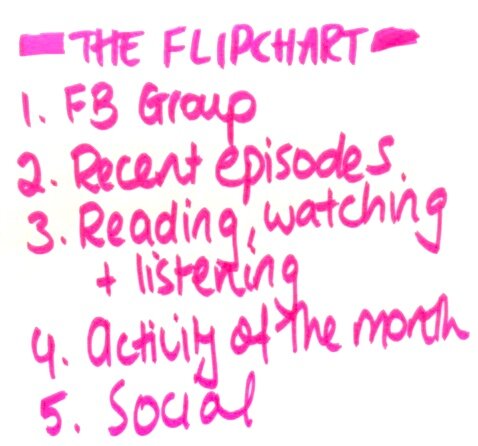 Join fellow listeners and facilitators on our Facebook group, The FlipchartThe reason I started this group is because, as a facilitator, I spend a lot of time scouring the internet and YouTube, trying to find a perfect activity, exercise, game, video, image to support my learning material. I’m sure there’s a few of you out there who are doing the same thing! Let’s make it easier for each otherThis is a global community for facilitators who want to get better at their craft, and also more efficient at developing their workshop content. In this group, we share awesome training tips, hacks and recommendations to help you with the next workshop you deliver. Jump on board! Recent First Time Facilitator podcast episodes
- This week I talk about a facilitator packing checklist. Grab a copy of the Google Sheet checklist here - you can copy it to your own google docs drive and customise it for any upcoming workshops you have.
- Storytelling is powerful, how good are you at capturing and weaving stories into your workshops? If you need some tips, listen to my conversation with Hadiya Nuriddin
- "Life is too short for bad presentations"! One of the best statements, ever (in my opinion). This quote came from Toon Verlinden, a chemical engineer in Belgium. Listen to how Toon and his co-author, Hans Van De Water are helping academics present better.
Reading, watching and listening
- Meeting Tips Radio was a podcast from 2014 with 16 episodes only, however I binge listened to every episode prior to facilitating a global Executive strategy session recently, where I discovered the ToP methodology and ORID. If those acronyms don't make any sense to you, listen to the podcast! I'll also be interviewing a few facilitators on the ToP methodology in future episodes.
- I've also been watching Tom Bilyeu's Impact Theory on YouTube - the interviews are great, but I've been observing the way Tom introduces his guest. His introductions are some of the best I've seen. Watch him introduce Seth Goden.
- The Do Lectures put together this list of the 100 must-read books of 2018. I have collected a ton of Audible credits over the last few months, I know what I'll be using them for! I think I'll start with Cal Newport's 'Digital Minimalism'.
Activity of the month: Space Team'Space Team' is an group player app I played at the 'We Are Podcast' speaker's retreat last week (my podcast hero, Pat Flynn told us about it). I think you could weave it into a team-based activity around delegating tasks and the importance of listening.You can see how the Space Team app works here.About the app: Basically up to 8 people with a randomly generated set of space ship controls on your screen that you have to operate on command before you blow up but your instructions are sent to another random player.After playing a few rounds, our group decided on strategies - which involved a focus on listening more, taking stock of your controls to start with, and being responsive when you actioned a task.SocialI'd love to chat with you on social media!
- Instagram @firsttimefacilitator (or if you like photos of sausage dogs, running, behind the scenes stuff @leannehughes)
Happy facilitating!Leanne

The ultimate facilitator packing checklist (and how the MOST method saves you energy) with Leanne Hughes (Episode 38)

How do you go about packing when you're off to deliver a workshop?I’ve been travelling quite a bit and spending a lot of time and energy packing. I thought it was high time I developed some kind of system or checklist around this because spending time and energy on things that can be automated, is not a great use of time. So I’ve developed a packing system for facilitators, it’s called the MOST method.Have you ever been in a workshop and realised that you forgot the attendance sheet, to print the name of people coming along, you’ve forgotten your laptop charger, your phone charger. It’s easy to forget things because your mind is probably more focused on your delivery, and the content. If we want to up our professionalism as a facilitator, and to take opportunities that may come at a moment’s notice, it’s important to have a dedicated facilitator kit that we can use, when required. It's also about getting a really good night’s sleep. There’s nothing worse than waking up in the middle of the night before a workshop, thinking, ‘Oh gosh, did I pack that worksheet? Did i print that diagram?’ Having a checklist of what to go, to trigger that, before you go to sleep that night is probably the best thing you can do, to ensure you have that energy for the next day.The model I’ve created is an acronym called ‘MOST’ and it stands for categories on my facilitator packing list: M = Me, OS stands for ‘Office Supplies’ and T stands for ‘Tech’.
Facilitator resources mentioned in this episode:
- The Flipchart Facebook group - join now!
- First Time Facilitator playlist on Spotify
- Mr Sketch flipchart pens
- Neuland markers
- Cymbal
- We Are Podcast conference - check out the podcasts of the speakers I hung out with!
I want the checklist!
Click here to get a free copy of the Ultimate Facilitator packing checklist delivered to your inbox.
Contact the host: Leanne Hughes
Episode 37: Announcement: Facebook Group is finally here (p.s. It's called 'The Flipchart')
This week’s episode is a bit unusual, it’s a lot shorter than others and it’s really an announcement episode. For a while, like more than six weeks, I’ve promised to launch a Facebook group for the First Time Facilitator audience, or really, anyone that wants to become a better facilitator, trainer or workshop content developer.
This week’s episode is a bit unusual, it’s a lot shorter than others and it’s really an announcement episode. For a while, like more than six weeks, I’ve promised to launch a Facebook group for the First Time Facilitator audience, or really, anyone that wants to become a better facilitator, trainer or workshop content developer.
Where can I find The Flipchart group on Facebook?
The Facebook group is called ‘The Flipchart’, like the name of my e-newsletter. email newsletter.You may be wondering why it's called The Flipchart and not First Time Facilitator. The reason is that I know many of you are beginning your side hustles, or consultancy, business in this space, and you probably don’t want to be seen in a Facebook group called ‘First Time Facilitator’,as it may create an incorrect assumption.The reason I started this group is because, as a facilitator, I spend a lot of time scouring the internet and YouTube, trying to find a perfect activity, exercise, game, video, image to support my learning material. I'm sure there's a few of you out there who are doing the same thing! Let's make it easier for each other. This is a global community for facilitators who want to get better at their craft, and also more efficient at developing their workshop content. In this group, we share awesome training tips, hacks and recommendations to help you with the next workshop you deliver. I haven’t gone too prescriptive on what this page really looks like but to give it a bit of guidance, here are some of the daily hashtags - but don’t worry if you want to post something and it’s not related to the daily hashtag, just go ahead and post it!
Group daily Hashtags are:
And then at anytime,
I’d love for you to join the group. Just head on over to The Flipchart on Facebook
Episode 36: 7 attributes of a superhero facilitator (and how to rescue a workshop from a fate worse than death) with Leanne Hughes
What does it take to get to get to superhero status in the facilitation game?In this solo episode, Leanne Hughes explores and explains the 7 key attributes she thinks are critical to becoming a superhero facilitator.So, how does a facilitator carry out the responsibilities of a facilitator like a superhero (Lycra optional)? Listen in!
What does it take to get to get to superhero status in the facilitation game?In this solo episode, Leanne Hughes explores and explains the 7 key attributes she thinks are critical to becoming a superhero facilitator.So, how does a facilitator carry out the responsibilities of a facilitator like a superhero (Lycra optional)? Listen in!
In this episode you'll learn
The seven key attributes that First Time Facilitators should consider when wanting to level up their game
Key questions/statements facilitators can use in their next workshop
The APPLE technique, and how you can employ this the next time you're in front of a group
About your host
Leanne Hughes is the host of the First Time Facilitator podcast and is based in Brisbane, Australia. She works in the field of Organisational Development. She loves to shake up expectations and create unpredictable experiences and brings over 12 years’ of experience across a variety of industries including mining, tourism, and vocational education and training and believes anyone can develop the skills to deliver engaging group workshops.
Like this show?
Please leave me a review here — even one sentence helps! Consider including your Twitter handle so I can thank you personally!Let Leanne know about your number one takeaway from this episode! (or, leave a comment below)
Episode transcript
View the transcript of Episode 36 with Leanne Hughes.
Your thoughts
What do you think? Did Leanne miss any? Do you think any of these attributes are more important than others? Let us know! Comment below.
Episode 35: Shift your focus: Be with your audience (not just in front of them) with Hadiya Nuriddin
In today’s episode, I talk to Hadiya Nuriddin. Hadiya is a speaker, a learning strategist, instructional designer and an e-Learning Developer based in Chicago. She has nearly 20 years' experience in all levels of learning and development and has extensive experience in designing, developing, and delivering both technical and professional development courses.
In today’s episode, I talk to Hadiya Nuriddin. Hadiya is a speaker, a learning strategist, instructional designer and an e-Learning Developer based in Chicago. She has nearly 20 years' experience in all levels of learning and development and has extensive experience in designing, developing, and delivering both technical and professional development courses.
Hadiya is extremely enthusiastic about ensuring her messages stick. In this episode, we not only talk about using stories to engage your audience, but she also shares how you can use them in your interactions with clients -which is so helpful if you’re starting a side business, or going out all on your own and trying to drum up business.
In this episode you’ll learn:
How story sharing helps to build rapport with potential clients
Tips on finding the right story to tell
How she pivoted from a tech support role; into instructional design; and discovered the world of facilitation
How the developed her confidence as a facilitator by shifting her focus
Hadiya's explanation of the 'story spine' and how this can apply to you as a facilitator
About our guest: Hadiya Nuriddin
Hadiya Nuriddin is the owner of Focus Learning Solutions. She has a MEd in Curriculum Design, an MA in Writing, and a BA in English. She holds the Certified Professional in Learning and Performance (CPLP), and is MBTI certified. She designs and develops eLearning courses using Articulate Studio, Articulate Storyline, and Captivate. Hadiya is the author of the book StoryTraining: Selecting and Shaping Stories That Connect.
When she is not working with clients, she consults with other self-employed L&D professionals to help them start and build their own businesses. Hadiya also facilitates courses nationwide on instructional design and development for the Association for Talent Development. She has a Master’s degree in both education (M.Ed.) and writing and publishing (M.A.). She is also a Certified Professional in Learning and Performance (CPLP).
Resources mentioned in this episode:
Like this show?
Please leave me a review here — even one sentence helps! Consider including your Twitter handle so I can thank you personally.
Let Leanne know about your number one takeaway from this episode!
Quotes of the show:
“You may be nervous and scared and trust me; If you begin to change your thinking and realise this journey is “for them” not “for me” then, you will put more on the onus and more of the focus on them and less on yourself.”
“Don’t think that one event only has one lesson.”
“The point is not just for you to tell stories. The point is to make them, the learners, feel comfortable enough to share their own stories with each other.”
Episode transcript
View the First Time Facilitator episode transcript with Hadiya Nuriddin.
Episode 34: First Time Facilitator podcast transcript
This is the transcript of my conversation with Toon Verlinden.
This is the transcript of my conversation with Toon Verlinden.
Alternatively, you can listen to the First Time Facilitator episode with Toon.
Leanne: Welcome to the show. Thanks so much for joining us and thanks for your time this morning.
Toon: Yeah, thanks for having me.
Leanne: I always like to start with our facilitators and asking them a bit about their background and what was it and how they got inspired to enter the world of facilitating and in your case helping people present and deliver better presentations.
Toon: Yeah. So what happened, I graduated as an engineer, Biochemical Engineer and as a journalist and later on I went into research on water purification and I was asked to talk at World Water Day. That's an annual day about water and water purification. I was there and I was talking and before me there were two or three other researchers and after me there were two or three other researchers and it was all quite dull and a quite boring that day.
But after my presentation, someone wrote me an email and he said, “Hey, that was an awesome presentation we should talk about that because presentation academics are quite bad most of the times and quite boring most of the times and we should stick our heads together and think of ways on how to make that better.” and that and we started doing that by putting up a blog with some tips and tricks and not long after that there the first questions came in. “Hey, do you do workshops as well because we are have researchers and you are, it's correct, the presentations are not always that good.” I had conferences or stuff and so we started to do workshops and that took off quite good and it was 2012 and now five, six years later we give workshops all over the place and that's how it all worked out and that's quite nice.
Leanne: It is really nice. I mean who would have thought that one presentation would have really changed the trajectory of your career.
Toon: That’s the thing.
Leanne: I do have to ask. What did you do in that presentation and how much time did you really dedicate to making it so good?
Toon: Well, it was a presentation of let's say five minutes more or less and it was about a water purification project I was running in Ghana by the time. The thing was they asked me, “Hey, can you give a presentation on World Water Day? I said, “Yeah, cool!” and then they said, “Yeah, you have five minutes.” and I go, “Ah, okay. Yeah. But I want to talk about 13 things and then I had a list of things I want to talk about.” and then I heard that there are also researchers coming in front of you and after you so I thought, “Yeah, I really need to cut down.” So I get out most of the things I wanted to say and really focus on one or two main key messages and they stuck, they really stuck.
And there's always this thing about people wanting to say everything, they are afraid that people will think that they don't know their subject or so. So I started my presentation by saying “Hey, I'm just going to give you just enough relevant information so you can get on board but not more than that. So there is more to this story but I'm only going to give you one or two key points.” And by doing that in my introduction, people knew, “Ah, okay. There's a lot of more to the story than he will be saying.” And that enable me to make it shorter and more focused and I think the focus was really important in making it stick with people. Yeah, I think that's the most important thing.
Leanne: Yeah.
Toon: The really the focus that you have to take. Yeah.
Leanne: You're absolutely right. I think what’s really great that you frame that upfront so you set the right expectation especially among sort of academics.
Toon: Yeah.
Leanne: I can imagine, information is power. But the other thing, I think it is a lot harder and I know that Mark Twain talked about it with writing in terms of, it's actually a lot harder to present something with impact that's a lot shorter.
Toon: True.
Leanne: It's easy to film a 30-minute presentation or to write a thousand words when you really have to get, convey and convince people in a short period of time, it's quite tricky.
Toon: It is. It is, especially in academics because people say “Yeah, if it isn't difficult, it isn't Science.” or “Hey, you're not showing us all the data, so you didn't do all the experiments.” And so people get afraid and they will want to cram in everything that they've done. But then they lose their audience of course because then they draw on and give information-information-information and then you lose your audience and that's really a problem in a lot of academic presentations.
Leanne: Yeah.
Toon: And they don't dare to focus and I had problems with that myself and therefore I did that framing in advance like, “Hey I'm going to give you like just enough relevant information and nothing more.” And I think that was a key concept that struck my now colleague, Hans, to contact me and say, “Hey, that was really interesting what you did there. Frame it in advance and saying you're only going to give just enough relevant information. I can't to do something with that framing thing, with that concept.” And from there on we started talking.
Leanne: Yeah, it's kind of like when you go to the movies and the trailers.
Toon: True.
Leanne: Like you were giving a bit of a movie trailer and then people like, “Oh, this is interesting and this is the hooks.” and they want to see the movie.
Toon: Yeah, that's true.
Leanne: Yeah, that’s great. So that's, I didn't know that's how you met your co-author Hans, that's through the presentation.
Toon: Yeah.
Leanne: Fantastic. You started this company, The Floor Is Yours back in 2012 and I love the whole philosophy around it; Life is too short for boring presentations.
Toon: Yeah.
Leanne: I want to give you a virtual high-five. I love that!
Toon: Yeah.
Leanne: So why do you think there are so many boring presentations around the world? I mean you saw this in one conference. Why is it still happening?
Toon: I think there are a lot of reasons. But one of the main reasons as I said before, is that especially with the people I'm training like academics engineers, people who have to bring across complex information, they are afraid most of the times. There are a lot of the PhD students I'm training, they have seen quite a lot of that presentation that talks stuff like that and they know it can be done differently. But they don't really dare to because there's always like a promoter or a boss looking over their shoulder and saying, “No. You have to do it like I have done it. You can't do it differently.” and I think a lot of it is coming from that people are a little bit afraid of doing it differently. Also, people are a little bit afraid of putting up a show when they are presenting because it's science, it's academics. It doesn't have to be fun, it has to be correct and I think they are afraid of doing its difference.
Leanne: Yeah. I hate that too. I think it's possibly from the role models that you're given.
Toon: Yeah.
Leanne: At the same time because I've sat through university lecturers and you just think, “Oh gosh, if you only made it a bit more interesting.”
Toon: It’s true.
Leanne: You'd probably get more people interested and engage and really excited about this topic. It’s going back to high school and some of our favourite subjects but because of the teacher that taught it in a way related to us.
Toon: Yeah.
Leanne: So you talked about attention and you had five minutes at this conference. But I like on your website, you talk about 20 seconds that period of time.
Toon: Yeah.
Leanne: And you say that, “If you can't explain it in 20 seconds, you don't understand it well enough.” Can you share that what that message means for our listeners?
Toon: First off, the thing is, if people start to present a new topic, a new complex topic, they start off and they go all different directions and they want to cram everything into that little teaser. But the thing that happens then is you're talking to someone, for example, and after 10 minutes, the person in front of you gets like a glaze in front of his eyes and you noticed like then that person is not really interested. So the 20 seconds is really a good way to see if people are interested in what you are saying. Now, next to that if you are a facilitator, I need to do the 20 seconds, how do they apply is if you are talking in a workshop, try to get everything out as quick as possible in the beginning like a little teaser, like, “This is what you're going to do.” and I try to focus on like a problem-solution advantage structure.
So I say, “Hey, why don't you start with sketching. Look guys, this is a problem you are having. This is the solution I will be bringing to you and this is the advantage, this is the reason why this is useful to you.” and if you get that out quite quick in the beginning in let's say 20 seconds or so, you have framed quite good, what you're going to talk about, why it is important that people will listen and what they will get out of it and I think that's very useful because a lot of people start a presentation by saying, “Hey, I'm that person from that company and that faculty and that's my boss or my promoter.” I don't know but the sad fact is that in the beginning not everybody's or almost nobody's interested in who you are exactly. They're more on what can you do for me. So if you can get that in 20 seconds like problem-solution advantage structure wise, then that's a very good to have handy at the beginning of workshop.
Leanne: Is that's something that you came up with yourself? I've never heard of that. I like it.
Toon: I piece it together from- so if you notice that a lot of people start with the solution. If you look at movies for example or other stories that we like, they tend to go for a problem-solution advantage structure. Let's say, you take a movie like Lord of the Rings. Everything is good in middle-earth and then there's suddenly a big bad wizard Sauron coming up and that's a problem and then they need to come up with a solution, “Ah, we find a ring and we need to cast it in the mountain and a volcano where was it came.” That's solution and then the advantage is everything is better again.
Leanne: Yeah.
Toon: So every story follows, every story that we like or that we read follow that problem-solution advantage structure. But what people tend to do is especially academics is they say, “Hey, I researched this.” But I'm not sure why you research that or what's the use of you researching it? So it's much better to get a problem in advance and that's also for facilitators quite good you say, “Hey, I feel your problem and I'm going to give you the solution and that's why you need to listen to me.”
Leanne: Yeah.
Toon: And that's quite handy if you put that as much in front as possible. I didn't piece it together all of myself, I need to give credit to- you had him on the podcast, Sean D’Souza?
Leanne: Do you listen to Sean D'Souza?
Toon: Yeah. I listen to his Brain Audit.
Leanne: Oh, my gosh. That is so funny.
Toon: Yeah. I listen it all the way through.
Leanne: That book is great but did you listen to it on or the audible version, there's a piano that plays all the way through?
Toon: I listen to all at the ad, the audible version. Yeah and I really liked it and there are some really good concepts in there as well. I think he also focuses on, “Hey, what's the problem of the person you are talking to and how are you going to solve that?” and you can use that perfectly in presentations as well. Then there was a book as well called Houston, We Have a Narrative and that was from an Astrophysics guy, I think, that started working in Hollywood later on and he uses that structure a little bit as well. He connects it to like, “Hey, we have Hollywood movies. How are they- how do they tackle that problem and how can we use that into in our presentations?” and I think if you smash those two together you get that structure a little bit and that really really works because if people need to think about, “Hey which problem am I going to solve for my audience? If you need to think about that in advance, that's already very good step to take and to start with.
Leanne: It is, it's great. I love that you've heard of Sean D’Souza. That’s fantastic.
Toon: Yeah. I did. Yeah.
Leanne: I think he’s coming to Brisbane next month for a conference I’m at, I'm emceeing. We have podcasts. So looking forward to talking out with him. I'll let him know that another podcast guest from Belgium. Hey, I think he was there recently running a workshop and they went to the Tintin Museum a lot.
Toon: Yeah. I heard.
Leanne: Yeah, small world.
Toon: So yeah, I like what you are saying and how it’s bringing it to the people and I think it's yeah, you can use his advice in a lot of different topics. It's like how do you craft a landing page but you can use that advice as the same in presentations a little bit you need to alter it of course but it's yeah, it's a useful advice.
Leanne: Yeah. So I heard the problem-solution framework before. There's a book I can't remember the exact title of it but it's about Steve Jobs in the way that he speaks and so if you watch his the release of the iPhone and what he was doing the whole time was just talking about a problem, really setting the problem aren't making it really real and then talking about how the Iphone just fixed everything and why that was important.
Toon: Yeah.
Leanne: So yeah, that's really great. It’s about getting that that mix of- so it hooks people in. So like that.
Toon: Yeah, true.
Leanne: So that's in terms of what you're actually saying as a facilitator. I also like that you also focus on slide design for dummies. What can we do with our slides to make them more I guess compelling with our audience?
Toon: Yeah. There are two problems that lead to full slides. The first problem is when people ask us to give a presentation; what do we do? Well, we open a PowerPoint and there's PowerPoint and PowerPoint asks, “click to add your title” and so you do and then the first bullet point is already there and it says, “click to add text” and so, “Okay, PowerPoint. I click to add text.” and that's what you start to do. So you fill up bullet point after bullet point and then after a while you need to cut stuff out, you need to rearrange stuff and you get a presentation as a little bit unstructured and most of the times it's full of text.
So one of the things I advise, try to start with like a blank slide not with like these pre-set bullet points or so just blank slide and start to draw your own square sensor. And then the second thing people need to know is that if you are presenting, you are important; not your PowerPoint. Because a lot of people want their PowerPoints to be let's say use as handouts as well so they can hand it out your PowerPoint. But if people can understand your PowerPoints perfectly by reading it and then they don't need you. If it is a perfect handout, your PowerPoint, they don't need you to tell it as well. So you need to try to avoid that, you need to see, “Hey, is there stuff on that PowerPoint that I'm just going to say as well? Like it is on the PowerPoint, “Do I read my PowerPoint from top to bottom?” That's what happens quite a lot. People start to read top to bottom while they are presenting.
But the thing is people, the audience can read faster than you can speak so they have read the entire slide before you are half way and they will zone out. So it's better to get less text on your slides. We may, most of the times we say, “Yeah. Try to aim for a maximum of 20 words per slide.” and that's already quite a lot. There's presentation advice, it says, “three words” or “no words” or “three lines and three words”.
But if you say to academics or engineers for that matter like, “Hey, you can only use three words on a slide.” They’ll say, “You're crazy.” So try to aim for maximum 20 words per slide and I think it's a good idea to brainstorm in advance and start with white slides like blank slides where you start sketching on and don't open up your PowerPoints the moment they ask you to give a presentation because then you will just start feeling bullet points and that doesn't work that well.
Leanne: Good advice. So if you've got a slide there and you're just talking over at the slide redundant or you've got to change what you're saying to beef it up and create up a story or something to illustrate the point better.
Toon: Yeah. It's also- the another reason why people fill their slides too much is because they want their slides to act as like a teleprompter. They need the text themselves but there's like a notes function in PowerPoint that you can use to get a lot of text out of your slides and put it in the notes, so you can use the notes and you don't have to put it on the slides. So my advice is create two presentations.
To the engineers in your company for example, let them take your presentation, let them make a copy of it, rename it to hand out and not presentation and then take their presentation and start cutting in it and then you have two versions like the slides that are have less text. They can use that as a presentation and then their original slides, they can use that as a handout probably. So that's something they can do.
Leanne: Genius. Something's so simple but that'll help the debate if they say, “Oh, well, people need this.” It's like, “Well, just create two versions. Just call this one down.” and then practice before you get in the room.
Toon: Yeah.
Leanne: So you don't need- it's like a crutch, I understand.
Toon: And handouts isn't the same as a presentation. A handout can also be like a Word document that you've written out with like the main important things and if people say, “Hey, can I see a presentation?” Just say, “Hey, here's the handout.” and it's not necessarily the slides.
Leanne: Nice. So you're all about doing things a bit differently in the way that you present on helping others do the same thing.
Toon: Yeah.
Leanne: What is the, I don’t know, the coolest, the craziest, the biggest X Factor thing you've done in a presentation. If you really sort of gone out there or do you keep it?
Toon: That's quite okay. Now, I try to attract the attention in the beginning of a workshop like a standard thing. I do quite a lot is if I need to give a pitch workshop, I also researched as academics need to pitch to management, to funding agencies to each other. I come up on stage with a bottle of wine and a glass and I just come up and I fill my glass with wine and people go like, “Hey, well, what he's doing? It's nine o'clock in the morning, he's drinking wine.” and then I say, “Hey, imagine you're at a networking event.” and then I go on from there networking event pitching stuff like that and that really attracts the attention.
Now, one of the things I did not, that long ago was, I opened with a real story, a true story of a guy that attached some helium balloons to his lawn chair and then left off. He flew like two kilometres up in the air. I used that story as a beginning in the workshop but that day I took myself my lawn chair with me with some helium balloons, I put it on a table and I sat in the lawn chair and it really attracts the attention and that worked. And it's not that if I tell that to people they say, “Yeah. But show- the content is important. It's not how it looks but the content needs to be important. It's more important.”
But then I say, “Yeah. But just by attracting attention in the beginning, people are hooked and then you can come with your content.” and it doesn't have to be you in a lawn chair with helium balloons. It can be as simple as like opening a bottle of wine for example. There once was someone, after our workshop, he went to a conference and he was doing research on what purification and more specifically on extracting this too from people out of the water to reuse it. The phosphates in the stool.
Leanne: Wow.
Toon: And he opened his presentation big with only slide and he opened with one word “Shit” and it was nine o'clock in the morning on a conference, everybody went like, “What's happening? Everybody awakes and that really worked and it didn't get like negative feedback off from that slide. You only got positive feedback from that slide. So it's a little bit daring to do things differently. So those are some examples of what I’ve did.
Leanne: That's so cool.
Toon: And that really works.
Leanne: Well, it works because we're talking about it today. It's something that was very memorable, that guy's first slide.
Toon: Yeah.
Leanne: Where did you get your ideas on- how did you get your ideas with the helium balloon and the bottle of wine? Was it just you and your mate Hans are talking about it or writing things down and seeing where the connections are?
Toon: I think as a facilitator, it's always important to think like, “When does my audience need to do this?” So with a bottle of wine is, “When does my audience need to pitch?” Probably at the networking event. “What do you have in your hand?” Ah, a bottle of wine. I’ll add another bottle of wine, a glass of wine probably. So okay we’ll do that.
Leanne: In Australia, we’ll probably have a bottle of wine. The Australian version of that kind of beer outside.
Toon: Yeah. But that's very important. Just think, “Hey, my audience. How does it work? How does it go? Why are people distracted when they need to listen to speaker?” Ah, probably because he doesn't grab their attention. “How should he grab their attention?” Now, another thing like the guy with the helium balloons, it's always good to have like always- I write them down.
If I come across a story that's like quite interesting, I write it down like, “Hey, that's a good story. Maybe I can use it later.” and most of the times it's like, “Yeah. A funny story.” That I hear in a podcast for example or did I get on the internet and I write it down and I think it's good to have that backlog of interesting stories somewhere so you can grab one out if it suits you.
Leanne: One of my earlier guest on the podcast was a guy called Matthew Dicks and he's written a book called Storytelling.
Toon: Okay.
Leanne: He's one there's a something in the U.S. called the Moth where it's a big storytelling competition and he's won about 30 or so.
Toon: Wow.
Leanne: I’ve been reading his book and he says the same thing and he calls it “homework for life”.
Toon: Yeah.
Leanne: And he says that, “At the end of every day, just think of one thing that was memorable and just write it down, just a sentence to capture it.”
Toon: Yeah.
Leanne: And so, I've been starting to do that and then you think about those everyday moments and there's always some kind of lesson or link that you can, one day link it back to.
Toon: Yeah.
Leanne: I think it's handy that you don't have to create it from scratch. It's like looking through your database and going, “Oh, that one will work.”
Toon: That's very useful. Yeah. Because you don't have to start every presentation with a story but it's very useful to start a presentation with the story. Also, if you give a workshop, I do it as well. The uses that a lot of people are talking and talking and smart phones are up and computers laptops are open and then when you start with a story, the first sentence people stop talking. The second sentence, laptops closed. Third sentence, smartphones go away. Fourth sentence, everybody’s listening to you. And that's why a story is such a good way to start a workshop or presentation and that's why it's indeed useful to write them down if you come across them like, “Hey, this could be of interest to me later on.” and that's useful to write it down.
Leanne: It's great that you're using your journalism skills as well for telling stories.
Toon: Yeah, for telling stories and it's also like copywriting and what to focus on and what not to focus on. That’s also very useful to have like a little bit of feeling with that. I use the journalism skills indeed. Yeah.
Leanne: Good one. So we spoke about it's important to gain attention in terms of your slide design. Start with a blank template and telling stories is really key as well. So are there any other skills that you think are really important in terms of facilitating workshops? Something that you do differently between compared to speaking? What do you do differently when you actually facilitate and engage in a two-way learning process?
Toon: I think as a facilitator, you need to be very honest with yourself and with your audience and what I mean by that is, I really think that bad presentations are a problem in this world especially with academics. One, it's boring to sit and listen to a bad presentation. But two, it's also let's say, you are researching climate sciences, you're researching climate change for example then it's important that you can talk about that to the audience. So I really think bad presentations are a problem and I think as a facilitator that comes across. If you really care about your subject then that really really works. Other things I do- the question was what I do differently if I give a workshop instead of giving a presentation, is that the question?
Leanne: Yeah.
Toon: Yeah. The key techniques remain the same. What I tend to do in a workshop as well is I try to divide the entire workshop in three blocks. We divided our workshop, our presentation workshop for example, in story, show and slides. So first, we say, “Hey, you have a complex idea.” How can we make a good story from that that people understand, then we go show. How can we make it appealing to look at and appealing to listen to and then we go slides. How can we make good slides and that three-part structure is very powerful. But I use it in presentations as well as in workshops because people tend to be able to structure three things quite well in their head. If you will add like, “Hey, I'm going to talk in this workshop, I'm going to talk about these ten different blocks.” Then people are lost by number four and if you go, “Hey, these are the three things that's what we are going to talk about.” that really works.
Leanne: Yeah and I know that Sean D’Souza uses three parts in his podcast too.
Toon: Yeah, true.
Leanne: And the whole rule of threes and speeches, so I like that too.
Toon: That works.
Leanne: The listeners on our show are technical experts could be engineers, accountants, people working in HR. What would your advice be to people that are starting their careers in facilitation or transitioning from being the subject matter expert or the academic into creating engagement presentations. What would you say to them starting out?
Toon: The most important thing someone told us in the beginning when we started was try to find your niche. Because we were starting out and we thought, “Hey, we don't like bad presentations.” But yeah, a lot of people don't like bad presentations and then we thought, “Hey, we should focus on scientists maybe.” and then that's when it really took off when we said, “Hey, we are specially focusing on scientists and engineers.” and that was really important. Because if you run out on the street and yell, “Hey, I need someone for presentation techniques.” and a lot of people will come. But if you say, “Hey, I need someone to be able to tell that to scientists and engineers and people who need to deliver complex information.” then that's a different story. So I think for people who want to start with this like don't go too broad with your audience. It may also makes it more easier to focus your workshops towards your audience and people will know or companies will know that you are an expert especially to their audience and that will really work for you as it’s working your advantage.
Leanne: That's amazing advice and I really liked how you've both carved out your niche in that area.
Toon: Yeah.
Leanne: The title of your book certainly attracted my attention when I did see it on Amazon and that's how I heard about you both.
Toon: Ah, wonderful.
Leanne: Yeah. So times up. Where can people find you guys online or if they want to get in touch with you and asking more questions. Where should we send them?
Toon: Well, the place to go to is thefloorisyours.eu, E U from European Union and that's a blog where people can find free advice on how to talk to companies, how to talk to media, how to give presentations. So that's the go-to place and from there on there's an About page with our Twitter handles. There's the link to our book as well if you want to buy it and we are working on eBook by the way, that will be out in a couple of weeks.
Leanne: Oh, amazing.
Toon: Maybe interesting for people in Australia because then you don't have to have all the delivery constraints and stuff like that. But thefloorisyours.eu is the place to go to and then you will find all the information.
Leanne: Fantastic. Can you share what your eBook is about or is it a top secret?
Toon: Well, so yeah. No, it’s the eBook version of the Life is too Short for Bad Presentations book. Now, it's only available like hardcopy but then we can send it all over the world and we want to have it as much as impact as possible. So it's about presentation techniques and it's divided as I said in three blocks, that's the best way to do it. First, we are going to look at story then that show and that slides, the same as in the workshop. But the useful thing about the book is that you can put a lot of more info in there than you can put in your workshop. You can't flood people in your workshop with too much information and then the book is like good for us to put everything in. That’s what it is.
Leanne: It’s like in the Encyclopaedia.
Toon: Yeah.
Leanne: That's amazing. Gosh, you must be both be so busy. Congratulations on everything that you've built in the last sort of six years.
Toon: Thank you.
Leanne: It's really exciting and I do recommend our listeners, check out the show notes for this episode where we'll have all the links to your website as well as the e-book by the time this episode's launched. It may be out or even a day or two away. So Toon, thank you so much for your time and really interesting story. I'd love to hear more in future about the process writing a book in and doing everything you both have done. You’ve accomplished a lot.
Toon: Yeah.
Leanne: So thanks for sharing your tips with our audience.
Toon: My pleasure. Yeah, no problem.
[END OF AUDIO] 29:06
Episode 34: How a chemical engineer is changing the way academics present (because life is too short for bad presentations) with Toon Verlinden
In today’s episode, I talk to Toon Verlinden. Toon is an international presentation coach and expert in scientific communication. He is a freelance science and travel journalist and a Biochemical Engineer by profession.
In today’s episode, I talk to Toon Verlinden. Toon is an international presentation coach and expert in scientific communication. He is a freelance science and travel journalist and a Biochemical Engineer by profession. Together with Hans Van de Water, they started a blog and wrote a book called 'The Floor is Yours: Because Life is too Short for Bad Presentations', and now train thousands of researchers in the techniques necessary to prepare and give effective presentations.
Listen in when I ask about the coolest and craziest thing he has done in a presentation.
In this episode you’ll learn:
How one presentation provided the opportunity for a career pivot
Tips on how to make slides more compelling with your audience.
Tips on creating engaging presentations as first time facilitators.
The importance of PowerPoint slide design for a workshop (and how a second version can help with your handouts)
About our guest
Toon Verlinden is a freelance science and travel journalist and a Biochemical Engineer by profession. His expertise as an engineer lies in subjects such as water purification, food safety, climate and biochemistry. Emerged with a joint purpose, he wrote the book 'The Floor is Yours: Because Life is too Short for Bad Presentations' along with his good friend, Hans Van de Water,to support researchers at universities, university colleges and organisations in bringing clear and attractive research presentations.
Resources mentioned in this episode:
Like this show?
Please leave me a review here — even one sentence helps! Consider including your Twitter handle so I can thank you personally.
Click here to let Leanne know about your number one takeaway from this episode!
Quotes of the show:
“If you are presenting, you are important; not your PowerPoint.”
“I think as a facilitator, you need to be very honest with yourself and with your audience.”
“Don’t go too broad with your audience. It may also makes it more easier to focus your workshops towards your audience.”
Episode transcript
View the First Time Facilitator episode transcript with Toon Verlinden.
Episode 33: The pre-workshop questions you can use to drive a great outcome with Steph Clarke
On today’s show, I chat to Steph Clarke. Steph is originally from the UK and is now based in Melbourne, Australia. She runs her own business, using her experience in learning, leadership development and executive coaching to develop courses to help organisations develop and professionals become more confident, productive and effective leaders.
On today’s show, I chat to Steph Clarke. Steph is originally from the UK and is now based in Melbourne, Australia. She runs her own business, using her experience in learning, leadership development and executive coaching to develop courses to help organisations develop and professionals become more confident, productive and effective leaders.
We cover topics in this episode, ranging from how she pivoted from being an accountant into the world of Learning and Development, and how she grappled with being a First Time Facilitator. She also shares why she’s decided to focus her business on leadership and creating effective teams; and how she’s created a very unique and cool personal brand.
Listen in when she shares a book recommendation that's really influenced the way she sets up her learning environment, and gives her the language to challenge clients on some of their decisions in the lead-up to delivering a workshop or meeting.
In this episode you'll learn
Why it's important to challenge decisions made prior to a workshop
How Steph changed careers and entered the world of Learning and Developments
How Steph uses self-discovery techniques to keep her participants engaged
Why she decided to focus her business on teaching leadership skills for emerging managers/technical experts
Her Venn diagram process for leadership (and how she created this model)
Her book recommendation and how it changes her outlook on why we bring people together
About our guest
Steph Clarke is a learning and development professional and pommy (that’s a Brit living in Australia for the uninitiated) based in Melbourne.After starting life as an accountant she realised she enjoyed developing others more than deciphering technical accounting standards. Cue a career pivot and for the last nine years she has worked in learning and development in a global professional services organisation. Steph runs her own business, using her experience in learning, leadership development and executive coaching to develop courses to help organisations develop and professionals become more confident, productive and effective leaders.She also hosts the 'Future Leaders Collective'; a meetup in Melbourne for emerging leaders across industries to come together and learn, collaborate and hear from other successful professionals.When she's not creating and curating killer content, you’ll find her in the pilates studio, in the kitchen, on a plane or hiding somewhere with a podcast, book or a great Spotify playlist
Resources mentioned in this episode
Like this show?
Please leave me a review here — even one sentence helps! Consider including your Twitter handle so I can thank you personally.
Click here to let Leanne know about your number one takeaway from this episode!
Episode transcript
View the First Time Facilitator transcript of my conversation with Steph Clarke.
First Time Facilitator podcast transcript
This is the transcript of my conversation with Steph Clarke. Alternatively, you can listen to my First Time Facilitator conversation with Steph.
This is the transcript of my conversation with Steph Clarke. Alternatively, you can listen to my First Time Facilitator conversation with Steph.
Leanne: Steph welcome to the show.
Steph: Thank you and hi.
Leanne: Hi, now Steph you've started your life as an accountant and I love in your biography that you say that you realized you enjoy developing others more than deciphering technical accounting standards, and I think a lot of our facilitators, you're the first accountant that's made the pivot on the show, but I'm sure not the first accountant in the world that's done it.
Steph: I know a few.
Leanne: I actually know a few too. It seems that accountants turn into L&D people later on in their careers. How did you manage that pivot and what really drove you to L&D?
Steph: I can't really think about what the exact moment was that I thought actually L&D is for me, but I remember going on training courses when I was a young accountant and feeling like actually I wanted to be at the front of the room, developing content and delivering the stuff rather than sitting there having it taught to me and maybe that's a slight on some of the people who are delivering incredibly dry accounting topics and thinking, "Maybe I could be a bit more creative with some of this."
Not that I feel like necessarily-- Actually, okay, I think sometimes that I could do a better job, but sometimes just thinking surely this could come to life a lot more than it currently is and be done in a different way and liking the idea of that challenge.
Leanne: Yes, that's exactly what drove me as well I think. You can't see Steph because you're listening in, but you're your eyes have just lit up talking about that passion that you have for being in front of the room. I thought it was something that you've been comfortable with being at the front?
Steph: Well, I remember the first few times I did it and despite me thinking like, "Yes that's what I want to do," just being terrified but I think a lot of that was less about being at the front of the room but it was the pretty bit more of the judgment of the people there and thinking, "This is what I really want to do, this matters and actually feeling like I wanted to do a good job," not that I didn't feel like I wanted to do a good job when I was doing the accounting stuff because I did, but it was more around wanting to prove that I was good enough to do this and almost justify that being my next career choice which is a bit scary.
Leanne: It's like that impostor syndrome that comes through and funny accounting it's a job where you're behind a computer and it's quiet, no one really sees it whereas facilitating is very public so everyone can have an opinion on it. Is that what you found when you made that transition as well?
Steph: A little bit and I think there's really so feeling like because I went into it when I was quite junior relatively speaking that I didn't have enough technical knowledge to justify teaching, but I think there's there's definitely old adage of those who can't teach so I have rode that way everything for a few years of my accounting training life. I think actually one of the things I noticed within even six months of doing the training because first couple of years, this is context, I did both so I did training and I did accounting and just switch between the two at different times of the year. What I found was I was much better and I understood the concepts much more deeply after I'd done the training.
Once I'd been thinking about putting in to different perspectives and doing it in different ways and explaining it to others, I understood it so much better than I did when I was just doing it and having it explained to me once or twice and then having to get on with it.
Leanne: When you were sitting in that room and you were looking at the facilities at the front and going, "Gosh this is dry what are they doing?" What then did you think that would be a good strategy for you to get engagement and how did you start getting the skills to engage your audiences?
Steph: At first I didn't, at first I sucked because I just did what everyone else did because that was the script and I just needed to get over the initial fears and then I thought, "Hang on, if I want to do this a bit differently and if I want to not have people looking like they'd rather be anywhere else in the room rather than in the room I need to mix it up." I think initially and I still use this technique is very much around a bit of self-discovery so actually giving different topics for people to research in the same way as they would when they're at work because someone's not always stood at the front of the room in the audit room or in the office telling you what to do.
Actually giving people little projects to research using the resources that they're going to have to use every day to research the technical topics anyway and letting them then teach back. It practices some multiple different skills, gets a bit of peer learning in there, gets a bit of social learning in there, gets a bit of discovery and people then own it a bit more because they've actually done the research rather than being quite passive. Just trying to make learning a bit more active rather than passive.
Leanne: Yes, hear, hear. All the time I think we see a lot of talking and people are lecturing and then it's just listening and I think who actually does learn that way and like you said, when I just sit there in our cubicles learning by people talking at us it's all about getting involved and having that conversation, I 100% agree. I want to move on to your attraction towards leadership and that's something a skill that you love to teach now. What was it about leadership that attracted you that's all these topics going around communication, presentation skills, why leadership?
Steph: I think leadership jumped out because I see it and this isn't necessarily relative just in my industry, but I just see it done badly so often and when I talk to people, when I have conversations with friends, with family, the thing that always sucks out of their work is their leadership or lack thereof sometimes depending on the the context. I think because there's so many problems to solve, I find I quite like it because it's quite meaty. There's always going to be work because clearly [laughs] it's quite future-proof as a career I think.
I like that it is a bit broad, but you can go quite deep into different areas of it. For me, the areas that I quite like to focus on are two, one is emerging leaders so those who have made that transition particularly from technical competencies such as accounting because yes, that's my path as well. Those who've made that transition from technical roles through to leadership or management roles and a bit like, "Oh what do I do and who are these weird people that I now need to lead and where do I even start? I've got this other work to do I don't have time for them," and just trying to navigate that to build the sustainable leadership.
Then secondly teams, actually working with teams at different levels not necessarily just new leaders that can be quite senior executive teams and leadership teams to help them be more effective. Actually building back some of the habits that they might need to help them to be be more effective as a team. Just to some of those to get a bit unstuck because some of those teams they've been operating together a while or they've had new people in and they're a bit like, "Oh we need to start again but we're not really sure how because it's been a long time since we've had to do that."
Leanne: Like you said the very broad groups, with the emerging leaders that you focus on, what do you think is the biggest struggle for someone that's stepping into a leadership role?
Steph: It is a few things and I think a largely it comes down to having even an idea of your identity as a leader, what do you actually want to be known for? Who do you want to be as a leader? What do you want your team to say about you, think about you in three months, six months, twelve months time when they're not your team anymore? I think a lot of people are promoted into those ranks not because of their leadership skills, but because of their technical skills so that is what they identify with. It's what they've been rewarded for, it's what they've been recognized for, it's what they think and know that they are good at and they are which is great, but those things are not going to make you a great leader.
It's being able to help them identify what they want to be as a leader and for a lot of people, again depending on industry that's quite an alien concept because it's quite fluffy, it's ambiguous, it's a bit airy-fairy whatever. They've not really thought about themselves in that way and I suppose a lot of them or not a lot of them but a number of them don't necessarily even want to be a leader.
A leader of others necessary or a manager of others. They want to just do the work that they are good at and get on with it. Helping them see how they can bring their strengths from their technical areas into leading others and whether that's being a technical expert and being a technical leader, but still having some of those qualities of great leadership as well.
Leanne: I think about leadership all the time, it's something that I work with at my organization and everything that you've said there is I think echoed in a lot of organizations right now so you're right. You'll never be out of a job. It's funny with leadership I think with all leaders and I've had conversations with my mates around the barbecue as well in all different industries and there is that common denominator of, "My leader doesn't this or this I can't delegate, they don't speak well." I think a leader these days there's a lot of different hats to wear.
They've got to champion diversity initiatives, they've got a champion safety, environment standards. It can seem really tough I guess it's a bit maybe but it might seem we are asking too much for a leader or we are trying to create a type of a unicorn perhaps. What do you think about that? Do you think there's a lot of crazy expectations on leaders or what should someone do?
Steph: There really is, and I think it's not even just expectations, but the wash of initiatives that we throw at leaders or throw organizations. Yes, from really senior to the more junior leaders and managers is just not fair because we are not setting them up right or well or fairly to really succeed because they are trying to do everything, you just do nothing. I think there is a fundamental issue in, I don't want to say workload necessarily, but that's what it all comes down to because it's so broad.
Not always, we are trying it and we are expecting the same thing from everyone. [unintelligible 00:09:56 baseline of what we do need to expect around things like safety particularly if you're in the extractions in the industry or things like that. Clearly there's a baseline, that's not a leadership thing that's an everyone thing, but when we come to the leaders, we do need to think about maybe differentiating slightly more and thinking about what strengths and what are people going to be great at bringing to the organization and fostering or championing in the organization maybe expecting less of everyone to do everything.
Leanne: Yes and that's what the whole strengths based approach really is all about, not everyone needs to be a champion diversity, not everyone needs to be all about the environment, not everyone needs to deliver inspirational speeches at morning teas.
Steph: Absolutely yes.
Leanne: Share that around. Now you're talking about an emerging leaders and you said that one critical thing is to know yourself and what your legacy is or how people perceive you in three, six months. That leads me back into the model that you developed your framework, do you want to explain that to our listeners and how you developed that I think it's really great.
Steph: Thanks yes so my trifecta or Venn diagram for leadership is know your stuff know yourself, know your team because when I think about all the challenges and all the different skills and behaviors you need as a leader it really does boil down to those three things and by team of course you can make that broader and think about your stakeholders, your organization, your customers et cetera because there is no others.
Maybe in time that will evolve to know others rather than know your team, but if we start with know your team I think particularly for emerging leaders that's a good starting point and then you can take those behaviors and thinking a bit broader. I think the way I came up with it was really just synthesizing most of the different challenges I hear and also the strengths I hear from people as well. When people are great what is it they're great at and it's usually something that helps with all three of those if not two, to three of those areas.
When I think about a lot of the skills and behaviors for things like delegation, things like communication, again you're good at those because you know yourself you know your staff, you know your team.
Leanne: When you would talk about synthesizing the ideas, did you just sit down with a stack of post-it notes and start drawing them out and categorizing them what was your process?
Steph: It was literally a shower idea.
Leanne: I'd say that.
Steph: I'm sorry. There was no process. It had been festering away in my brain and literally saying to me one day and I don't know if I was actually in the shower, but I was doing something really inane like washing up or in the shower or something when those moments come to you and that was. I went and scribbled it down and thought, "I could work with that." What I tend to do then is leave it for a bit in front of me on my desk or something on a post-it note or a scrap of paper and then just keep going back to it and just testing, does that fit within that and does this fit within that? Will with this work if I was using it in this situation and then just testing it on some courses and testing it on LinkedIn and in my newsletter and stuff like that in some posts just to see how it landed if people came back were like, "That is why don't-- I was going to say something a bit rude - and that is terrible." What rating this podcast is sorry.
Leanne: We've had a few people say explicit words on it. I think when talking about those situations they've been in workshops so don't need to censor it. The reason I ask that is I think as facilitators we tend to use a lot of of course leadership theory and models off from reviewed articles and a lot of stuff but it is nice to have our own IP and think about what's our own opinion is on certain things and how we see the links. I think that's a value that we can bring as facilitators so I guess the tip there for first-time facilitators is to have more frequent showers.
Steph: I think so, yes.
Leanne: Also, I think what you said is that you had this model, you let it sit there, you kept reflecting on it and coming back to it from time to time and then testing it which is key.
Steph: Yes, and also just refining it and being open because I think it's really tempting and I definitely fell into this with this model and a couple of others that I've worked on use more in specific courses and things as you get really attached to it you're like, "I've had this idea and I might never have it again and this is going to be it." Then you have to be okay with with refining it or taking feedback or it not working anymore or it becoming a bit outdated. Yes, it's absolutely great to have your own IP and really working on that and I spend a bit of time thinking about letting the ego go and knowing that that IP might not be great forever.
Once you might have that Eureka moment in the shower and think, "Yes, this is the best thing since something by Covey," you need to take a step back and think and be okay when it doesn't work.
Leanne: That's hard sometimes when you're all so attached. I was talking to a really great leader at my business and he said, "When you put an idea at the table, you've got to be prepared to step back and let the criticism come in and let the feedback flow and just don't be attached to it." I thought that was really great advice. You mentioned Covey there and growing up for me his book Seven Habits was one of my favorite books growing up and still is. Are there any books that have really impacted you professionally I guess both in your facilitation sense but as the way that you I guess live and run your life.
Steph: I like how you say growing up like you're like a 10 year old reading Seven Habits [unintelligible 00:15:05]. [laughs]
Leanne: Well his son Sean Covey he had Seven habits of highly effective teens so I did [crosstalk] Yes, actually very. I didn't read the Stephens version until I was a bit older, but yes Sean's version same same but just the language is written in a really- [crosstalk]
Steph: Yes, nice overachieving I love it Leanne.
Leanne: It was a Christmas present [unintelligible 00:15:33]
Steph: The books and actually there's one I've read really recently and I keep waxing lyrical about it on LinkedIn and on some blog pop ask was have done is The Art of Gathering by Priya Parker. I think as a facilitator it's quite a new book, I think it actually came out early this year but as a facilitator it's really changed the way I think about why we get people together and not just change the way I think, but really put some language for me around some of the uneasiness I have sometimes when some groups come together and some of the language around why I don't feel that something's are useful or helpful.
She just really helped to go and this is why I'm like, "Ah this is why." It's always just been like a bit of a weird feeling and I've not been able to really articulate, for example, it's a bad structure now I realized so it's a bit of an example. When you've got a team together and there's people in the room that shouldn't be in the room for the conversations they're having, and you know that it's not quite working but you don't really know why, but you do know why because it's those one or two or three people. What this book really does is it almost gives you the confidence to go back to whoever the stake holder is and say, "Let's go through the list and actually talk about why each person is there and actually have them articulate. Yes well we've had to invite that person because of some legacy thing or we invited this person, we have to invite that person."
Whatever that usually political reason is and then just being able to challenge them and say, " If this is what we're trying to achieve and actually having a really clear purpose on what is it, why are we bringing this particular group together, is having these one or two or three people there. Is that going to help us get closer to or further from our goal, our objective, our mission? Using that then as the catalyst to uninvite some of those people which can be controversial and a bit challenging, but using that purpose of why we gather and how we're bringing and why we're bringing people together to then challenge who's there, why we're there, where we meet as well.
I think as a facilitator we just rock up at the office or at the conference venue or whatever it is and sometimes as facilitators we're maybe coming in for a session as part of a bigger event, so we don't have the luxury of saying, "Have you thought about why you're in this place," and they're like, "No we just booked it, we use every year." We can't always have that level of control, but when we do it was a great reminder to think about what does this symbolize? What does this represent? Is this the best environment for us to have this particular conversation.
For example if we want to talk about the future of the company is sitting in the company's mahogany panel boardroom with pictures of all the old presidents and chair people and all the rest is that really getting us in the mindset of the future of this company? Maybe not.
Leanne: Maybe not, no. That's really interesting because I've actually looked at participant lists and gone I'm actually physically scratching my head and I do ask the question but it wasn't in the way where it referred back to the purpose or saying is it bringing us closer to the purpose and to continue iterating that, I wasn't too sure how to challenge it or if it even was my place as a facilitator because I'm trying to serve you if you think that's the best move maybe that's the best move, but I think if we're there to drive the best outcomes we need to start taking accountability and ownership of who is in the room and what's the environment like.
Steph: Yes, and I think it's a great point you raised Leanne because as a facilitator as any subject matter expert whether it's of your the skill as a facilitator or the subject matter of the content you're there to have an opinion, you are there to be the expert so if you are the facilitator that is exactly the kind of thing that we should be having an opinion on challenging our clients or our organizations other internal or external clients on because we're there to help them get the outcome not just to walk them through a process or walking through a conversation. That's part of it, but there is a much, much bigger environment and ecosystem that we are part of them that we can control to get that outcome.
Leanne: That's how we start adding more value as facilitators.
Steph: Absolutely.
Leanne: Talking about conference locations and venues, have you presented at any X Factor or participated in any great conference locations?
Steph: I was think about this because you had this on I think it was, I can't remember if it was Facebook or LinkedIn or Instagram one of the social media.
Leanne: It was Instagram.
Steph: You had some bland picture and I was really racking my brain I think unfortunately having delivered a lot of accounting training, the locations aren't always super imaginative so a lot of hotels have very boring walls and windowless rooms and things like that. I've been to some really cool locations. I've been around the world to deliver different training when I was basically [unintelligible 00:20:35] I've been to Singapore to, a couple of times in Singapore, Shanghai so not just places beginning there, Hong Kong all around Australia, quite a few places in Europe so Germany, the Netherlands, US.
I've been really lucky to travel a lot with my facilitation, but most of those in fairly uninspiring offices and locations unfortunately.
Leanne: I should just get rid of any windowless room. It should just be [crosstalk]
Steph: I know, a few nice country clubs and golf clubs in the UK because that was often our conference venue were in those locations, you drove out to the country and because they are usually bit bigger as well but sadly nothing super loud. We've had some cool places where there was footballers or some kind of celebrity staying in the same place, some of the participants got really excited and just following let's try and find if they could get spotted and selfies with whichever footballer was there.
Leanne: That sounds like you didn't need to do any kind of energizer if you've got celebrities- [crosstalk]
Steph: Exactly, yes.
Leanne: We've had great experiences because you've worked for this global company. Now you're also a side hustle, some people don't like the word side hustle but you've got a side project that's happening and I've got to say that I love your branding. In your email signature you've got these really cool, your icon of red glasses. Can you talk us through how you started branding yourself and figure out your brand story and all that for facilitators that are trying to make that transition from corporate to running their own show.
Leanne: Yes, and I think for me it was a bit of a turmoil in trying to pin down what my area was going to be because as a bit of someone who's bit of a jack-of-all-trades and likes to have fingers in. The thing for me for about three or four months just know you feel a bit sick just thinking about niching or niching if you're American, niching because it was just a lot of it. That idea of cutting off different options and when I realized that actually no I'm not cutting off different options, I'm actually just specializing or focusing on one or two for now and in a year, two years, three years whenever I can always transition because I'll have a client base and I'll have all these different contacts.
If I want to then focus a bit more on presentation skills which is another thing I really love to teach but didn't want to necessarily do right now, well then it's quite an easy transition because it's, "We've seen Steph present, she does leadership stuff or she's a great presenter. Great yes, she would be great if you get her to do some presentation." Actually thinking about the evolution of a life-cycle of the business rather than just what I'm doing for the next three, six nine, twelve months. That was the first hurdle was to get over my innate fear of boredom and a lack of variety which was a bit of a problem.
Psychologist please apply within and then thinking about the other brand and what I wanted to building a website and all those kind of things. At first for starter we are just writing some blogs and just thinking about getting a voice and building the brand voice and the brand opinion and what topics I wanted to talk about and which ones flowed a bit easier than others and where I wanted to put a bit of a stamp and then from there, I thought we need some kind of logo and looking at different things. Then the big decision was do I brand without going into the back end of the business too much but do I brand ? Do I actually start a business and incorporation or do I go more sole trader and with my own name?
Looking at both the pros and cons of both and really thinking for this point in what I'm doing I want to be Steph Clarke and that's the brand to be rather than necessarily at the moment a business or a company name. That was the other thing to determine as well and obviously there's questions around, do you want to go and hire people immediately and have people working for you or franchise, in which case maybe go down the business and having a brand name otherwise if it's going to be you flying solo for a while maybe that's your name.
Then the glasses happened again I don't know if it was quite a shower idea and I think it was even my boyfriend, I'm sure he would take credit for it anyway, when I was thinking about what is it that makes me me and I think I had my glass on the time and so a bit of a slightly statement piece and I was looking at different icons because I really love iconography and rather than more detailed images.
Yes, I think at a similar time we went, "Oh, what about my glasses?" Then got a little icon of one just in the icon catalog and then made it red and I was like, "Yes, this could work." What I did, as I went then went onto Fiverr and just asked someone to sent a photo of my glasses and I was like make this into an icon in this color red and there we were.
Leanne: So clever, so clever. I like that you really thought about your life cycle of your business because I know in Australia a lot of people don't think of it until I have to get registered and I'm like, "I'm I still a trader? I'm I a business, what am I?" They wait for the governance to apply before actually proactively thinking where is this business going in the future. It's interesting you talked about specializing as well and just starting somewhere, getting clients and then expanding. I think that's a really nice approach. What are you up to now? What kind of projects and courses and workshops?
Steph: I have just this weekend hit submit on my first Udemy course it's going to be very exciting. I'm going to be using that really as a bit of a supplement to other things so it's my delegate or die course which I run. I have run classroom versions for and now it's going to [unintelligible 00:26:19].
Leanne: Cool name.
Steph: Thanks. Funny I recorded it all and I did like a promo video and all the rest and delegate or dialect, I just thought, "I hope they don't throw that away," because you have to submit it to be reviewed first. I thought if they come back and don't like that title I didn't want them to get a D because I'm going to start everything all over again and that would make me want to die, probably.
Leanne: You could just delegate that to someone else.
Steph: Exactly, delegate that yes, exactly. Luckily I looked on Udemy and there's another one that's called diplomatic or die or something like that so I was like, "Okay cool it's obviously okay so this is good." Anyway, that's one of the things that's going to be launched in the next, hopefully next week or so provided their review gets uploaded and submitted okay. That's very exciting and then outside of that I'm working on something called the New Leader 12 Week Success Planner which is going to be a combination of course of coaching and some other resources too some of which are still in in the pipeline so I can't talk too much about them at the moment in case it will fall through, but you've got some quite exciting things to actually help our new leaders take that first 12 weeks and think about what habits.
It's all based around the habit of leadership and the habits that you can be building in a sustainable way to actually help you as a new leader. When I say new leader it doesn't have to be someone who's day one, it could be you've been a leader or a manager for a little while and you're just like, "I've never really honed these skills and I need to actually think about refreshing or learning a bit more about my leadership style and skills et cetera." It's really helping them in quite a guided way to become better leaders and build the sustainable habits they need to lead.
There's content for that and there's going to be some mixture of online stuffs and coaching packages with me to actually help guide through that 12-week process and some classroom based sessions too. There's going to be a half-day version in November in Melbourne and looking at hopefully one in Brisbane as well but working on some dates for that by hopefully end of October.
Leanne: Wow, you must be so busy.
Steph: Yes, it's stuff that gives me this especially doing it on the side as well as I work four days in my main hustle and then the rest of the weekend well whilst I have one full day. Also I'm delivering for clients in some of that time as well so it really is evenings, weekends, [unintelligible 00:28:46] in between the two, but it's fun and it's creative. I think the creative side there's some bits that suck my soul as well when I'm filling in a spreadsheet with my expenses for that week or whatever with my general ledger mainly because that reminds me of accounting probably, but when something goes wrong in my website and I'm just like, "Oh God why is this so terrible?"
At the same time the creative freedom and I think just the possibility of where this could go and where the clients I can help and the people I can work with yeah it's really exciting.
Leanne: I hear you, I'm on a nine-day fortnight as well and that one day it's just so precious and you can't afford to be tired or sleeping, you've really got to ramp it up but then also use those after hours and it's amazing how much time you do find in a week and what you can get done. I think it's not tiring because like you say you get to be creative and making your own decisions and it's it's really fun. I really love-
Steph: I was just going to say actually that's just the point you made there around it's amazing how much time you do have an evening actually that's what started my business. It was just a bit of boredom because I exercise in the mornings, in the evenings I was making dinner and then just sitting and festering and I felt like my brain was disappearing. This was probably a year after moving to Australia, so yes there is a lot of other stuff going on, you're getting settled and yet doing it. Going out and doing stuff and then after that I was like, "Okay, what I'm I going to do know? [laughs] What's next in my career?" Just thinking about that and that's really where this whole thing emerged from was I think again my boyfriend's going, "Well, why don't you start your own business?" I was like, "Yes, okay, I'll try that." [laughs]
Leanne: [unintelligible 00:30:29] your boyfriend but you started in business and got your branding organized too?
Steph: Yes, let's not give them too much credit.
Leanne: What I love about your online 12-week program for habits is that we often find that when clients approach the internal or external, it's just to around a workshop. They don't really think about the embedding strategies. Something like a 12-week program because it takes, I don't know what the theory that you've read says, but I'm of the mind about 30 days to create a habit consistently every day. That's how I developed my habit of exercising in the morning and then when you make it that habit, if you don't do it, you just feel terrible because it's so ingrained. I think that course is going to be so useful for anyone transitioning, so well done on putting that together. That's great. If people want to connect with you, talk to you, find out all your stuff. What's one place that we can send them where they can do that?
Steph: Yes, LinkedIn is probably my most visited social media site. LinkedIn is where I'm probably most active at the moment. Get on there and contact me there. I'm Steph-Clarke and I'm sure you put the link in the show notes. I've recently joined Twitter which I did it while I was on sick leave, which I think was probably a massive mistake because it's just the vortex but I think someone described to me two months is one long shot, said, "Okay, go away." [laughs] I'm also on Twitter and Instagram which is Steph_Clark__ because someone had the one underscore already and on Facebook too, just Steph Clarke leadership, is where you can find me.
Leanne: Perfect, all on everywhere.
Steph: All the socials but LinkedIn is definitely where I'm most active.
Leanne: Yes, your posts and videos are very active. Also if you want to look at great how branding is, Instagram is really cool too. Steph we'll link to all those in our show notes, but also it's been wonderful having you on a nice, bright and early on a Monday morning. Great way to start our way week.
I think so.
We've covered so many topics, from leadership to your career pivot, through to skills with facilitator just in space of 30 minutes. I'm sure our audience appreciates that a lot and all the best with everything. I can't wait to see how all your programs go and where you position your business in the future. It's really exciting.
Steph: Thanks Leanne and I'm looking forward because I'm sure we'll be collaborating at some point in the future.
Leanne: I am sure we will.
Steph: Mainly because I love coming to Brisbane, so just any excuse of that. [laughs]
Leanne: Hell yes. For those based overseas, Brisbane's very sunny and Melbourne's renowned for being quite chilly in winter.
Steph: It's all relative, so when your from the UK, I'm like, "This is cool," because Melbourne's not like that.
Leanne: Thanks again Steph.
Episode 32: Does co-facilitating mean half (or double) the work? with Leanne Hughes
Today’s episode is all about co-facilitating. I’ve been wondering how to do it more effectively - particularly if you need to develop the actual content together as well. If you’re handed something off the shelf to deliver, it’s a lot easier to co-facilitate- but doing both the development and delivery together sometimes can be a little tricky.
Today’s episode is all about co-facilitating. I’ve been wondering how to do it more effectively - particularly if you need to develop the actual content together as well. If you’re handed something off the shelf to deliver, it’s a lot easier to co-facilitate- but doing both the development and delivery together sometimes can be a little tricky.
In this episode you'll learn:
The advantages of co-facilitation
A process to use the next time you co-facilitate
A core document called the ID map that should underpin your workshop development plans
Learning objectives: Why they're so critical
Systems, tools and apps that enable better collaboration between you and your co-facilitator
Resources mentioned in this episode
About your host
Leanne Hughes is the host of the First Time Facilitator podcast and is based in Brisbane, Australia. She works in the field of Organisational Development. She loves to shake up expectations and create unpredictable experiences and brings over 12 years’ of experience across a variety of industries including mining, tourism, and vocational education and training and believes anyone can develop the skills to deliver engaging group workshops.
Like this show?
Please leave me a review here — even one sentence helps! Consider including your Twitter handle so I can thank you personally!Let Leanne know about your number one takeaway from this episode! (or, leave a comment below)
Episode 31: It’s time to stop recreating content: How to be a more productive facilitator with Sally Foley-Lewis
When you're asked to deliver another workshop, do you find you’re having to recreate content, or dig around different folders, trying to find that one slide or activity that worked really well all those years ago? This happens to me. It drives me crazy. I wish I had a better way, or system to store these resources.
When you're asked to deliver another workshop, do you find you’re having to recreate content, or dig around different folders, trying to find that one slide or activity that worked really well all those years ago? This happens to me. It drives me crazy. I wish I had a better way, or system to store these resources.
If you listen in our guest today, Sally Foley-Lewis has a solution for you.
Sally is obsessed with productive leadership, helping dedicated professionals (like you), achieve more, reduce your stress and take back two hours per day!
Listen in to her when I ask about her tips on how she embeds learning on her workshop.
In this episode you’ll learn:
Valuable and time-saving hacks for first-time facilitators
Coping mechanism on dealing with feedback
The three big elements of productivity: personal productivity, professional productivity and people productivity.
Essential questions you need to to ask yourself before standing in front of your audience.
Skills needed as a first-time facilitator.
About our guest
Sally Foley-Lewis is a dynamic and interactive presenter, MC, and much sought after facilitator and executive coach. Blending 20+ years of working with a diverse range of people and industries, in Germany, the UAE, Asia, and even outback Australia, with exceptional qualifications; a wicked sense of humour and an ability to make people feel at ease, she’s your first choice for mastering skills and achieving results. Obsessed with productive leadership, Sally helps you achieve more, reduce stress and take back two hours per day!
She has written three books, her latest is The Productive Leader and she gives presentations and runs workshops to help people become Productive Leaders. Sally's clients rave about her because she leaves the audience equipped to take immediate positive action.
Resources mentioned in this episode:
Like this show?
Please leave me a review here — even one sentence helps! Consider including your Twitter handle so I can thank you personally.
Click here to let Leanne know about your number one takeaway from this episode!
Click here to tweet your thanks to Sally.
Quotes of the show:
“The goods are good; don't devalue good. It's good and that's a positive word.”
“I think for facilitators, it's being okay to play, be flexible and adaptive and to continue trying to work things out because your audience wants to get it".
“The more content you shove in; the more shallow you're going to be. I think that's that balancing act that makes it very hard for facilitators sometimes.”
Transcript
View the transcript of my conversation with Sally Foley-Lewis.